
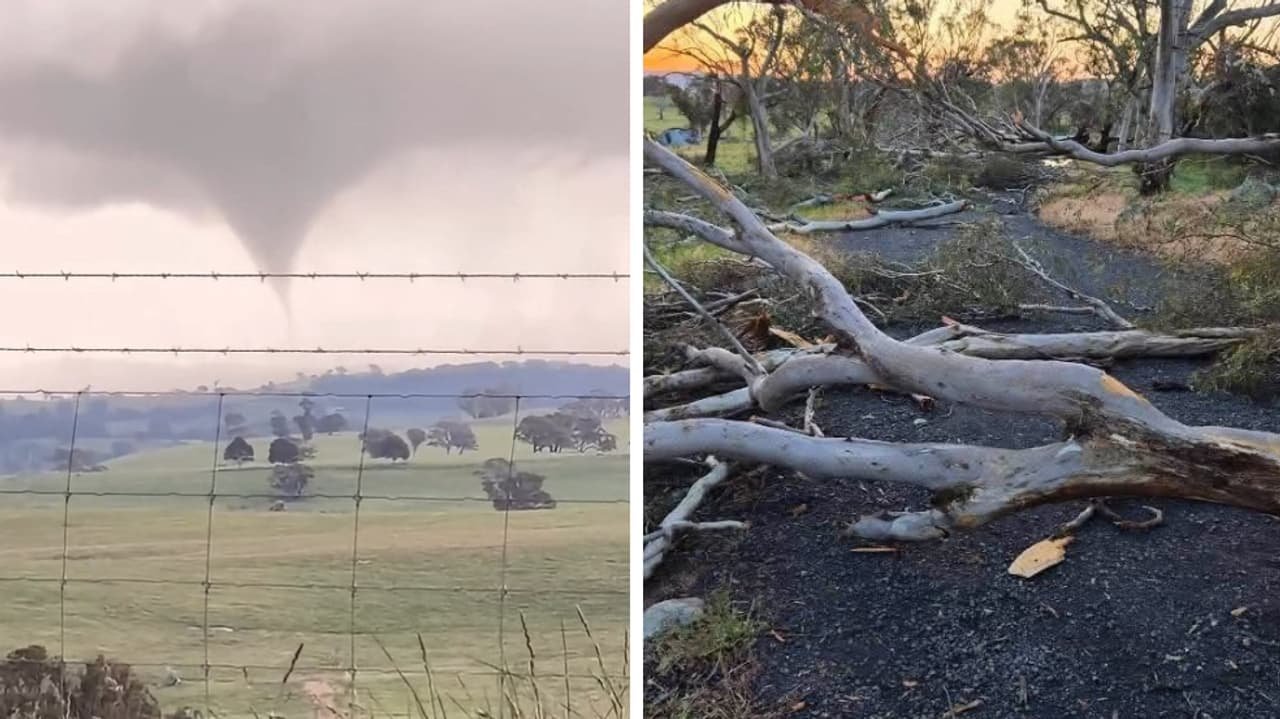
‘Tornado-Like’ Monster Storm Tears Roofs From Homes, Hurls Shipping Container 200 Metres and Blows Dog Into Woodshed as Golf-Ball Hail Pounds Tiny NSW Town of Good Hope
- A savage storm cell ripped six roofs clean off and damaged 10 more buildings in a rural community just 12 kilometres from Yass
- Emergency chiefs say a funnel appeared to form from the clouds as the system struck “very hard and very fast”
- A pergola roof flew 120 metres and felled a power pole, while a shipping container tumbled 200 metres down a hillside
- A local councillor watched his dog get swept into a shed and called the destruction of his friends’ homes “heartbreaking”
It came out of the sky with a roar that residents will not soon forget.
Within minutes, a quiet Saturday afternoon on the Southern Tablelands became a scene of chaos. Hailstones the size of golf balls hammered windows and rooftops.
Lightning split the air. Then the wind arrived, and entire roofs began peeling away from homes as if they were made of paper.
No one was hurt. In the tiny farming community of Good Hope, that is being described as nothing short of a miracle.
The violent cell swept across the locality, roughly 12 kilometres from the township of Yass in New South Wales, leaving behind shredded sheds, uprooted trees and families staring at open sky where their ceilings used to be.
According to the NSW State Emergency Service, six buildings lost their roofs entirely, while another 10 suffered significant roof damage. Fallen trees initially cut off road access into the area, hampering the arrival of help as darkness approached.
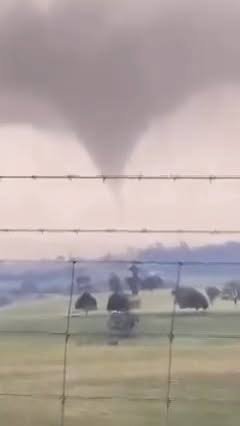
Deanne Young, the SES commander responsible for the Yass Hilltops area, said the system bore all the hallmarks of a tornado. She described an event that struck with enormous force and speed, noting that what appeared to be a funnel had begun forming beneath the clouds.
For Yass Valley councillor David Rothwell, who lives in Good Hope, the experience was unlike anything in his lifetime.
He recalled a deafening noise before conditions turned wild, with huge hailstones battering his home.
When he rushed outside to save outdoor furniture being tossed around his property, he abandoned the effort almost immediately – after watching his dog get blown into the woodshed.
At the nearby Good Hope Resort, owner and director Elizabeth Richardson-Szabo witnessed the storm’s terrifying power first-hand.
A pergola roof torn from one house was flung through the resort grounds before tumbling some 120 metres up a paddock. Along the way it smashed into a power pole, bringing live lines down inside the park.
Further up the road, the destruction was even worse.
Trees crashed down onto neighbouring properties, and in one of the most startling images of the day, a shipping container – a steel box weighing several tonnes – was sent rolling 200 metres down a hill.
The clean-up began immediately and is expected to stretch on for some time.
Councillor Rothwell did not hide his anguish. Friends of his had lost their roofs entirely, he said, and sheds across the district had been flattened.
He described the scene as terrible and heartbreaking.
The ferocity of the Good Hope storm has once again thrown a spotlight on a danger many Australians still underestimate: tornadoes on home soil.
While twisters are commonly associated with the plains of the United States, the Bureau of Meteorology has long recognised that tornadoes occur across Australia, often spawned by severe thunderstorms known as supercells.
Many go unrecorded because they strike sparsely populated farmland, far from witnesses or cameras.
The timing is no coincidence. Late spring marks the start of the eastern states’ severe storm season, when warm, humid air collides with cooler systems moving across the inland.
The tablelands and slopes west of the Great Dividing Range are particularly vulnerable to the violent cells that result.
The region carries painful memories.
In January 2020, a devastating hailstorm pummelled nearby Canberra, smashing cars, homes and government buildings with golf-ball-sized ice and generating one of the costliest insurance events of that catastrophic summer.
Scientists have repeatedly warned that a warming climate is loading the atmosphere with more energy and moisture – the fuel that powers extreme weather events like the one that tore through Good Hope.
Analysis: What This Means for Australia
The Good Hope storm is a stark reminder that rural communities remain on the front line of Australia’s worsening weather – and often the last in line for help.
When fallen trees blocked roads into the area, residents were effectively cut off at the very moment they needed emergency crews most. Had anyone been seriously injured, those minutes could have proved fatal.
It raises hard questions about how quickly responders can reach isolated hamlets when a fast-moving cell strikes with little or no warning.
Public safety is another pressing concern. Downed power lines inside a resort park, flying roofing iron and tumbling shipping containers are lethal hazards.
That nobody was hurt owes as much to luck as to preparation.
The financial fallout will also bite. Repairing roofs, rebuilding sheds and replacing damaged equipment will be costly for households and farmers already wrestling with rising living expenses.
Each new disaster adds pressure to insurance costs, which have soared across regional Australia in recent years, with the Insurance Council of Australia repeatedly flagging the escalating toll of severe weather.
For small towns, the social toll can linger longer than the physical damage.
Displaced families, disrupted businesses and the emotional strain of rebuilding can fracture tight-knit communities – or, as is so often the case in the bush, draw them closer together.
Emergency management observers say the event underlines the need for stronger early warning systems capable of detecting small but intense storm cells. Unlike cyclones or bushfires, localised tornadic storms can form and dissipate within minutes, leaving almost no time for residents to shelter.
Law enforcement and emergency services insiders warn that volunteer-dependent agencies such as the SES are being stretched thinner every season. As storms grow more frequent and destructive, they say, the burden placed on unpaid local crews is becoming harder to sustain.
Building industry observers believe incidents like this highlight weaknesses in older rural structures, particularly sheds, verandahs and pergolas that were never designed to withstand winds of this magnitude.
Retrofitting roof tie-downs, they argue, is one of the cheapest and most effective ways to prevent a repeat of the scenes in Good Hope.
Climate analysts, meanwhile, caution that the community should not view Saturday’s storm as a freak, once-in-a-lifetime occurrence. With the warm months still ahead, they say more severe cells are almost certain to roll across regional New South Wales before summer ends.
For now, the people of Good Hope are focused on the task in front of them: sweeping up glass, dragging debris from paddocks and patching what remains of their homes.
The town’s name has never felt more fitting – or more tested.