
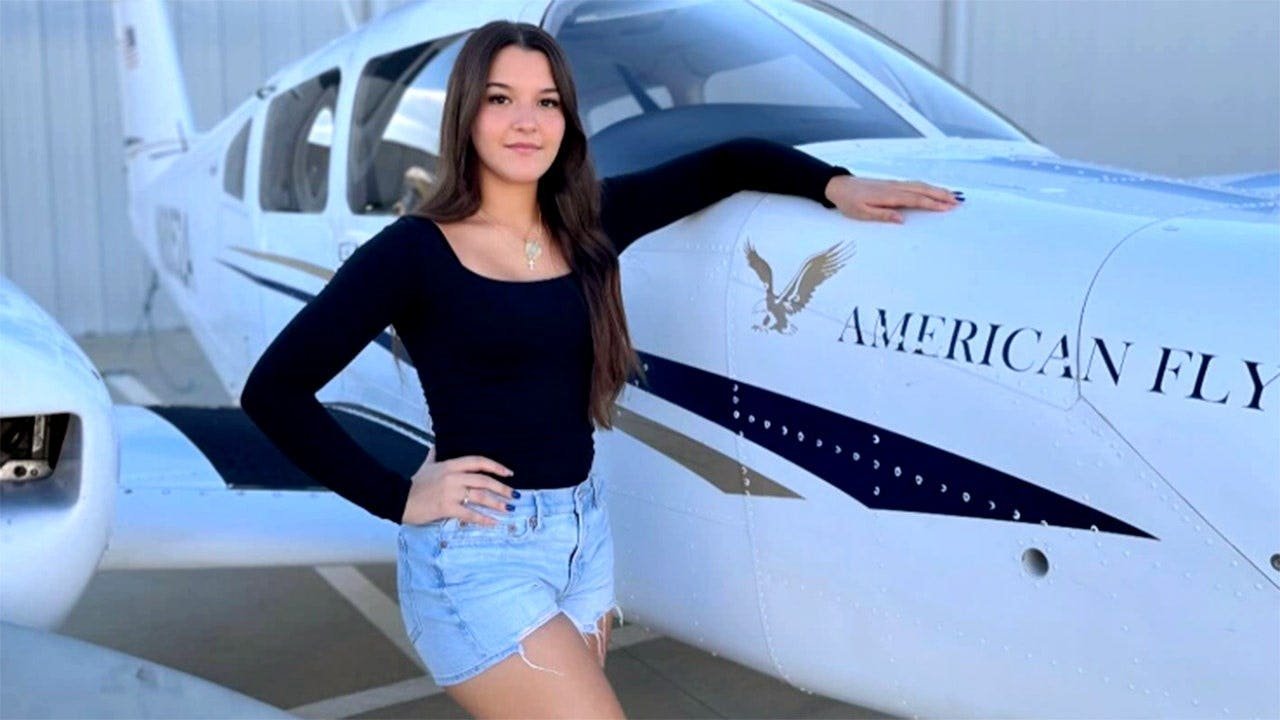
‘We’re Going to Crash Into the Ground’: Terrifying Final Mayday Calls as Learjet Carrying Young Family, Nanny and 20-Year-Old Copilot Tears Apart Mid-Air and Explodes Beside Packed Florida Road
- Nine people were killed, including a tech entrepreneur, his wife and their two children aged four and two, when a Learjet 60 broke up and slammed into a Palm Beach County neighbourhood.
- Radio recordings capture the crew reporting ice and violent turbulence before the jet plunged at up to 20,000 feet per minute and the pilot warned they were about to hit the ground.
- The 20-year-old copilot earned her pilot’s licence while still in high school and was rated to fly that type of jet, but not to command it.
- About 600 residents of nearly 80 mobile homes have been forced into a shelter, with officials unable to say when they can return.
The crew knew they were in trouble, and the last seconds of radio traffic make that brutally clear.
A mayday. Then a staggering rate of descent.
Then a final warning, delivered calmly, that the aircraft would hit the ground.
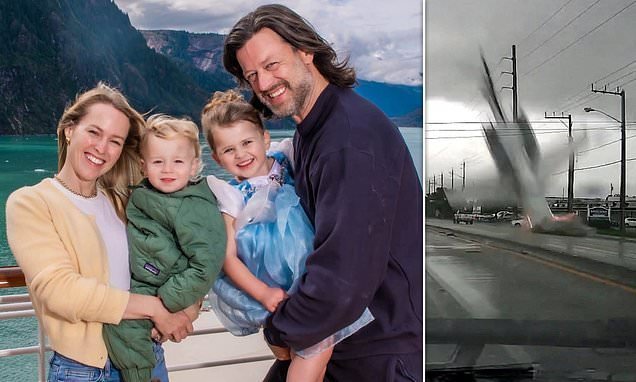
Moments later, a business jet carrying nine people, among them a toddler, a four-year-old and the woman who cared for them, smashed into earth just metres from a busy road in South Florida and vanished in a ball of fire.
It is the kind of disaster that haunts every community living beneath a flight path, and it is forcing hard questions in Australia about how prepared we are when extreme weather meets aviation over suburban homes.
The Learjet 60 had departed Austin-Bergstrom International Airport in Texas bound for North Eleuthera in the Bahamas. Two crew and seven passengers were on board.
It came down on Sunday, local time, in Greenacres, roughly 11 kilometres south-west of West Palm Beach, in a residential pocket of Palm Beach County.
Footage shared online shows the jet rolling hard to the right before ploughing into the ground beside a roadway and erupting.
Relatives have named technology entrepreneur Adam Robinson, his wife Helen Sharp, and their children Emma, four, and Charlie, two, among the dead. A joint family statement paid tribute to the couple as devoted parents whose children lit up their world.
The family’s nanny, Anita Maria Cetina, was also killed. Loved ones said she treated the youngsters with tenderness and was regarded as one of the family, leaving behind a legacy of unconditional love.
Two other passengers, Rachael Reed and Charmi Fehr, were remembered as women brimming with joy and a sense of adventure.
In the cockpit sat 20-year-old copilot Nathalia Gadelha Filgueiras. Her mother, Camila Corteleti, confirmed to American media that her daughter was one of the pilots.
Local reports from 2023 noted she had gained her licence at 17 while a senior at West Boca Raton Community High School. Her credentials allowed her to fly that model of Learjet, but not to act as pilot in command.
Her father, Allan Filgueiras, said he was not ready to speak publicly.
On the ground, a man in a vehicle fleeing the area suffered a leg injury, according to Tim Monville, a senior air safety investigator with the National Transportation Safety Board.
The sequence that brought the jet down unfolded with frightening speed. Heavy rain was lashing the region.
Air traffic control recordings published by LiveATC.net capture a pilot reporting light, clear ice that was manageable, alongside moderate turbulence violent enough to shove the aircraft up and down by around 700 feet.
The crew asked to climb a further 2,000 feet. Almost immediately, that request gave way to an emergency.
The pilot radioed that the jet was dropping 10,000 feet a minute, then reported an overspeed condition with a descent of 20,000 feet a minute.
NTSB board member Tom Chapman told reporters investigators had found evidence the aircraft began breaking apart before impact, meaning wreckage could be scattered over a wide area.
Weather, he confirmed, will be a central focus.
The recovery itself is a nightmare. The impact crater has filled with rainwater, and Mr Chapman described retrieving evidence as a daunting challenge, with simple access to the wreckage proving difficult.
The jet was originally fitted with a cockpit voice recorder, which investigators hope to locate.
Meanwhile, the human toll stretches well beyond the nine lives lost.
County commissioner Joel G Flores said a shelter had been opened for around 600 residents of almost 80 mobile homes near the site, admitting officials had no idea when people could go home.
Mayor Sara Baxter urged the public to keep the victims in their thoughts and prayers.
Analysis: What This Means for Australia
Australians should not dismiss this as a distant American tragedy. The ingredients behind it, namely volatile storm systems, airframe icing, private jets and housing built close to flight corridors, all exist here.
Melbourne knows the cost. In February 2017, a King Air crashed into the DFO shopping centre moments after taking off from Essendon Airport, killing the pilot and four passengers.
That disaster triggered a fierce national debate over development near airports and the oversight of charter and private flights.
The Florida crash revives those concerns.
Business aviation operates under different scrutiny than major airlines, and regulators such as the Civil Aviation Safety Authority face ongoing pressure to ensure training, crew experience and weather decision-making keep pace with growth in private flying.
Weather is the other glaring factor.
As the Bureau of Meteorology tracks increasingly intense storms, questions about how aircraft handle severe turbulence and icing become more urgent for a nation reliant on air travel across vast distances.
Then there is the community fallout. Six hundred people displaced overnight is a sobering reminder of how vulnerable residential parks and lower-cost housing can be when disaster strikes nearby.
With housing affordability pushing more Australians into caravan parks and manufactured home estates, emergency planning for these communities matters more than ever.
Security analysts say the economic ripple from such crashes, including emergency response, displacement and lengthy investigations, often far exceeds the initial headlines.
Aviation safety observers believe the reported break-up before impact will draw intense focus, as it may point to the aircraft being pushed beyond its structural limits during the uncontrolled descent.
They caution, however, that no conclusions should be drawn until the investigation is complete.
Industry insiders warn that the copilot’s experience will inevitably attract scrutiny, but stress that crew pairings with junior first officers are common, and that responsibility for flight decisions rests with the pilot in command.
Others say the case should prompt Australian authorities, including the Australian Transport Safety Bureau, to review how lessons from overseas investigations are shared with local operators, particularly around aviation safety in storm conditions.
For now, investigators in Florida face weeks of painstaking work in a waterlogged crater.
For the families, the questions are far simpler, and far more painful: how a holiday flight to the Bahamas ended in fire on a suburban roadside, and why two small children never made it.