
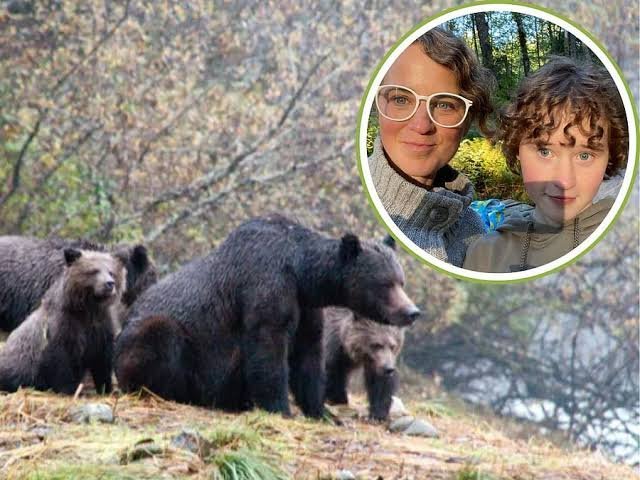
‘We Know How It Ended’: Grizzly Mother and Three Cubs Destroyed After DNA Links Them to the ‘Predatory’ Mauling of an Art Therapist and Her 20-Year-Old Daughter on a Remote Canadian Trail
- Art therapist Jenny Balcarras, 48, and her daughter Selah Reed, 20, were found dead near a hiking trail in Bella Coola, British Columbia, days after their family raised the alarm.
- DNA testing pinned the killings on a female grizzly and her three cubs. All four animals have now been put down.
- Investigators believe the bears behaved like hunters, treating the pair as prey, which is extremely rare.
- The same valley was the scene of a bear attack on a school group less than a year ago that left 11 people injured, including children.
They set out together into one of the most breathtaking wilderness areas on Earth. Neither came home.
A mother and her young adult daughter, tied by love and a shared affection for the outdoors, were hunted down by a family of grizzly bears in Canada’s rugged west.
Officials now admit the attack was the kind of nightmare that almost never happens.
For a grieving family left with three surviving children and a mountain of unanswered questions, the confirmation brings little comfort.
The remains of Jenny Balcarras, a 48-year-old art therapist, and her 20-year-old daughter Selah Reed were found last week close to a walking trail near Bella Coola, a remote community on the central coast of British Columbia.
The discovery came soon after relatives reported the pair missing, prompting a search of the surrounding bushland.
Forensic teams then gathered DNA from the scene. The results were stark.
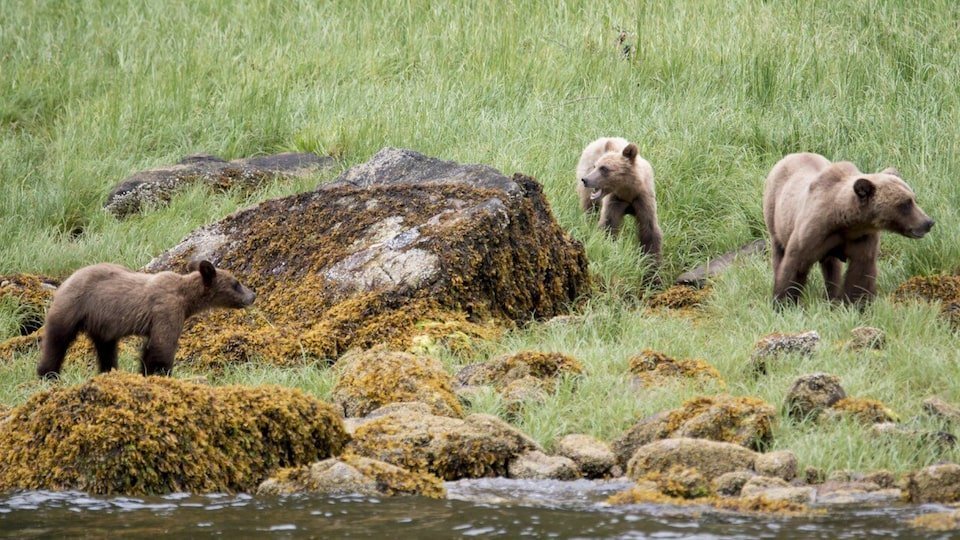
A female grizzly and her three cubs were responsible.
Wildlife authorities confirmed that all four bears had since been ‘dispatched’, the official term for destroying an animal. They said the decision was made to protect the public.
The most chilling detail came from Inspector Jeff Tyre. He said the investigation pointed to likely predatory behaviour, and stressed that this was very rare.
He conceded that investigators could not say how the encounter began, only how it finished.
That single admission has rattled outdoor enthusiasts across North America and beyond. Most bear attacks are defensive.
A startled animal, or a mother protecting her young, lashes out and then retreats. A predatory attack is a different thing altogether.
In that case the bear sees a human as food.
Timing appears to be a critical factor. Grizzlies become far more aggressive in the weeks before winter hibernation.
They feed almost constantly to build up the fat reserves that will carry them through months underground.
A mother feeding three growing cubs faces enormous pressure to find calories. Wildlife experts have long warned that this season is when human encounters with hungry bears turn most dangerous.
Bella Coola has been here before. In November last year, a bear attacked a school group in the same area.
Eleven people were hurt, including children, and some suffered serious injuries.
Authorities have stressed that none of the four bears linked to the latest deaths were involved in that earlier attack. The reassurance does not cover the bigger worry.
Two serious attacks in one valley within roughly a year raise hard questions about how people and predators are sharing an increasingly crowded landscape.
Back home, the family has been swamped with support. A fundraiser set up by a relative has raised about $CAD80,000, roughly $82,500 in Australian dollars.
The money will cover funeral costs and help Ms Balcarras’s surviving son and two daughters.
Analysis: What This Means for Australia
The tragedy unfolded more than 12,000 kilometres away, but it should hit home for Australians.
British Columbia is a favourite destination for Australian travellers, from backpackers on working holiday visas in Whistler to retirees on Rocky Mountain rail tours and families chasing Canadian national park adventures.
Many arrive with no experience of large land predators.
Australians grow up learning to respect snakes, spiders, sharks and saltwater crocodiles. Very few are taught what to do when a 200-kilogram grizzly comes out of the scrub.
Bear spray, noise discipline, group hiking and food storage are second nature to Canadians. Many visiting Australians have never heard of them.
Federal travel advice through Smartraveller urges Australians to research local hazards before heading overseas. Security and travel analysts argue that wildlife risk is consistently underweighted in pre-departure planning.
There is also a domestic lesson.
Canada’s decision to destroy an entire bear family will feel familiar to Australians who have followed fierce debates over culling dingoes on K’gari after attacks on tourists, removing problem crocodiles in the Top End, and the long-running row over shark nets and drumlines along the east coast.
Each case involves the same painful trade-off. Officials must weigh public safety and tourism income against conservation and animal welfare.
Coverage of crocodile attacks, shark attacks and K’gari dingo attacks has shown how quickly public anger can swing either way.
The economic stakes are significant too. Nature-based tourism is worth billions to regional Australia.
A single fatal attack can empty campgrounds, cancel tours and devastate small communities that rely on visitors.
Wildlife management specialists say the Bella Coola case is a stark reminder that a ‘rare’ event is not an impossible one. The cost of being unprepared is measured in lives.
Law enforcement insiders familiar with wildlife investigations say DNA confirmation has become the gold standard in such cases. It lets authorities act decisively while sparing animals that played no part.
Canadian officials appear to have followed that approach here by formally ruling out any link to last year’s school group attack.
Conservation observers believe the destruction of three cubs alongside their mother will prove deeply controversial.
They note that cubs who have learned to treat humans as prey are almost impossible to safely relocate or rehabilitate, which leaves authorities with few options.
Outdoor safety experts warn that late autumn is the riskiest window of the year in bear country.
They advise anyone hiking in grizzly territory to travel in groups, make regular noise, carry bear spray within easy reach and leave immediately if they see signs of recent feeding.
Travel industry observers say Australian operators selling Canadian wilderness packages should give wildlife briefings the same weight as weather and terrain warnings.
Behind the analysis and policy debate, a family in British Columbia is preparing to bury a mother and daughter who went for a walk among the trees.
Three children are left behind, and a remote valley has been shaken twice in a single year.
As Inspector Tyre’s grim assessment made clear, nobody may ever know exactly how the encounter started. Everyone knows how it ended.