
‘Earthquake Apocalypse’: South Island Shaken to Core as Powerful 5.9 Magnitude Tremor Sparks Tsunami Scare and Leaves Thousands Shaken
- Thousands of New Zealanders fled their homes in terror as a massive earthquake struck the South Island, triggering a tsunami warning and widespread destruction
- The 5.9 magnitude quake, which was initially reported as 6.3, was felt across the island, causing chaos and destruction in popular tourist regions
- As the region struggles to come to terms with the disaster, experts warn of “dangerous currents and unpredictable surges” in the coming days
- Emergency services are on high alert, with authorities scrambling to inspect infrastructure and respond to the crisis
The earthquake, which struck at 9.14pm on Thursday, sent shockwaves across the South Island, leaving a trail of destruction and chaos in its wake.
The powerful tremor, which was centered 40km north of Te Anau, was felt as far away as Otago, Southland, and Canterbury, with residents describing a long and unsettling jolt.
As the quake struck, thousands of people took to social media to describe their terrifying experiences. One Facebook user in Wanaka said the quake felt “very strong”, while another in Alexandra reported hearing a “very loud rumble” followed by “decent shaking”.
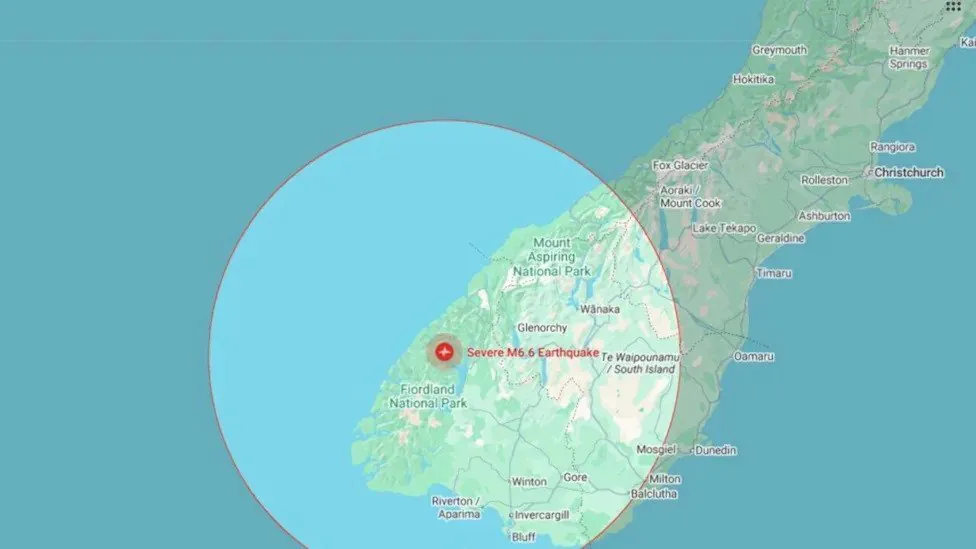
A Cromwell resident said their house was “moving for quite a while” and that they felt aftershocks, while further south in Riversdale, one person said the shaking lasted “around 20 to 30 seconds”.
The National Emergency Management Agency (NEMA) issued a tsunami warning soon after the quake, sending panic waves across the region.
However, the warning was later downgraded to an advisory for tsunami activity, warning of dangerous coastal conditions rather than land inundation, after the magnitude was revised.
Despite this, authorities are urging people to remain cautious around the coast, with Emergency Management Southland warning of “strong and unusual currents” in the coming days.
As the region struggles to come to terms with the disaster, experts are warning of a heightened risk of coastal erosion and landslides. “The earthquake has weakened the ground and increased the risk of landslides and rockfall,” said a geologist at GNS Science.
“People should be extremely cautious when traveling to coastal areas and should avoid any areas that have been affected by the quake.”
The government has also moved to respond to the crisis, with authorities scrambling to inspect infrastructure and respond to the disaster.
Queenstown Lakes District Council said the Edith Cavell Bridge would be closed for inspection by engineers at first light on Friday as a precaution, with an update expected by 8.30am.
Motorists traveling over the Crown Range were also urged to take care and watch for possible rocks or debris on the road.
Analysis: What This Means for Australia
The earthquake is a stark reminder of the seismic risks facing New Zealand and the potential consequences for Australia.
As a neighboring country, Australia is exposed to similar seismic risks, and the disaster highlights the need for greater preparedness and cooperation between the two nations.
“The earthquake is a wake-up call for both countries to review their disaster response plans and ensure they are prepared for a similar event,” said a disaster management expert at emergency management.
Security analysts say the disaster also highlights the need for greater investment in disaster resilience and mitigation measures.
“The earthquake is a reminder that disaster can strike at any time, and it’s crucial that we invest in measures to reduce the risk of damage and loss of life,” said a security expert at national security.
As the people of New Zealand struggle to come to terms with the disaster, the earthquake serves as a stark reminder of the importance of preparedness and cooperation in the face of natural disasters.