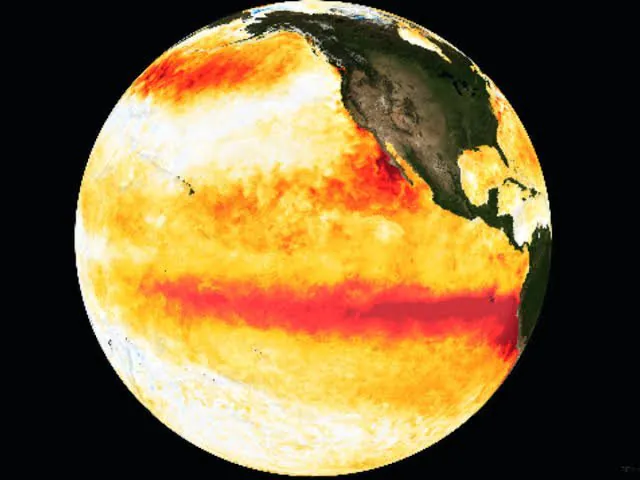
Australia Braces For Deadly “Super” El Nino: Hundreds Of Heat Deaths Predicted As Scientists Warn Of Climate Crisis
- A “super” El Nino event is expected to cause hundreds of heat-related deaths in Australia over the coming months, with NSW predicted to be the worst affected state
- Scientists warn that the record weather event will push temperatures 1.2 degrees Celsius above normal, leading to 44 per cent more extremely hot days than usual
- The Climate Impact Lab forecasts 260 extra heat-related deaths in Australia from this month to February next year, with the global toll predicted to be a staggering 451,000
- Experts say that the “anomalously warm conditions” will resemble the higher temperatures that climate change is projected to deliver 20 years in the future, and will lead to a significant increase in heat-related mortality
The prediction of hundreds of heat-related deaths in Australia over the coming months has sent shockwaves across the country, with scientists warning that the “super” El Nino event will be a deadly glimpse at a climate-crisis-altered future.
The Climate Impact Lab’s forecast of 260 extra heat-related deaths in Australia from this month to February next year is a stark reminder of the devastating impact of climate change on human life.
NSW is expected to be the worst affected state, with 120 predicted heat-related deaths, followed by Western Australia with 72, Queensland with 61, Victoria with 13, and South Australia with 12.
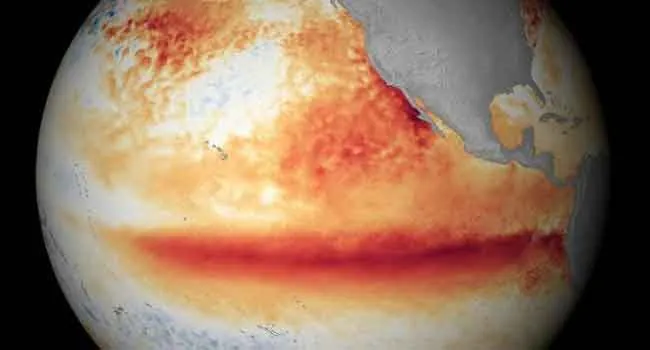
The “super” El Nino event is expected to push temperatures 1.2 degrees Celsius above normal, leading to 44 per cent more extremely hot days than usual.
This will have a disproportionate impact on vulnerable populations, including the elderly, young children, and those with pre-existing medical conditions.



The authors of the report, Michael Greenstone, Tamma Carleton, Genevieve Maricle, and Emily Grover-Kopec, warn that the “anomalously warm conditions” will resemble the higher temperatures that climate change is projected to deliver 20 years in the future, and will lead to a significant increase in heat-related mortality.
The Climate Impact Lab’s research has shown that there is a significant disparity in the relationship between mortality and temperature across income levels.
Regions with similar climate will often have quite different mortality outcomes due to their ability to adapt and mitigate heat-related deaths, such that poor regions tend to see higher numbers of heat-related mortality than their rich counterparts when experiencing similar temperatures.
This is evident in the predicted global toll of 451,000 heat-related deaths, with the worst affected countries being in Africa and Asia.
The Sahel region in Africa is expected to be particularly hard hit, with 31,400 predicted heat-related deaths in Nigeria alone from this month to February.
The “super” El Nino event is not just a natural disaster, but a warning sign of the devastating impact of climate change on human life.
The report’s authors warn that the “anomalously warm temperatures” that most of the globe will see during this El Nino event are a “postcard from the future”; while they feel anomalous now, they will become normal just a few decades into the future.
This highlights the urgent need for adaptation and mitigation strategies to reduce the impact of heat-related deaths.
The report calls for emergency support to be redirected to the worst affected areas, and suggests heat warnings, health outreach to vulnerable populations, cooling centres, and hydration stations as effective tools to reduce the number of deaths.
Analysis: What This Means for Australia is a critical aspect of this report.
The predicted heat-related deaths in Australia are a stark reminder of the need for urgent action to mitigate the impact of climate change. The report’s findings have significant implications for national security, law enforcement, and community safety.
The predicted increase in heat-related deaths will put a significant strain on the healthcare system, and will require a coordinated response from emergency services, healthcare providers, and community organizations.
The report’s authors warn that the “difference with climate change is that there is more time to undertake adaptations to save lives,” and urge decision-makers to take immediate action to reduce the number of heat-related deaths.
Security analysts say that the predicted heat-related deaths in Australia will have a significant impact on community safety, particularly in vulnerable populations.
Law enforcement insiders warn that the increased risk of heat-related deaths will require a coordinated response from emergency services, and will put a significant strain on resources.
Industry observers believe that the report’s findings highlight the need for urgent action to mitigate the impact of climate change, and that this will require a significant investment in adaptation and mitigation strategies.
As Australian Bureau of Statistics data shows, the impact of climate change on human life is a significant concern, and will require a coordinated response from government, industry, and community organizations.
The climate crisis is a critical issue that requires immediate attention, and the predicted heat-related deaths in Australia are a stark reminder of the need for urgent action.
The report’s findings are a wake-up call for Australia, and highlight the need for urgent action to mitigate the impact of climate change.
The predicted heat-related deaths in Australia are a stark reminder of the devastating impact of climate change on human life, and require a coordinated response from government, industry, and community organizations.
As the housing crisis and energy crisis continue to affect Australians, the report’s findings highlight the need for a comprehensive approach to addressing the climate crisis.
The Australian Federal Police and Australian Security Intelligence Organisation will need to work closely with state and territory authorities to address the potential security implications of the predicted heat-related deaths.
Ultimately, the report’s findings are a stark reminder of the need for urgent action to mitigate the impact of climate change, and to protect human life.