
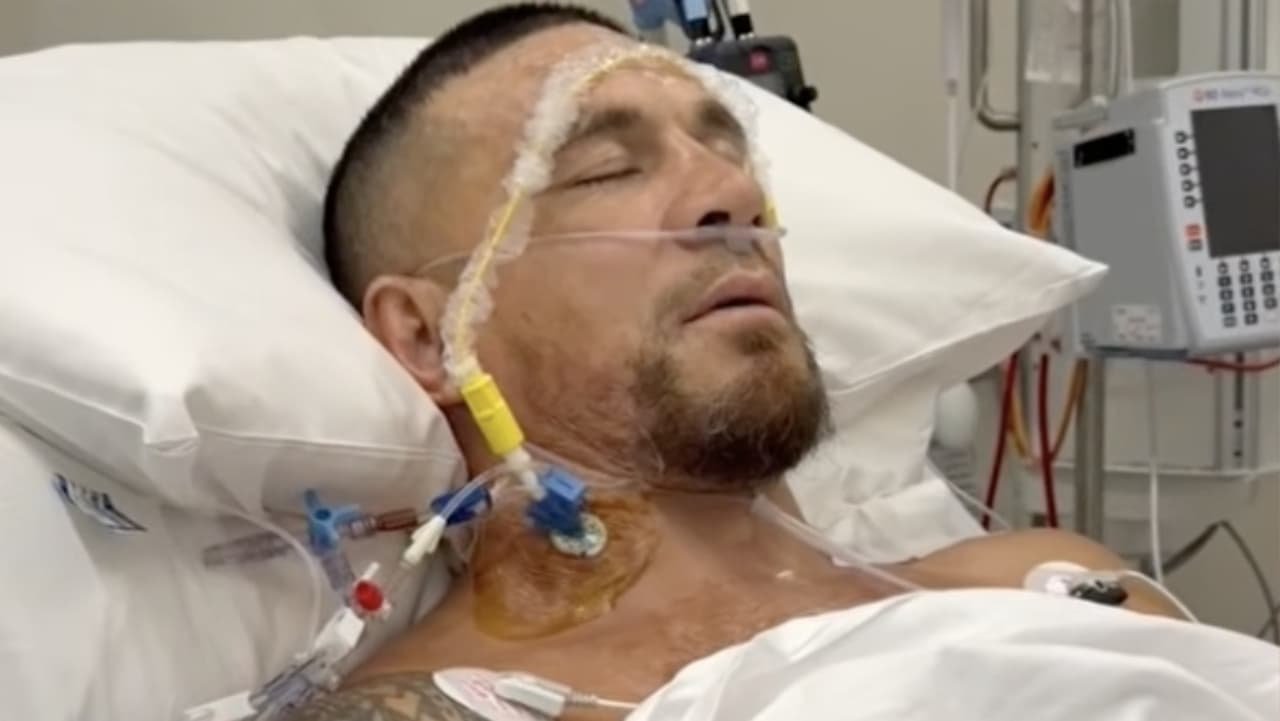
‘It Was About to Pop’: Sonny Bill Williams Reveals Hidden Heart Defect That Could Have Killed Him at Any Moment, and the Terrifying Night He Feared He Would Not Survive
- Cross-code icon Sonny Bill Williams has undergone open-heart surgery after a routine checkup uncovered a heart defect he had carried since birth.
- Doctors described the discovery as a ‘miracle’, warning his enlarged heart had reached 7.5cm and that he fitted the profile of a fit-looking person who suddenly drops dead.
- The 41-year-old described five hours of hallucinations, delirium and pain alone in hospital, saying he did not know if he would make it through the night.
- His surgeon believes the hidden condition had been handicapping him throughout his decorated rugby and NRL career.
He was one of the most physically imposing athletes Australia and New Zealand have ever produced. A two-code champion, a heavyweight boxer, a man whose body looked like it was carved from stone.
Yet inside Sonny Bill Williams’ chest, a silent threat had been ticking away for more than four decades.
Nobody knew. Not his coaches, not his team doctors, not the man himself.
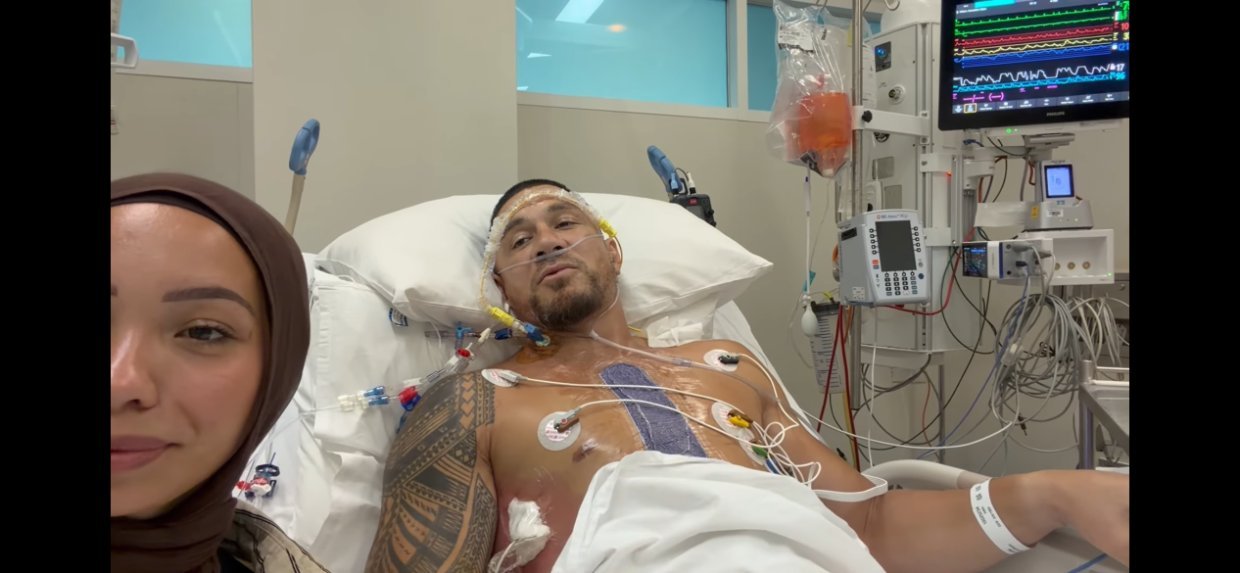
Now Williams has revealed he has gone under the knife for major open-heart surgery, after a checkup he almost certainly expected to be routine exposed a congenital defect that his doctors believe could have ended his life without warning.
The former Bulldogs, Roosters and All Blacks star shared the confronting ordeal in a lengthy YouTube video, documenting the moments before and after the operation, and the harrowing hours in between.
The discovery came at a time when Williams was still recovering from neck surgery only months earlier. A follow-up examination turned up something far more alarming: a problem with his heart that had been present since the day he was born.
Earlier this month he was wheeled into Sydney’s Royal Prince Alfred Hospital, where cardiac surgeon Dr Michael O’Keefe performed what is known as a Ross procedure.
The complex operation removes a damaged aortic valve and replaces it with the patient’s own healthy pulmonary valve. The pulmonary valve is then itself replaced with a donated human valve, effectively making it two open-heart operations rolled into one.
Speaking in the footage, Dr O’Keefe explained that the Ross procedure is one of the few operations in cardiac surgery that can return a patient to a normal life expectancy.
Mechanical or tissue valves, he noted, carry complications that can shorten a patient’s life.
The trade-off is supply. Donated pulmonary valves are effectively human organs and are in short demand.
Because they contain no living cells, the body does not reject them, but they can trigger an inflammatory reaction, which the surgeon said explained why Williams felt as though he had been hit by a truck.
The most chilling detail came from Williams himself.
He said doctors told him his heart had swollen to 7.5cm and was close to bursting, describing his case as the classic scenario of an outwardly healthy person suddenly collapsing and dying.
The 41-year-old spent more than a week in hospital. The second night, he said, was the worst of his life.
Alone in his room, he described lying awake from midnight until 5am, staring at the clock while hallucinating, delirious, shivering and sweating at the same time, racked with pain and unable to sleep.
He admitted he genuinely did not know whether he would survive.
Seven days later, he was speaking to camera with gratitude, saying he could not be more thankful and believed his heart was now stronger and more efficient than when he arrived.
A devout Muslim, Williams repeatedly thanked Allah after waking from surgery, declaring the operation a success and saying his faith had changed his life for the better.
He said he would go through it all again.
Perhaps the most startling revelation is what the condition may have cost him on the field. When Williams asked whether the defect would have affected his career, Dr O’Keefe answered without hesitation that it definitely would have.
The surgeon said the fact Williams performed at such an elite level showed just how extraordinarily fit he must have been to compensate, describing it as playing with a handicap he never knew existed.
Looking back, Williams said he now recognises the signs. By his late 20s, he recalled, he could no longer reach the fitness levels he once took for granted.
At the time, it would have been easy to put that down to age, injury and the brutal toll of professional sport.
Analysis: What This Means for Australia
Williams’ story is not simply a celebrity health scare. It is a stark warning for ordinary Australians who believe that looking fit means being healthy.
According to the figures shared in his case, the type of condition he carried affects around two per cent of the population, yet only a small fraction of those people ever develop symptoms.
That means many could be walking around with a hidden defect, entirely unaware.
For Australian communities, the implications are significant.
heart disease remains among the nation’s biggest killers, according to the Australian Institute of Health and Welfare, and sudden cardiac events in apparently healthy adults routinely devastate families, sporting clubs and workplaces.
The case also raises uncomfortable questions for sport.
If an elite athlete monitored by professional medical staff for nearly two decades could go undetected, what of the weekend footballers, park runners and gym-goers across the country who never see a cardiologist?
There are pressures on the health system too.
Dr O’Keefe’s comments about the scarcity of donated valves highlight the ongoing importance of organ donation in Australia, where demand for donated tissue continues to exceed supply.
And there is the economic dimension. Preventable cardiac deaths among working-age adults carry enormous costs in lost productivity, emergency care and long-term support for grieving families.
Earlier detection, through checkups like the one that saved Williams, is far cheaper than crisis treatment.
Williams himself has made it clear where he wants to go next. He says his mission is now to raise awareness, because doctors told him many people have the same condition and simply do not know.
Cardiac health advocates say a high-profile figure speaking openly could do more to drive men towards checkups than any government campaign. Men, in particular, are notoriously reluctant to see a doctor when they feel well.
Sports medicine observers believe the case will reignite debate over whether more comprehensive heart screening should be standard for athletes at every level, not just in the professional ranks.
Health industry insiders also warn that the reliance on donated tissue for procedures like the Ross operation underscores how vital public participation in the donor register remains, and how one person’s decision can transform another’s future.
Groups such as the Heart Foundation have long urged Australians to have regular heart health checks, particularly from middle age onwards, regardless of how fit they feel.
For Williams, the lesson has been brutal but clarifying. A man who spent his life defying physical limits was, unknowingly, competing with a heart under strain.
He found out by chance. Many others will not be so lucky, unless they go looking.