
‘Not Really, No’: Wealthy Boston Father Convicted of Repeatedly Groping Teenage Girl Through Her Seat on JetBlue Flight While His Wife and Four Children Sat Nearby
- Jonathan Alan Lefman, 48, was found guilty of reaching between seat cushions to touch a 17-year-old girl as his 16-year-old son sat beside him on a Puerto Rico to Boston flight
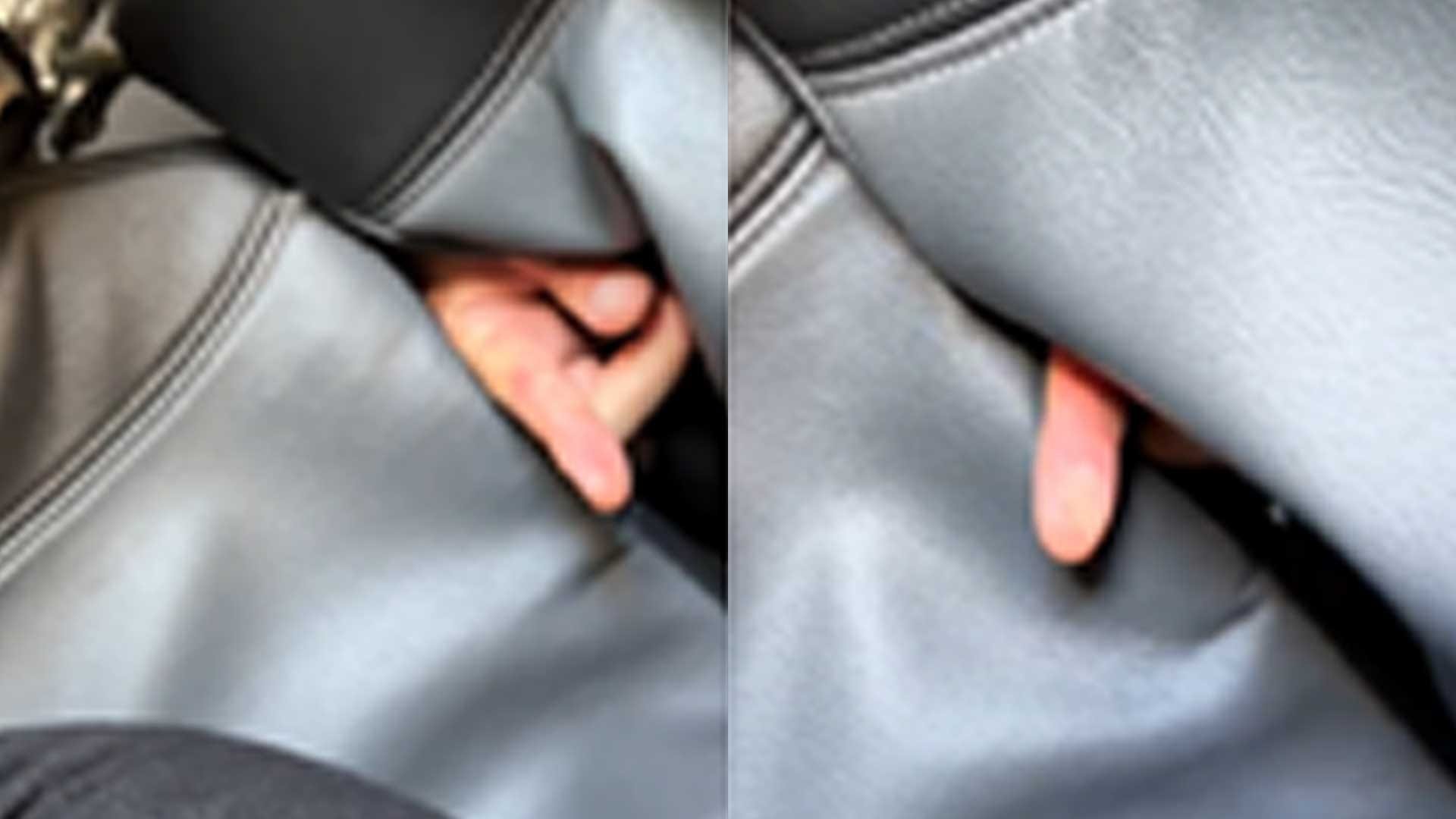
- The brave teenager spotted his reflection in her seatback screen and photographed his fingers poking through the gap beneath her
- Lefman claimed he was ‘stretching’, then told investigators his fingers in the photo didn’t look familiar: ‘Not really, no’
- The case raises urgent questions for millions of Australian families who send children on long-haul and domestic flights every year
She was 17, strapped into an economy seat, thousands of feet above the Caribbean, with nowhere to go.
Behind her, a middle-aged father on a family holiday was allegedly pushing his hand into the narrow gap between her seat back and cushion. Again and again.
What happened next turned a terrifying ordeal into a federal conviction.
The teenager glanced at the glowing monitor in front of her, caught the reflection of a man leaning forward between the seats, and did something remarkable.
She grabbed her phone and captured the evidence.
Now Jonathan Alan Lefman, a 48-year-old from the leafy, affluent Boston suburb of Newton, stands convicted by a US jury of sexually abusing her.
The offending took place on August 30, 2024, aboard a JetBlue service bound for Boston from Puerto Rico. Lefman was not travelling alone.
His wife and four children were on the same flight, and his son, then 16, was seated directly to his left as the abuse unfolded.
Prosecutors told the court Lefman repeatedly forced his hand between the back and base of the seat in front of him to touch the girl’s buttocks.
She had not consented. She did not know him.
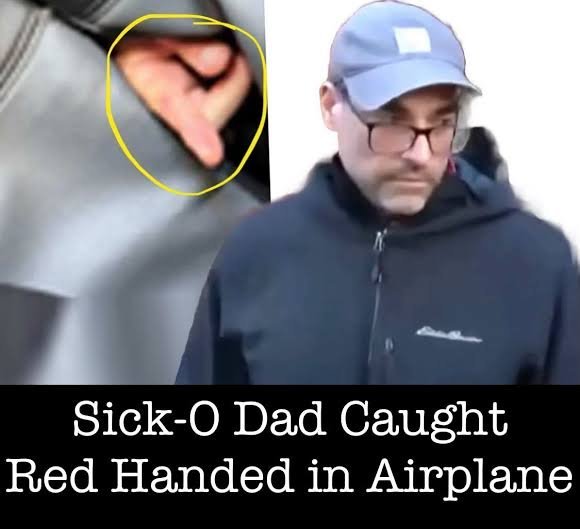
The photograph she took showed his fingers protruding through the gap beneath her.
When the plane landed, an adult female relative of the girl, who had been seated in another row, confronted Lefman directly. She then took the matter to a JetBlue supervisor, producing video of his fingers as proof.
Lefman’s response was to apologise and insist he had simply been stretching.
Later, when federal investigators showed him the image of the fingers jutting through the seat and asked whether they looked familiar, he replied: ‘Not really, no.’
The jury did not believe him.
After a three-day trial, he was convicted of one count of abusive sexual contact within the special aircraft jurisdiction of the United States, the US Attorney’s Office in Massachusetts announced on Thursday.
He will be sentenced on January 12, 2027.
Lefman, who lives in a home valued at around $3.7 million roughly 13 kilometres west of downtown Boston, faces up to two years behind bars, between five years and life on supervised release, and a fine of up to approximately $355,600.
US Attorney Leah B.
Foley said the girl had been ‘simply trying to travel safely aboard a commercial flight’, adding that the verdict ‘sends a clear message that those who prey on vulnerable passengers will face justice’.
Ted E.
Docks, Special Agent in Charge of the FBI’s Boston Division, praised the teenager’s ‘remarkable courage’, noting she had been abused in ‘a confined, public space where she was entitled to feel safe’.
The case lands amid mounting concern about sexual misconduct in the skies.
Aircraft cabins present a uniquely dangerous environment: passengers are packed shoulder to shoulder, lights are dimmed for hours, and victims are physically trapped with their abuser until the aircraft touches down.
Unaccompanied minors and teenagers seated apart from their guardians are particularly exposed. In this case, the girl’s family was on board, but in a different row.
That small separation was enough.
The method itself, reaching through the gap between seat components, is chillingly low-tech. It requires no conversation, no eye contact and, in a darkened cabin, little risk of being seen.
Were it not for a reflection on a screen and a quick-thinking teenager, Lefman may never have faced a courtroom.
Analysis: What This Means for Australia
For Australians, this is far from a distant American story.
Australian families are among the world’s most enthusiastic long-distance travellers, routinely spending 14 hours or more in the air to reach the United States, Europe and Asia.
Teenagers are frequently seated apart from parents when bookings split, or when families decline to pay seat selection fees.
The public safety implications are stark. Long-haul overnight flights, a staple of Australian travel, mean prolonged periods of darkness in which passengers sleep and cabin crew are thinly spread.
These are precisely the conditions offenders exploit.
From a law enforcement perspective, jurisdiction in the air can be murky. In Australia, offences on board aircraft fall under the Crimes (Aviation) Act, and the Australian Federal Police are responsible for policing at major airports.
But a successful prosecution depends heavily on what happens in the minutes after landing: whether the victim reports, whether crew act, and whether evidence is preserved.
The Lefman case demonstrates how crucial that window is. A photograph, a video and a relative willing to confront the accused built the foundation for a conviction.
There is also a broader social cost.
Every case of in-flight abuse erodes trust in air travel and places greater pressure on airlines to train crew to recognise and respond to sexual assault complaints.
For parents, it adds another layer of anxiety to child safety when booking family holidays.
Security analysts say airlines must treat seat allocation for minors as a genuine safeguarding issue rather than a revenue opportunity, ensuring children are not placed beside or directly in front of unrelated adults where avoidable.
Law enforcement insiders warn that in-flight sexual offences remain heavily under-reported, with victims often unsure who to tell, fearful of making a scene in a packed cabin, or simply eager to leave the airport and put the experience behind them.
Child protection advocates believe the case should prompt Australian parents to have frank conversations with teenagers before they fly: that unwanted touching is never acceptable, that cabin crew must be alerted immediately, and that recording evidence, as this girl did, can be decisive.
Industry observers believe carriers serving Australian routes will face growing pressure to publish clear reporting procedures and to guarantee that complaints are escalated to police on arrival, rather than being handled quietly at the gate.
Victim support groups, including services such as 1800RESPECT, stress that anyone who experiences sexual misconduct while travelling should report it as soon as possible, regardless of where the incident took place.
For the girl at the centre of this case, justice has come more than two years after a flight that should have been an ordinary journey home.
Her composure under pressure, and the decision of her relative to speak up, ensured the man behind her could not simply walk away.
Lefman now awaits his fate.