
‘Surely All of Us Have a Role to Play’: Canberra Confronts a Wave of Political Hostility as AFP Logs More Than 1,000 Threats Against MPs After Helen Haines Is Left a Double Amputee
- The nation’s top police officer has drawn a direct line between inflammatory political rhetoric and a surge in threats, abuse and harassment aimed at federal MPs
- More than 1,000 reports of threatening, harassing or offensive behaviour targeting parliamentarians and high office holders were logged in 2025-26
- Independent MP Helen Haines lost both legs after being struck by a car outside her Wangaratta electorate office in what is being described as an alleged attack
- Tanya Plibersek and Barnaby Joyce clashed over where civility ends and censorship begins, exposing a deep fault line in Australian democracy
A regional electorate office should be one of the most ordinary places in Australian public life. A shopfront.
A front desk. A door that constituents walk through to complain about potholes, pensions and paperwork.
Last week, outside one of those offices in the Victorian town of Wangaratta, an elected representative was struck by a car. Independent MP Helen Haines survived.
But the injuries were so catastrophic that both of her legs had to be amputated.
Now the country’s most senior law enforcement figure is warning that what happened in north-east Victoria cannot be viewed in isolation, and that the words spoken in Parliament and on the campaign trail may be feeding something far more dangerous.
Australian Federal Police Commissioner Krissy Barrett has delivered a blunt message to the nation’s political class: heated debate can rapidly morph into real-world threats and abuse.
Her warning arrives alongside a confronting figure.
Across 2025-26, the Australian Federal Police recorded more than 1,000 reports of harassing, offensive and threatening conduct aimed at federal parliamentarians and other high office holders.
That is roughly three reports every single day.
The Commissioner’s intervention, combined with parallel concerns raised by the Australian Security Intelligence Organisation, has forced a rare moment of public soul-searching in Canberra.
Appearing on Sunrise on Monday, Social Services Minister Tanya Plibersek said the security agencies’ warnings should prompt every politician to rethink the way they conduct themselves in public debate.
“You can have strong and robust debate without being mean or cruel,” she said.
Plibersek described the alleged attack on Haines as a moment that must mark a turning point. She argued politicians needed to call out inflammatory behaviour, but stressed this should be done without sliding into censorship.
Crucially, she widened the lens beyond Parliament House. Teachers and principals, shop assistants, flight attendants, even children refereeing weekend sport, she said, are all increasingly on the receiving end of confrontations.
“Surely all of us have a role to play,” the minister said, urging Australians to show more patience in daily life. “Just think can I do this better?
Can I be kinder to the people around me?”
Not everyone on the panel accepted the framing in full.
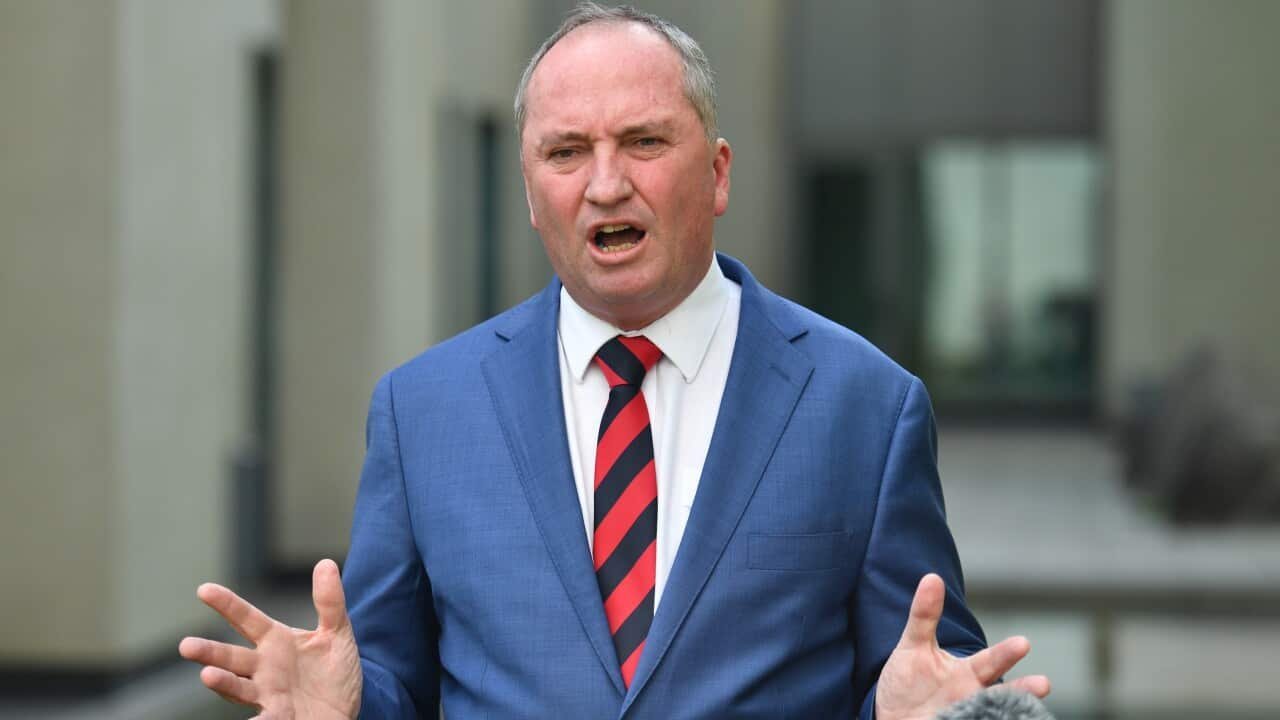
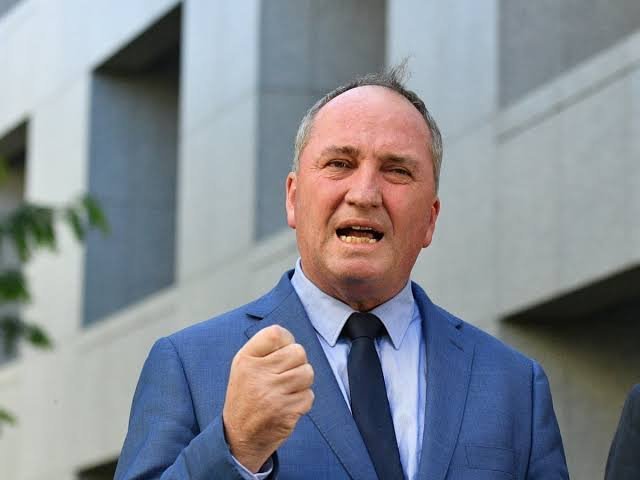
One Nation MP Barnaby Joyce agreed politicians should steer clear of excessive behaviour, but warned that concern over rhetoric must not become a Trojan horse for curbing free expression.
“What I always worry about is when these things start heading towards censorship, because censorship is a huge problem for Australia,” he said. “It’s a huge problem for democracy.”
Joyce rejected the suggestion that politicians alone were to blame for the rising temperature.
He pointed to street demonstrations, specifically the march across the Sydney Harbour Bridge, saying participants waving Palestinian flags and what he called “ISIS-like flags” were “certainly stirring up sentiments”.
People who provoke strong feelings, he argued, should expect a response. “You can do two things at the same time,” Joyce said.
“Tone down what you do without bringing about censorship.”
The collision of views is not new. For several years, Australia’s security establishment has been sounding the alarm about the erosion of civility in public life.
ASIO has repeatedly flagged politically motivated violence as a growing concern, warning that grievances once confined to fringe online forums are increasingly spilling into the physical world.
The pandemic years supercharged that shift. Lockdown protests, vaccine mandate rallies and conspiracy movements created a new generation of activists deeply distrustful of institutions.
Electorate offices were vandalised. Staff were abused.
Some MPs quietly installed additional security.
Since then, divisive flashpoints, from the Voice referendum to the conflict in the Middle East, have kept tensions simmering. Social media algorithms reward outrage, and political actors on all sides have learned that inflammatory clips travel further than measured policy statements.
The Haines incident has now given that abstract danger a devastating human face.
Analysis: What This Means for Australia
From a national security standpoint, threats against elected officials are not simply personal attacks. They strike at the machinery of democracy itself.
When representatives fear for their safety, they may avoid public events, shutter shopfront offices or soften positions on contentious issues. That chills participation and hands power to whoever is most willing to intimidate.
For law enforcement, a caseload exceeding 1,000 reports a year places significant strain on protective resources. The AFP must triage each report, assess credible risk and coordinate with state police, all while juggling counter-terrorism, organised crime and cyber investigations.
Every MP who needs enhanced protection represents a cost borne by taxpayers.
The community impact is perhaps the most sobering. Plibersek’s point about referees, retail workers and flight crews highlights that hostility is not trickling down from Parliament alone; it is woven into everyday interactions.
Retail unions and education groups have long warned of escalating workplace violence, and the economic consequences are tangible, from staff burnout and resignations to the cost of security guards and training.
There is also a democratic recruitment problem. If serving in public office means risking life and limb, fewer capable Australians, particularly women and those from regional communities, may put their hand up.
Security analysts say the most worrying trend is the shrinking gap between online threats and offline action. Where abusive messages once stayed on screens, a small but determined minority now appears willing to turn up in person.
Law enforcement insiders warn that rhetoric does not need to explicitly call for violence to be dangerous. Constant dehumanising language, they argue, can give unstable individuals a sense of permission.
Civil liberties observers, however, echo part of Joyce’s concern. They believe any legislative response must be carefully targeted, warning that broad restrictions on speech could deepen the very distrust that fuels extremism.
Political observers believe the coming weeks will reveal whether Canberra’s shock translates into genuine behavioural change or fades once Question Time resumes its usual combative rhythm.
Discussions around free speech and politician safety are expected to intensify.
For now, one image lingers: a regional MP, doing the most ordinary part of her job, outside the most ordinary of buildings. And a nation left asking how its political climate came to this.