
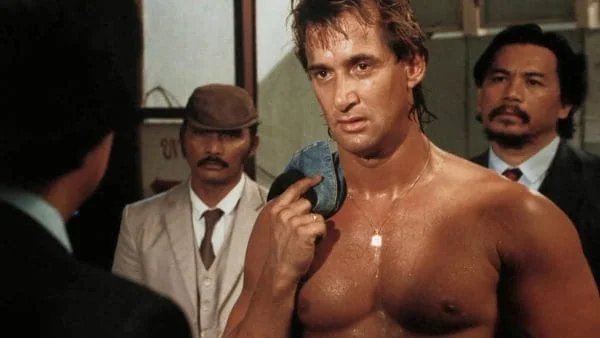
‘First Known Death’ From Unapproved Peptides: Coroner Finds Injections ‘Triggered’ Fatal Collapse of Aussie Action Legend Richard Norton, Calls for Urgent Crackdown
- Martial arts star Richard Norton, 75, collapsed and suffered a cardiac arrest hours after injecting experimental peptides, a Victorian coroner has found.
- Norton had admitted to a clinic nurse that he was using double the prescribed dose of the unapproved compounds on the very day he collapsed.
- The doctor who prescribed the drugs was cautioned by the Medical Board after an expert called his clinical notes ‘sparse, inadequate and perfunctory’.
- The coroner wants the medicines regulator to consider tougher restrictions on the peptides now flooding gyms, clinics and social media feeds.
He had spent half a century surviving brutal fight scenes, punishing stunts and the physical toll of a life spent in combat.
But Richard Norton, the Australian martial artist who trained and worked alongside some of Hollywood’s biggest names, was ultimately felled by something far smaller: a syringe of experimental peptides that had never been approved for use in this country.
His death is now believed to be the first confirmed fatality in Australia linked to unapproved peptide use, a grim milestone that has sent a shockwave through the booming anti-ageing and ‘biohacking’ industry.

Victorian Coroner David Ryan has ruled that the 75-year-old’s death was triggered by complications from his use of two products known as CJC1295 and Ipamorelin.
Norton died at Melbourne’s Alfred Hospital on March 30, 2025, after becoming unresponsive shortly after an injection.
In his findings, the coroner noted Norton had been taking more of the medication than his doctor had prescribed.
The detail is chilling.
On the day he collapsed, Norton told a nurse at the clinic of his prescribing GP, Dr Jerzy Muchnicki, that he had been administering twice the recommended amount.
The nurse advised him to return to the correct dose from the following week.
Within hours of that conversation, he injected again. He never recovered.
Days earlier, Norton had reported that he felt good and believed the therapy was easing his symptoms.
The veteran performer had sought out peptide treatment after living with asthma, osteoarthritis and the after-effects of reconstructive surgery on both shoulders. He told Dr Muchnicki another practitioner had previously prescribed him peptides for fatigue, slow physical recovery, shoulder pain and declining lean muscle.
According to the coroner’s report, the doctor reviewed his history, ordered baseline blood tests and discussed the experimental nature of the therapy, its potential risks, and the absence of approved alternatives.
Norton signed a formal consent form before the injectable compounds were prepared for him by a licensed compounding pharmacy in Queensland.
Norton’s career had made him a familiar face on film sets for decades, working as an actor, stuntman and fight instructor.
He was photographed over the years with stars including Margot Robbie and Tom Hardy, and action icon Chuck Norris publicly mourned his friend on Instagram after his death.
So why are healthy-looking older Australians injecting themselves with substances that have never passed regulatory scrutiny?
The answer lies in an explosion of online wellness culture. Peptides, short chains of amino acids, are being marketed across social media as miracle tools for muscle repair, fat loss, sleep and youthful vitality.
Influencers, gym circles and private clinics have pushed them into the mainstream at extraordinary speed.
CJC1295 and Ipamorelin are promoted for their ability to stimulate the body’s own growth hormone release. Yet neither has been assessed by the Therapeutic Goods Administration for safety, quality or effectiveness.
The regulator has already sounded alarms elsewhere, recently revealing that a patient suffered a torn oesophagus after using an unapproved weight-loss peptide labelled as retatrutide.
Analysis: What This Means for Australia
Norton’s case exposes an uncomfortable truth: products with no proven safety record can still reach Australian patients through legal channels. The TGA told the coroner that various pathways exist allowing doctors to access unapproved peptides, while compounding pharmacies can lawfully prepare them.
That creates a regulatory grey zone.
A patient can do everything apparently by the book, with a doctor, blood tests, a consent form and a licensed pharmacy, and still be handed a substance whose risks are essentially unknown.
For public health, the stakes are rising. As demand surges, overstretched regulators face the task of policing a market that moves at the speed of a viral video.
Self-injection at home, often with no supervision, removes the safety net entirely. Norton’s doubling of his dose shows how easily enthusiasm for a treatment can override caution.
There are economic consequences too. Every serious adverse event lands in emergency departments and intensive care units already under strain, adding to the pressure on the healthcare system.
And there is a social cost. An ageing population chasing vitality, combined with a younger generation steeped in fitness culture, forms a vast potential market for unproven products.
The coroner has now recommended the TGA review the benefits and risks of peptides such as CJC1295 and Ipamorelin, and consider whether further restrictions should be imposed.
The prescribing doctor has not escaped scrutiny. The Australian Health Practitioner Regulation Agency received a notification raising concerns, prompting an investigation by the Medical Board of Australia.
An expert report from clinical professor Alistair Vickery found there was insufficient evidence that the peptide combination was safe, effective or beneficial for humans. However, given Dr Muchnicki’s training, the written consent and Norton’s earlier uneventful peptide use, he concluded the clinical care met a reasonably expected standard.
Where Professor Vickery drew the line was record keeping, describing the notes as sparse, inadequate and perfunctory, and finding performance on that issue fell below expectations.
Dr Muchnicki acknowledged the criticisms, accepted accountability, apologised for errors of judgement and lapses in documentation, and expressed sorrow for the impact on Norton and his family.
He has engaged an educator for one-on-one training in clinical records.
In July, the board found his practice is or may be unsatisfactory, but determined regulatory action was not warranted. He received a caution and conditions were placed on his practice.
Health policy observers say the case may become a turning point. They argue that consent forms and blood tests cannot compensate for a fundamental lack of evidence about what these compounds do inside the human body.
Medical insiders warn that the gap between what is legal and what is safe is precisely where tragedies occur, particularly when patients are given the means to inject at home.
Industry watchers believe pressure will now build on Canberra to tighten access pathways and rein in compounding of unapproved peptides, especially as online marketing grows more aggressive.
For its part, the TGA says it continues to warn consumers and practitioners about the dangers of unapproved peptides and is still assessing whether further regulatory measures are needed.
For those who knew Richard Norton, a man celebrated for his discipline and toughness, the cruel irony is unavoidable. The pursuit of strength and recovery ended in a hospital bed.
The question now is whether his death will finally force Australia to confront the risks hiding inside the wellness industry.