
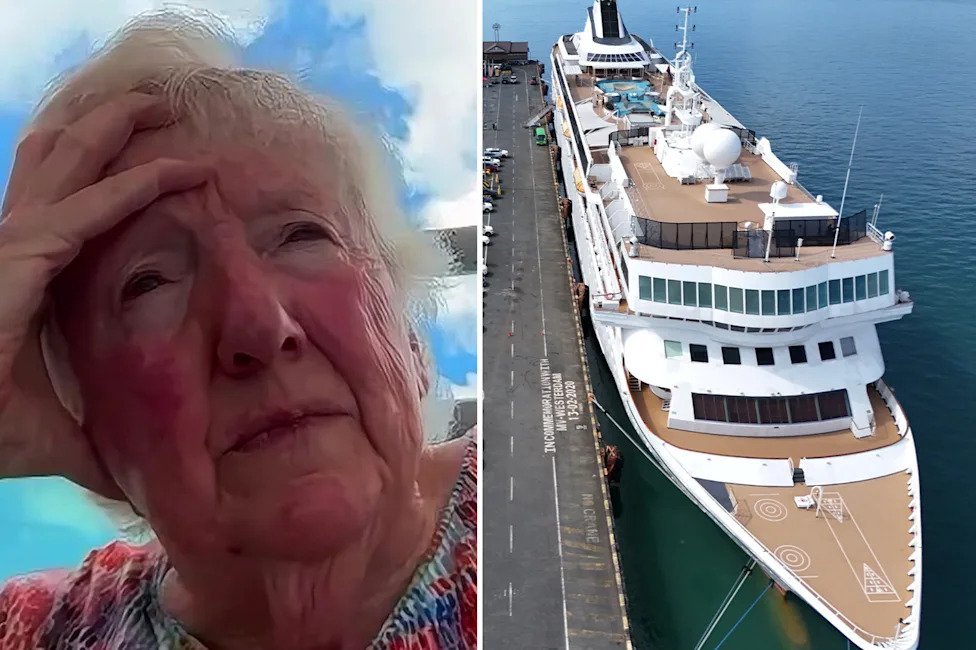
‘Absolutely Devastating’: Australian Retirees Who Poured Their Life Savings and Superannuation Into a Luxury Floating Retirement Left Stranded in Cambodia as Cruise Ship Runs Out of Money
- A former Brisbane teacher handed over more than $63,000 of her superannuation for a dream retirement at sea, but the ship’s finances collapsed weeks before she was due to board.
- More than 200 passengers were ordered off the Villa Vie Odyssey in the Cambodian port of Sihanoukville and given a single chance to retrieve their belongings.
- Residents say they were asked to hand over extra cash for fuel months before the collapse, with some paying hundreds of thousands of dollars more.
- The operator blames fuel costs that it says have more than tripled because of the war in Iran, and the crisis is now hitting cruise giants operating in Australia.
It was sold as the ultimate escape from an ordinary retirement: years at sea, hundreds of exotic ports, and a cabin to call home while the world drifted past the porthole.
Instead, Australians who bet their savings on that promise are now counting their losses in a Cambodian port, or watching helplessly from home as the dream disappears.
For Queensland woman Lisa McKay, the blow landed before she had even set foot on the deck.
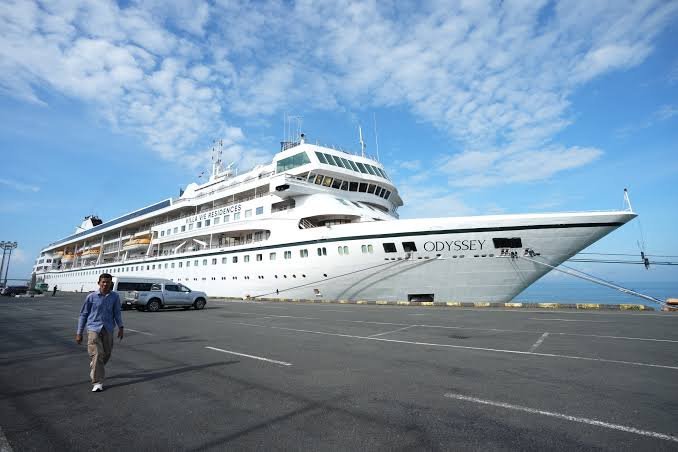
The former Brisbane school teacher withdrew $63,500 from her superannuation and paid it by direct bank transfer to secure her place aboard the Villa Vie Odyssey, a residential cruise ship billed as an alternative way to spend your later years.
She was due to join the vessel in Kuala Lumpur on November 15.
Weeks out from departure, she learned that passengers had been ordered off the ship in Cambodia because the company could no longer afford to run it.
Ms McKay described the voyage as the trip of her lifetime. She said she could not afford to lose the money and called the experience utterly devastating.
She now believes her chances of a refund are extremely slim, and pointed out that travel insurance does not cover boutique vessels like the Odyssey.
The collapse came on Tuesday. During what should have been a routine stop in Sihanoukville, more than 200 residents were told to pack up and leave.
Among them was Brisbane passenger Rina Cavazza, who had paid $170,000 to live aboard and still had 18 months of her voyage remaining.
She has since checked into a local hotel and is arranging her trip home to Brisbane. Ms Cavazza said it had been a sad period for many on board.
Residents had been told almost nothing about what comes next, she said, apart from the fact that they would get one final opportunity to go back aboard and collect their possessions.
According to the Cambodian government, most of those on the Florida-based ship came from the United States and Canada. Some had sold their homes to raise the hundreds of thousands of dollars needed for a berth.
Perhaps most troubling is Ms Cavazza’s account of what happened in the months before the collapse. She said residents were asked to contribute money towards fuel as early as February, and again shortly before the ship docked in Cambodia.
Some passengers, she said, paid hundreds of thousands of dollars extra to keep the vessel moving.
Operator Villa Vie Residences, which is based in the US, put the blame squarely on soaring fuel prices.
The company said monthly fuel costs per cabin had averaged around US$1,800 but had climbed to between US$6,000 and US$8,000 in parts of Asia because of the ongoing war in Iran.
It said it could not pass increases of that size on to residents, and that the resulting shortfall had made its operating model financially unsustainable.
The Odyssey’s troubles did not begin in Asia. The ship left Belfast in 2024 after a months-long delay before departure, which frustrated residents waiting to begin their journey.
It set off on a three-and-a-half-year circumnavigation promising 425 destinations across 147 countries.
The residential cruise model depends on large upfront payments and fixed long-term pricing, which leaves very little room to absorb a sudden shock. When the cost of fuel prices exploded, that model came under enormous strain.
Ms McKay says she saw warning signs. Before handing over her money, she read negative comments online and raised her concerns with a booking agent.
In messages seen by the ABC, the agent told her she would not be working for the company if she believed it was in trouble. The agent also said that if the ship ever stopped operating, the company would arrange another vessel.
That replacement has not materialised.
Analysis: What This Means for Australia
The Odyssey saga exposes a growing financial danger for older Australians: retirement savings moving into overseas ventures that sit almost entirely outside local consumer protections.
Superannuation exists to fund decades of life after work.
When a retiree draws a large lump sum and sends it offshore to a foreign operator, the safety nets most Australians take for granted, from insurance cover to domestic regulators, may offer little or no help.
The financial pain is only part of the damage.
Retirees who sold homes or drained savings may come back with fewer assets, higher housing costs and a greater reliance on the age pension, adding pressure to a system already strained by the cost of living crisis.
Australians stranded overseas also face immediate practical problems: finding accommodation, booking flights and getting their belongings home. That is exactly the kind of situation in which travellers are urged to monitor Smartraveller and register their whereabouts.
The fallout is spreading across the wider cruise industry. Carnival Corporation, the world’s largest cruise operator, says higher fuel prices have added about US$150 million to its 2026 outlook.
It recently announced plans to halve its Australian fleet next year.
Royal Caribbean reported a 27 per cent year-on-year rise in fuel costs in the second quarter of 2026, from US$279 million to US$355 million.
Neither Royal Caribbean nor Disney now operates full-time in Australia.
For port cities that rely on cruise tourism, the warning is clear: fewer ships could mean fewer visitors, and less money for local businesses.
Consumer advocates say anyone considering a large offshore travel or lifestyle purchase should check whether the operator is subject to any Australian oversight.
Guidance from the Australian Securities and Investments Commission and the Australian Competition and Consumer Commission can help would-be buyers understand where their rights begin and end.
Industry observers believe the Odyssey’s collapse shows how fragile small operators can be when they depend on long-term, prepaid pricing during a volatile global energy market.
Without the cash reserves of the major cruise lines, observers say, even a short spike in fuel prices can become an existential threat.
Financial planning experts warn that a request for extra money mid-contract, especially one framed as an emergency, should be treated as a serious red flag.
They say passengers who were asked to fund fuel costs should keep detailed records of every payment in case of future claims.
Retirement specialists say the case highlights the risk of putting a large share of retirement savings into a single non-refundable purchase. They urge retirees to seek independent financial advice before making a payment that cannot easily be recovered.
For now, the Australians caught up in the collapse face an uncertain wait. Ms Cavazza is preparing to fly home, and Ms McKay is hoping for answers about her money.