
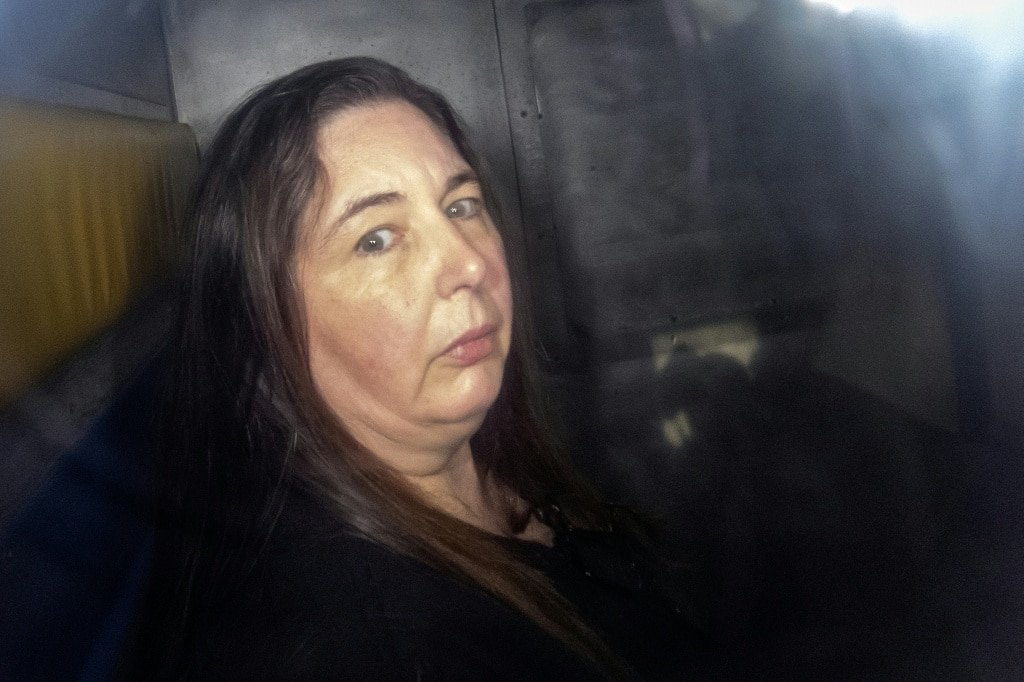
‘The Worst of the Worst’: Mushroom Killer Erin Patterson Will Die Behind Bars as Appeal Judges Tear Up Her Parole Lifeline and Reject Bid to Overturn Triple Murder Convictions
- Erin Patterson has been stripped of any hope of freedom after Victoria’s Court of Appeal resentenced her to life imprisonment with no possibility of parole.
- Judges rejected every argument her lawyers raised, including claims that jurors were compromised by staying in the same hotel as the lead homicide detective.
- She now joins a tiny group of Australian killers serving true life sentences, a category that includes Port Arthur mass murderer Martin Bryant.
- Patterson showed no emotion as she watched on a screen from her isolated maximum-security cell, while police and supporters of her estranged husband smiled outside court.
She will never walk free.
The woman who served a deadly beef Wellington to the people who had welcomed her into their family will spend every remaining day of her life inside a Victorian prison, after the state’s most senior judges ruled that a door to parole should never have been left open.
For the families of Don and Gail Patterson and Heather Wilkinson, the ruling closes a chapter that has dragged on for more than three years. For Australia’s justice system, it sends an unmistakable message about how the nation punishes calculated, intimate betrayal.
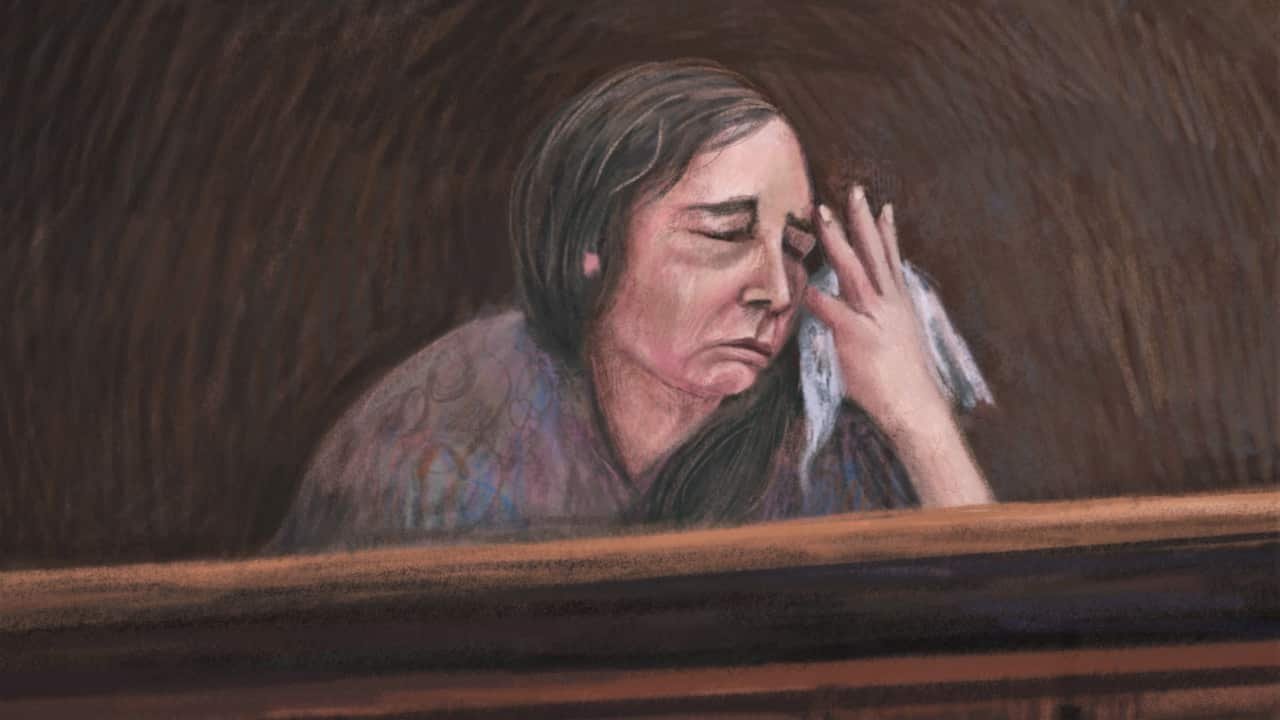
A three-judge bench of the Court of Appeal, comprising Justice Stephen McLeish, Justice Lesley Taylor and Justice Peter Kidd, handed down two rulings in Melbourne’s Supreme Court.
The first dismissed Patterson’s challenge to her convictions. The second upheld a prosecution appeal and erased the 33-year non-parole period she had been given.
Patterson chose not to attend in person.
She appeared only as a small image on a large screen, seated in a stark white room at the Dame Phyllis Frost Centre, glancing toward a window and at times closing her eyes as Justice McLeish read the court’s reasons.
The packed courtroom fell silent. Then came an audible gasp when it became clear the parole period was gone.
Homicide Squad detectives, prosecutors and supporters of Patterson’s estranged husband Simon were seen grinning broadly as they left the building.
Her lawyers had argued seven separate grounds of a miscarriage of justice. The court granted leave to appeal on just two, refusing the remaining five outright, including complaints about the lead prosecutor’s manner of cross-examination.
The two grounds that were heard both failed.
The first, and the centrepiece of the defence case, was that jurors deliberated while housed in the same accommodation as the case’s lead homicide detective and members of the prosecution team.
Barrister Richard Edney had described the arrangement as “catastrophic”. But under questioning, he conceded there was no evidence anyone had actually spoken to the jury.
The judges found there was no realistic chance the jury had reached a wrong verdict as a result.
The second ground, an attack on the admissibility of mobile phone data presented at trial, was also rejected.
On sentence, Justice McLeish said Patterson’s offending was marked by an elaborate web of deception, pointing to her fabricated cancer diagnosis, her destruction of evidence, the careful planning of the lunch, and what he called a cruel betrayal of relatives who trusted her.
Her conduct, he said, must be condemned in the strongest possible terms, and parole was simply not appropriate.
The road to this moment began in July 2023 at Patterson’s Leongatha home in Victoria’s South Gippsland, where she served a meal laced with death cap mushrooms.
Don and Gail Patterson, her former parents-in-law, died, as did Gail’s sister Heather Wilkinson. Heather’s husband Ian, a local pastor, survived after weeks fighting for his life in hospital.
After a trial that gripped the nation, Justice Christopher Beale sentenced Patterson in September 2025 to three life terms for the murders and 25 years for the attempted murder of Ian Wilkinson.
Crucially, he set a minimum term of 33 years, meaning she could have been released in 2056, aged 82.
Justice Beale justified that lifeline by pointing to the unusually harsh conditions Patterson faces. Held in the maximum-security Gordon Unit for her own safety, she spends between 22 and 24 hours a day alone.
Her lawyers said meals arrive through a trapdoor, fresh air is scarce, and the only fellow inmate she is permitted to speak with is a convicted terrorist.
She passes the time crocheting in her cell.
The Office of Public Prosecutions Victoria argued the sentence was “manifestly inadequate”, insisting Justice Beale erred because Corrections Victoria reviews her conditions monthly, her notoriety would eventually fade, and she has never shown a shred of remorse.
The appeal judges agreed.
Analysis: What This Means for Australia
This ruling reaches far beyond one prisoner.
It reshapes the boundaries of sentencing laws in Australia, confirming that the cold, premeditated killing of family members can sit alongside the nation’s most notorious massacres in the hierarchy of crime.
Whole-of-life sentences remain extraordinarily rare. Only a handful of offenders nationwide are serving them.
By placing Patterson in that company, the Court of Appeal has signalled that the method of murder matters less than the depth of planning and betrayal behind it.
The decision also exposes uncomfortable questions for law enforcement and court administrators.
While the jury accommodation argument failed, the very fact that jurors and a key police witness shared a hotel in one of Victoria’s highest-profile trials is likely to prompt reviews of how courts manage sequestered juries in regional cases.
Then there is the prison system itself.
Evidence aired in court revealed that staffing shortages at the Dame Phyllis Frost Centre often left Patterson unable to access the exercise yard, treadmill or library.
That raises broader concerns about prison overcrowding and resourcing pressures across Victoria’s corrections network, costs ultimately borne by taxpayers.
The financial fallout continues too.
Patterson’s lawyers are listed as a mortgagee over the Leongatha house, which a 2025 Supreme Court order prevented her from selling because it may be needed to meet compensation claims.
She inherited around $2 million from her grandmother in 2006, along with a second inheritance from her mother, wealth she once used to give interest-free loans to Simon Patterson’s siblings.
Legal analysts say Patterson’s remaining options are now vanishingly thin. Victoria’s 2019 reforms allow a second appeal only where fresh and compelling evidence emerges, something experts describe as exceptionally rare.
A bid to the High Court of Australia would face an even steeper climb.
Court observers point to Cardinal George Pell’s successful High Court appeal in 2020 as the rare exception that proves the rule. Without a powerful new legal argument, they believe, special leave is unlikely.
Law enforcement insiders say the ruling vindicates the painstaking work of Victoria Police’s Homicide Squad, whose investigators untangled the deceptions Patterson spun in the days after the lunch.
Criminal justice commentators warn, however, that the debate over her isolation will not disappear.
Prosecutors and defence lawyers both accepted she is likely to remain in solitary conditions for years, and human rights advocates have long questioned the long-term use of such confinement in Victorian prisons.
For now, the woman once described by former colleagues as quick to snap will remain behind the walls of the Gordon Unit. There is no release date.
There never will be.