
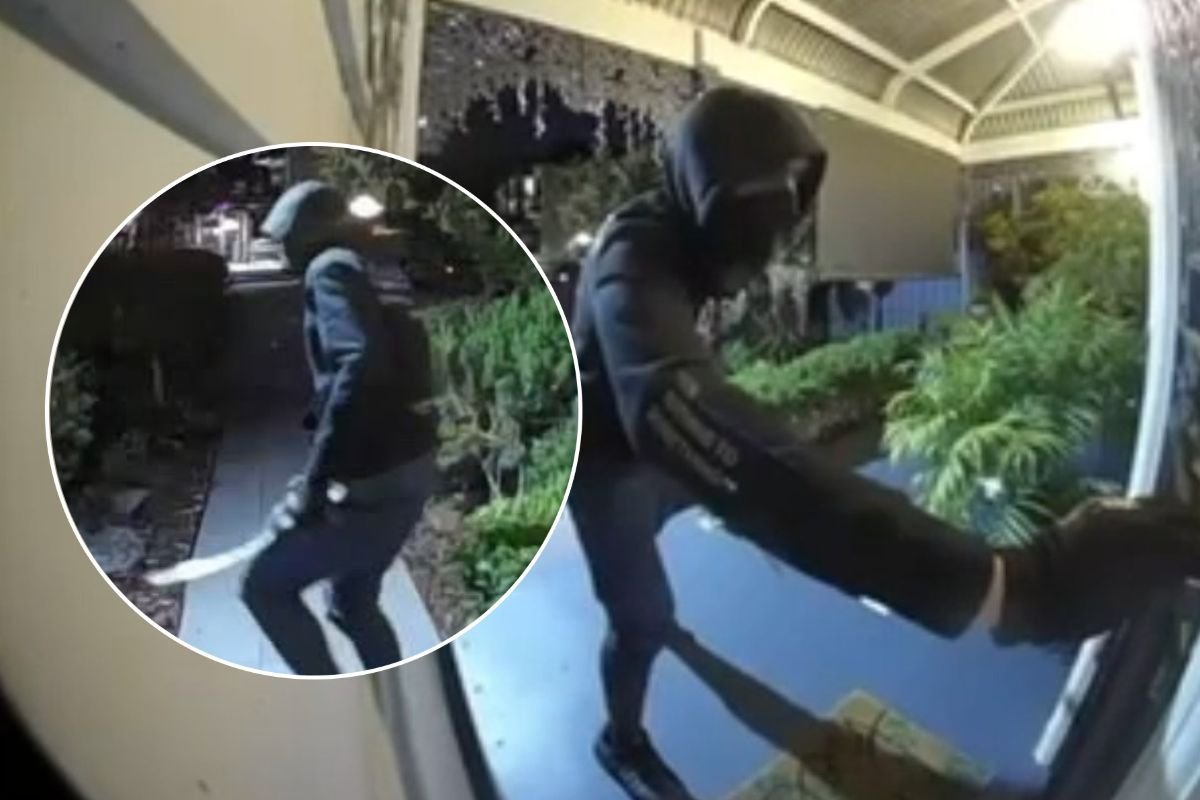
‘He Towered Over Us With a Massive Machete’: Port Melbourne Dad Breaks His Hand Fighting Off Masked Teen Intruder Who Was Allegedly Freed From Jail Just Days Earlier
- A father of three fought a masked, machete-wielding intruder at his family’s front gate before dawn while his three sons, all under five, slept inside.
- The 17-year-old alleged attacker was left with a broken jaw and a smashed nose. The dad suffered a broken hand.
- The teen had allegedly been released after serving only 49 days behind bars, one week before the terrifying confrontation.
- The family has not slept since. They now keep baseball bats within reach and lock every door, and the father says government has let them down “time and time again”.
It was still dark when the dog started barking.
Within minutes, a quiet Port Melbourne street had become the scene of a desperate struggle. A grandmother stood face-to-face with a masked man raising a machete.
Her son and husband fought with their bare hands to stop him getting through the front gate.

Inside the house, three little boys, the eldest not yet five, were metres from the violence.
For Daniel Shoppee, a 38-year-old father who has lived on Farrell Street since he was a child, the ordeal has shattered something he can never get back: the belief that his family is safe in their own home.
The nightmare began at around 5.30am on Wednesday. The family’s dog raised the alarm, and Mr Shoppee’s parents, who live in the household, went to investigate.
His wife then shook him awake and told him something outside was not right.
Mr Shoppee and his father noticed an unfamiliar car parked out the front. As the two men walked towards it, the driver eased away down the street.
They trailed the vehicle for a short distance before giving up and heading back.
That was when they heard his mother scream.
The men sprinted home and found her confronted just inside the front gate by a hulking, masked figure gripping an enormous blade. She managed to slip out onto the street and slam the gate behind her.
Her son and husband then threw their weight against it to keep it shut.
According to Mr Shoppee, the intruder held the machete high above his head and screamed at the family, promising he would not harm them if they let him through.
They refused. Mr Shoppee reached over the gate, seized the man’s arm and knocked the weapon down.
The intruder allegedly forced his way through anyway, and a brutal fistfight with father and son followed.
When it was over, the attacker had a broken jaw and a badly damaged nose. Mr Shoppee’s hand was broken.
His wife had already called police, and officers arrived within minutes to arrest the suspect.
The alleged intruder was a 17-year-old boy from the Maribyrnong area. He was taken to hospital before being charged with attempted aggravated burglary and possessing a prohibited weapon.
He was remanded in custody and will face a children’s court at a later date.
Mr Shoppee said the attacker was far bigger and heavier than him. He described standing with his mother on one side, his father on the other, and the armed man advancing on all three of them.
He said it felt as though it lasted for hours.
Asked why he chose to fight, his answer was simple. The adrenaline takes over, he said, and a father protects his family.
The most disturbing part of the story may be what allegedly happened before that morning.
It is understood the same teenager is linked to a series of attempted break-ins in which he was armed with a meat cleaver. He is also alleged to have broken into the Port Melbourne home of an elderly woman and driven off in her car.
For that offending, he reportedly spent only 49 days in custody. He was released a week before he allegedly turned up at the Shoppee family’s gate with a machete.
The case lands at a volatile moment for Victoria. Over the past two years, youth crime has become one of the most heated political issues in the state.
Aggravated burglaries, home invasions and carjackings have dominated headlines.
The state government has repeatedly changed course on bail laws and moved to outlaw machetes after a string of high-profile blade attacks shocked the public.
Despite those reforms, families like the Shoppees say the promises have not translated into safety on their doorstep.
Analysis: What This Means for Australia
This was not a random burglary gone wrong.
If the allegations are proven, it shows a revolving door: a young offender accused of repeat armed offending, released after weeks rather than months, and allegedly back on the streets with a weapon within days.
The implications go well beyond one Melbourne suburb.
Law enforcement agencies across the country face the same challenge of managing a small cohort of repeat young offenders who are responsible for a disproportionate share of serious crime.
Data published by the Crime Statistics Agency Victoria has tracked rising concern around youth offending, and police in other states have reported similar patterns.
The community toll is severe and lasting. Mr Shoppee said his wife is now too frightened to walk their children to the supermarket, even in broad daylight.
The family barricades every entry point and keeps baseball bats nearby. Nobody in the house slept the night after the attack.
When ordinary families feel they must arm themselves, public trust in the justice system is eroding. There are economic consequences too.
Home security spending rises, insurance premiums climb, and the appeal of once-tranquil neighbourhoods suffers, adding pressure to an already strained cost of living.
Then there is the danger of residents taking matters into their own hands. Mr Shoppee acted in what he describes as pure self-defence.
Experts fear that a growing sense of abandonment could push others towards confrontations that end in tragedy.
Law enforcement insiders warn that cases like this put enormous strain on frontline officers. Many feel they repeatedly arrest the same young people, only to see them released before the paperwork is finished.
Criminologists and youth justice observers point to a genuine tension. Locking up children can entrench criminal behaviour, but failing to manage high-risk offenders leaves victims exposed.
Many argue the missing piece is intensive supervision and support immediately after release, which is the window in which reoffending risk is highest.
Community safety advocates believe the public will judge reforms not by what is announced at press conferences but by whether families feel safe opening their front door.
On that measure, they say, the system is still falling short.
Security analysts also note that the growing use of large blades in home invasions has fundamentally changed the risk for householders. A disturbance that once might have ended with a fleeing burglar can now become a life-or-death encounter.
For Mr Shoppee, the policy debate is deeply personal. He grew up in the same house, roaming the neighbourhood freely as a boy.
He says it is a tragedy that his sons will not know that same freedom.
He describes a mix of anger and overwhelming sadness, along with bitter disappointment at what he sees as repeated failures by those in power.
The alleged attacker remains in custody. The Shoppee family, meanwhile, is left to lock the doors, keep the bats close, and wonder whether the next knock in the night will come.