
‘A Very, Very Difficult Situation’: Agonising Wait for Families as Two Australians Remain Missing After High-Speed Train Horror Near Madrid Kills at Least 69
- Two Australian citizens are unaccounted for after a catastrophic high-speed rail collision near the Spanish capital.
- At least 69 people have been confirmed dead after one train ploughed into another, with fears the toll could climb further.
- Australian consular officials are working through the night to establish whether the pair were aboard either train.
- Senior federal MP Chris Bowen has acknowledged the “very, very difficult” ordeal facing the families waiting for news.
Somewhere in Australia tonight, two families are staring at their phones and waiting for them to ring.
They are praying for a text, a missed call or a voice message. Anything that proves their loved ones are alive.
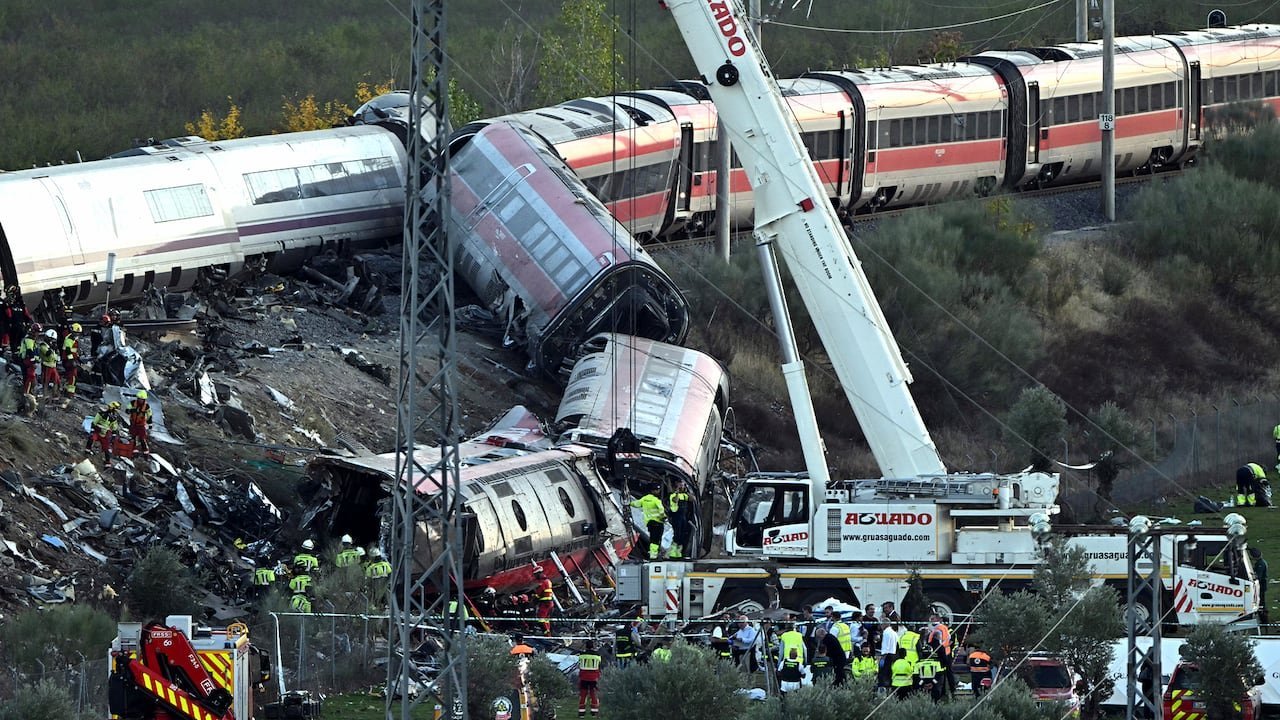
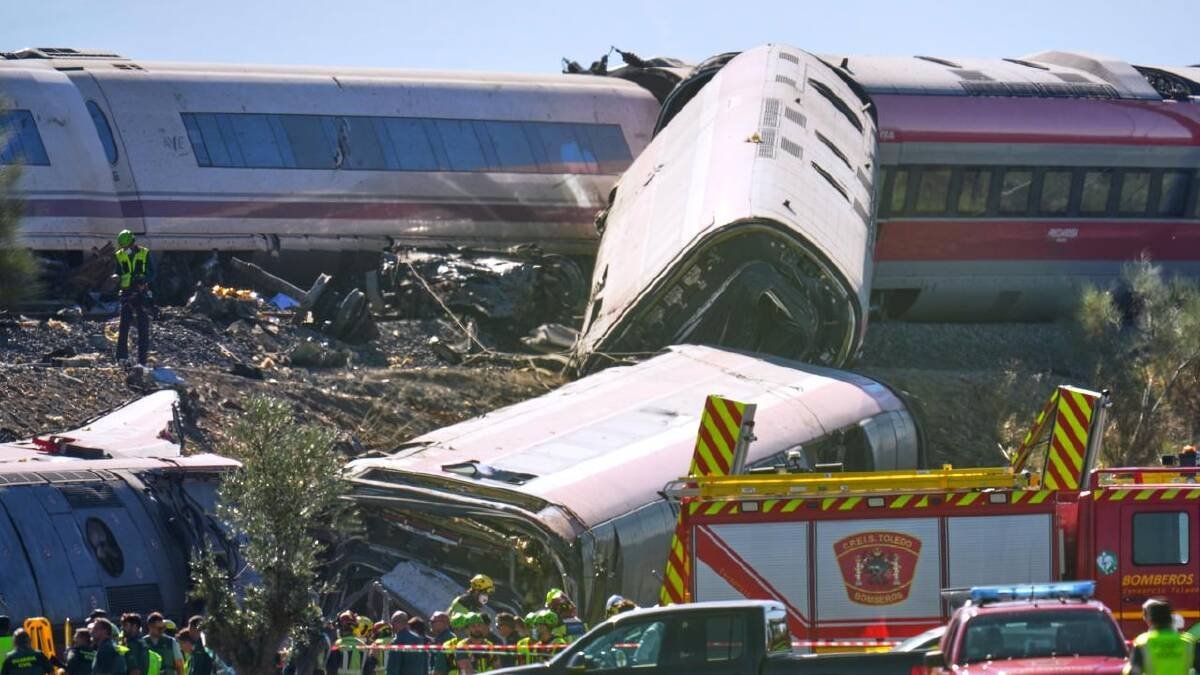
Because 17,000 kilometres away, on a stretch of high-speed railway outside Madrid, a scene of devastation is still being picked through by emergency crews.
And two Australians remain unaccounted for.
Spanish authorities say at least 69 people were killed when one train slammed into another on the busy line near the capital. It is one of the deadliest rail disasters Europe has seen in years.
Back home, the Department of Foreign Affairs and Trade has confirmed it is urgently trying to verify the safety of two Australian citizens believed to have been caught up in the crash.
It remains unclear whether the pair were actually on board either train. Officials have not released their names, ages or home states, and are not speculating on their condition.
Chris Bowen, the senior federal Labor MP, said Australia’s consular team on the ground in Spain was working flat out to track the two down.
He described the situation as an extremely difficult one and stressed that officials were doing everything possible to get answers.
“Our consulate officials in Spain are working very hard,” he said.
For now, that is all the families have to cling to.
Spain has long been held up as a global showpiece for high-speed rail. Its network is among the most extensive in the world, carrying millions of passengers between major cities at speeds that rival air travel.
For many Australian travellers, a fast train out of Madrid is a highlight of a European holiday. It is seen as clean, efficient and, above all, safe.
That reputation has been shattered before. In 2013, a high-speed train derailed on a sharp bend near Santiago de Compostela in Spain’s north-west, killing around 80 people.
Investigators later linked that disaster to excessive speed, and the tragedy prompted years of soul-searching over safety systems on the nation’s rail lines.
Now, more than a decade on, Spain is once again counting bodies beside a twisted railway line.
Questions about how two trains came to be on a collision course will dominate the coming weeks, as Spanish investigators begin the painstaking task of reconstructing the final moments before impact.
But for Australia, the more immediate question is human. Who were the two citizens?
Where were they travelling? And are they safe?
Analysis: What This Means for Australia
This disaster is a brutal reminder of just how exposed Australians are when tragedy strikes overseas.
Australians are among the most enthusiastic international travellers on the planet, and Europe remains a magnet for holidaymakers, backpackers, students and business travellers alike. Spain in particular draws a steady stream of visitors from Down Under every year.
When disaster hits, the burden falls squarely on Australia’s consular network.
These are often small teams in embassies and consulates who must suddenly liaise with local police, hospitals, morgues and rescue services, frequently across a language barrier and in the middle of chaos.
Identifying victims after a high-impact crash can be slow and harrowing. Families back home can be left in limbo for days, caught between hope and dread, while officials work through passenger records and medical reports.
There is also a broader public safety lesson.
Travellers who register their plans through Smartraveller and keep in regular contact with loved ones make it significantly easier for authorities to locate them quickly in an emergency.
Too often, consular staff are forced to start from scratch, chasing down travel itineraries and booking details while families wait.
The incident will also renew attention on travel safety and the protections available to Australians abroad, including the critical importance of comprehensive travel insurance. Medical treatment, repatriation and emergency travel for relatives can quickly run into tens of thousands of dollars.
And for the wider Australian community, particularly the many families with Spanish heritage or relatives living in Europe, the news has triggered a wave of anxious phone calls and frantic social media checks.
Consular insiders say situations like this test the system to its limits. Every hour counts, and every scrap of information, whether a ticket booking, a hotel check-in or a phone signal, can help narrow the search.
Transport safety analysts warn that while rail remains one of the safest ways to travel, collisions at high speed leave very little margin for survival. They say the force involved when two trains meet on the same line can be catastrophic, which often makes rescue and identification efforts extremely complex.
Industry observers believe the crash will inevitably reignite debate across Europe about signalling technology, automated braking systems and the human factors that can turn routine journeys into disasters.
Foreign policy watchers note that Australia’s response to overseas tragedies is frequently judged by how swiftly and compassionately families are kept informed. They say clear, regular communication can make an unbearable wait marginally easier to endure.
Former diplomats have previously observed that consular work during mass-casualty events is among the most gruelling assignments in the foreign service, combining logistics, diplomacy and raw human grief.
For now, the search goes on.
Australian authorities have not given up hope of confirming the pair’s whereabouts, and efforts to determine whether they were on either of the doomed trains are continuing.
Anyone concerned about friends or family who may have been travelling in Spain is urged to try contacting them directly first, and then to call DFAT’s 24-hour Consular Emergency Centre on 1300 555 135 from within Australia, or +61 2 6261 3305 from overseas.
In two households across the country, the phone is never far from reach tonight.