
Weekend of Carnage: Six Dead and Four Fighting for Their Lives as Horror Crash Spree Turns Victoria’s Roads Into a Killing Field, With Three Motorcyclists and a 75-Year-Old Grandmother Among the Victims
- Six people killed in under 48 hours across Victoria, with four lives lost on Saturday alone, from Melbourne’s inner west to the state’s rural heartland
- Three young motorcyclists, aged 21, 25 and 26, among the dead, while a pillion passenger remains in a critical condition
- A 75-year-old woman was mown down at a pedestrian crossing near Warrnambool in broad daylight
- Two 17-year-old boys hospitalised after an e-bike and car collided near Geelong, as a driver is charged over a cyclist’s death months earlier
They left home expecting to come back.
A young man heading out on his motorbike on a Friday afternoon. A grandmother crossing the road at lunchtime.
A driver making his way home through the dusk. By Sunday morning, six Victorian families had received the knock on the door that every parent, partner and child dreads.
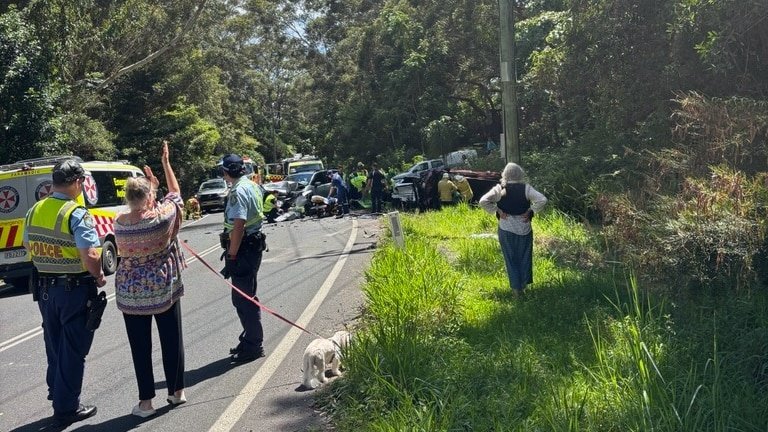
In one of the bloodiest weekends on the state’s roads this year, six people were killed and four more were left seriously injured in a relentless series of crashes that stretched from the inner suburbs of Melbourne to the Great Ocean Road region and the goldfields of central Victoria.
The carnage began on Friday afternoon in Footscray, in Melbourne’s inner west. A 25-year-old motorcyclist was killed when his bike and a car collided where Ballarat Road meets Dawson Avenue.
The car’s driver, a 59-year-old man from Mount Waverley, was arrested and questioned at the scene. He has since been released while police continue their enquiries.
Just hours later, at around 7.15pm, tragedy struck again on the Black Spur near Healesville, the notorious stretch of winding mountain road through the Yarra Ranges.
A 21-year-old rider from Somerville died at the scene after his motorbike and a car collided. Police will prepare a report for the coroner.
Saturday brought no reprieve. It was, by any measure, the darkest day of the weekend.
Shortly after midday in Dennington, on the fringe of Warrnambool, a 75-year-old woman was struck by a car at a pedestrian crossing. She could not be saved and died where she fell.
The driver, a 53-year-old man, stopped and tried to help her. He is expected to be interviewed by detectives.
As evening fell on the Mornington Peninsula, a 26-year-old man from Nunawading lost control of his motorbike at about 6.20pm and slammed into a tree in Blairgowrie.
He was killed. His passenger, a 29-year-old local man, was airlifted to hospital with life-threatening injuries and remains in a critical condition.
At almost the same moment, emergency crews were racing to Maryborough in the state’s west, where two cars had collided. A 47-year-old local man behind the wheel of one vehicle died at the scene.
His passenger, a 75-year-old Maryborough woman, was flown to hospital, where she remains in a serious condition.
Roughly 90 minutes later, the sixth life was lost. In Werribee, in Melbourne’s west, the driver and only occupant of a ute crashed into a tree and died.
He has not yet been formally identified.
Meanwhile, in Moolap near Geelong, an e-bike and a car collided on Saturday. A 17-year-old boy was flown to a Melbourne hospital with life-threatening injuries and remains in a serious condition.
A second 17-year-old was treated in hospital for injuries that were not considered life-threatening. The driver, who stopped at the scene, was unhurt.
The weekend’s toll lands against a sobering backdrop. According to Victoria Police, 227 people have now died on Victorian roads this year.
That figure is 20 fewer than at the same point last year, a statistic that might offer some comfort on paper. But for the families of those killed this weekend, a marginally lower annual tally means nothing.
And the timing matters. With the warmer months approaching, more riders take to the roads, popular touring routes fill up and holiday traffic begins to build.
Weekends like this one are a grim reminder of how quickly a downward trend can unravel.
The weekend also saw a reminder that justice in road deaths can take months.
A 20-year-old Warrnambool man was charged over the death of 70-year-old local cyclist Clive Coomber, who was allegedly hit and killed on Hopkins Falls Road in Cudgee in March.
The man faces several charges, including culpable driving causing death and failing to stop and render assistance. He was granted bail and is due to appear before Warrnambool Magistrates’ Court on December 4.
Analysis: What This Means for Australia
The pattern of this weekend’s victims should alarm policymakers well beyond Victoria’s borders. Half of the dead were motorcyclists, and all three were young men in their twenties.
Two more casualties were teenagers on an e-bike. A pedestrian in her seventies was killed at a crossing, a place specifically designed to keep her safe.
These are the road users with the least protection, and they are paying the heaviest price.
As road safety becomes an increasingly urgent national conversation, the weekend’s events expose the gulf between the safety of those inside vehicles and everyone else sharing the road.
For law enforcement, the strain is obvious. Officers, crash investigators and air ambulance crews were stretched across multiple simultaneous incidents hundreds of kilometres apart.
Each fatal crash demands hours of scene work, interviews and reports for the coroner.
For regional communities like Warrnambool and Maryborough, the impact runs especially deep. In towns where everyone knows everyone, a single death ripples through schools, sporting clubs and workplaces.
The south-west has now been confronted with a fresh fatality and a court case over another in the same weekend.
The economic cost is also staggering.
Every serious crash brings emergency response, hospital care, rehabilitation, lost income and long-term support needs, burdens borne by families, the health system and agencies such as the Transport Accident Commission.
The growing popularity of e-bikes adds another layer. The Moolap crash involving two teenagers raises fresh questions about how young riders of these increasingly common vehicles are protected on roads built for cars.
Road safety analysts say the lower annual toll should not breed complacency, warning that individual weekends can wipe out months of hard-won progress in a matter of hours.
Law enforcement insiders warn that the approach of summer typically brings heavier traffic and more riders on recreational routes, increasing the risk of exactly the kind of crashes seen this weekend.
Community advocates believe the deaths of older pedestrians and young cyclists point to the need for safer crossings, lower speeds in shared spaces and stronger protections for vulnerable road users.
Industry observers also note that motorcycle crashes remain disproportionately deadly, with riders exposed to catastrophic injuries even in collisions that would leave car occupants unharmed.
Victoria Police are urging anyone who witnessed any of the crashes, or has dashcam footage, to contact Crime Stoppers Victoria.
For six families, however, the appeals and statistics come too late. Their weekend ended with empty chairs at the dinner table, and grief that no annual road toll comparison can ever ease.