

‘Shut It Down’: Eight-Year-Old’s Charity Chocolate Crackle Stall Crushed by Permit Demand in Hyde Park, Sparking Fury Over Nanny-State Australia Strangling the Next Generation of Entrepreneurs
- An eight-year-old girl selling $1 chocolate crackles and 50-cent cordial to raise money for the homeless was ordered to close because she had no official permit
- An official from a nearby stage show warned that her tiny stall could see the entire event cancelled
- Onlookers rolled their eyes at the heavy-handed crackdown as the little shopkeeper watched her dream end in minutes
- The incident has reignited a fierce debate over red tape, flatlining productivity and whether Australia is teaching its children not to bother
She had a card reader, a hand-drawn sign and two dozen chocolate crackles. What she did not have was a piece of paper.
And for one eight-year-old girl, that was enough to bring her first business crashing down.
It should have been a gentle weekend morning in the park.
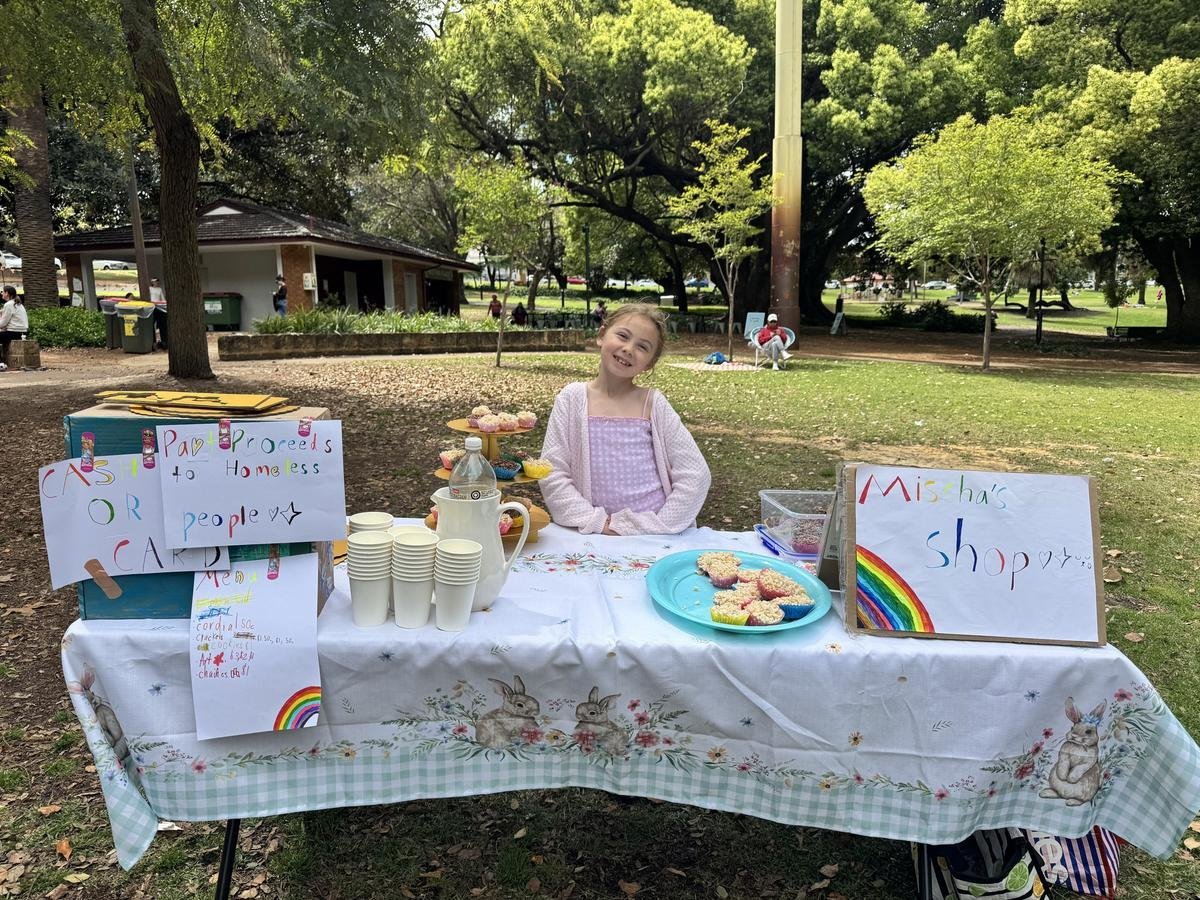
Instead, it has become a flashpoint in a growing national argument about whether Australia has become so cautious, so rule-bound and so allergic to risk that even a child’s charity cake stall is treated as a threat.
The young entrepreneur, Mischa, set up shop at Hyde Park a few weekends ago, finally realising what her family described as her life’s ambition: running her very own cake shop.
Her menu was modest. Chocolate crackles, most priced at a dollar.
Cups of cordial for 50 cents.
And a small gallery of her own artwork, including paper chains and drawings of cats sketched across paint swatches in dozens of shades of pink collected from Bunnings.
A homemade sign told customers that part of the takings would go to people experiencing homelessness. Originally, Mischa wanted every cent to go to charity.
Her parent persuaded her to keep a share, believing that doing good is more sustainable when there is some personal reward attached.
The family had done their homework. They asked the owner of the park’s kiosk for permission before laying out the treats, and the owner happily agreed.
But nobody had flagged the need for a formal permit.
That message arrived abruptly.
An official connected to a stage show running in the park that day approached the stall, demanded to see paperwork and, when none could be produced, shut the operation down on the spot.
The warning was blunt: the breach could jeopardise the whole event.
Nearby parkgoers and customers made their feelings clear, rolling their eyes at what many saw as a wildly disproportionate response to a little girl and her crackles.
What makes the closure sting is how much preparation had gone into it.
In the weeks beforehand, Mischa and her parent talked through profit and loss. Ingredients were bought.
Recipes were followed carefully. Hygiene was taken seriously.
She even rehearsed customer service, including how to deal with difficult people.
She chose Hyde Park deliberately for its heavy foot traffic, and decided that being visible and making purchases quick were key to success.
That led her to buy an electronic card reader, which in turn meant opening her very first bank account and learning, first-hand, how money actually moves.
The payoff came when a group of about ten teenage girls crowded the stall. Her parent stepped back and watched as she tapped in each amount and processed every payment, her confidence visibly growing with each sale.
Minutes later, it was over.
Mischa’s story is far from isolated. Across the country, there have been well-publicised cases of children’s stalls and community fundraisers being forced to close for lacking the correct permit.
In this instance it was an event organiser, not a council, that pulled the plug.
But in most cases, whether a stall like Mischa’s can operate comes down to individual local councils, which weigh up a patchwork of regulations, including rules governing temporary food stalls.
Some charitable and community fundraising stalls are exempt from food business registration. Others are not.
The result is a confusing, inconsistent system where families often have no clear idea whether they are breaking the rules until someone in a lanyard tells them so.
Analysis: What This Means for Australia
On the surface, this is a story about a few dollars’ worth of chocolate crackles. Underneath, it touches on one of the most pressing economic problems facing the nation.
Australia is grappling with sluggish productivity growth and a decline in business dynamism, the churn of new firms being created, competing and growing. Economists have long warned that a country which stops producing risk-takers eventually stops producing growth.
The skills Mischa was practising are exactly the ones policymakers say the nation needs. The Australian Curriculum, overseen by Australian Curriculum, Assessment and Reporting Authority, names initiative, problem-solving, adaptability and commercial awareness as core capabilities for young Australians.
The Australian Securities and Investments Commission has also sounded the alarm. Its 2021 report, Young People and Money, found that although managing money is a fundamental life skill, financial capability is too often left to chance.
That leaves a glaring contradiction. Classrooms tell children to be enterprising, while parks and public spaces can punish them for trying.
The social cost is harder to measure but just as real.
When families face unclear rules and the risk of public embarrassment, many will simply decide a lemonade stand or bake sale is not worth the hassle.
Over time, that erodes community fundraising, weakens local small business culture and chips away at the can-do spirit Australians like to believe defines them.
There is also a cost of living dimension. Young people entering adulthood with little real-world money experience are more vulnerable to debt, poor financial decisions and scams.
Policy observers say the fix need not be complicated. A clear, nationally consistent exemption for small-scale, child-run or charitable stalls would remove much of the guesswork without compromising genuine food safety standards.
Industry observers believe red tape is one of the most underestimated brakes on Australian enterprise, noting that the same compliance culture frustrating parents in parks is replicated at every level of business.
Child development specialists warn that early experiences of failure imposed from outside, rather than earned through effort, can teach children that initiative leads to trouble, a lesson that may stick far longer than any profit-and-loss tally.
Local government insiders acknowledge councils are balancing legitimate concerns about food safety, liability and event management, but concede that inconsistent application of the rules breeds public resentment.
For her part, Mischa’s parent is urging other families to help their children run a stall at least once, and calling on councils and event organisers to make room for these tiny ventures.
The message is simple: let children learn how to run a business before bureaucracy teaches them not to bother.