
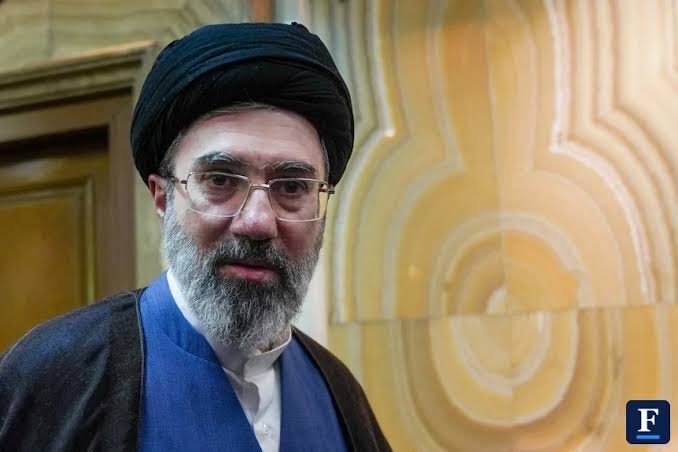
‘Geographically Unrestricted’: Iran’s Unseen Supreme Leader Orders Military to Hit Back Anywhere on Earth as Tankers Burn in the Strait of Hormuz and Washington Weighs a Post-Election Strike
- Mojtaba Khamenei, who has not appeared in public since taking power at the start of the war, has ordered commanders to answer any attack with an “immediate” response that has no geographic limits.
- Four oil tankers, including a supertanker carrying more than two million barrels, struck mines and caught fire in the world’s most important oil chokepoint.
- Reports suggest the US and Israel have drawn up joint plans to attack Iran as soon as the American midterm elections are over.
- For Australia, a nation that relies on imports for most of its fuel, a widening war in the Gulf could hit every bowser, freight route and household budget.
The man giving the orders has not been seen in public for months. His words, however, now carry a threat that reaches well beyond the Middle East.
Iran’s Supreme Leader has told his generals that if the Islamic Republic is attacked again, the retaliation will have no borders.
Meanwhile, in the narrow waters of the Strait of Hormuz, oil tankers are already burning.
Mojtaba Khamenei, who took power at the outbreak of the war launched by the United States and Israel on February 28, issued fresh strategic instructions this week.
Any military or terrorist strike on Iran, he declared, must be met with an “immediate, impactful, and geographically unrestricted response”.
The directive appeared on his official X account.
It also ordered military chiefs to update Iran’s so-called “Targets Bank” so that every kind of American and Israeli asset, which the statement described as both “tangible and intangible”, would fall within striking range.
The language is a significant escalation. Until now, Iran’s retaliation has mostly been aimed at military targets.
The new orders suggest that restraint is gone.
Khamenei also praised what he called the “intelligent steadfastness” of the Resistance Front, Tehran’s network of allied armed groups across several countries, and described the “unity of fronts” as decisive in shaping a new security order in West Asia.
Analysts read this as a signal that proxies including Hezbollah and Hamas would be expected to join any renewed fighting.
The timing is deliberate.
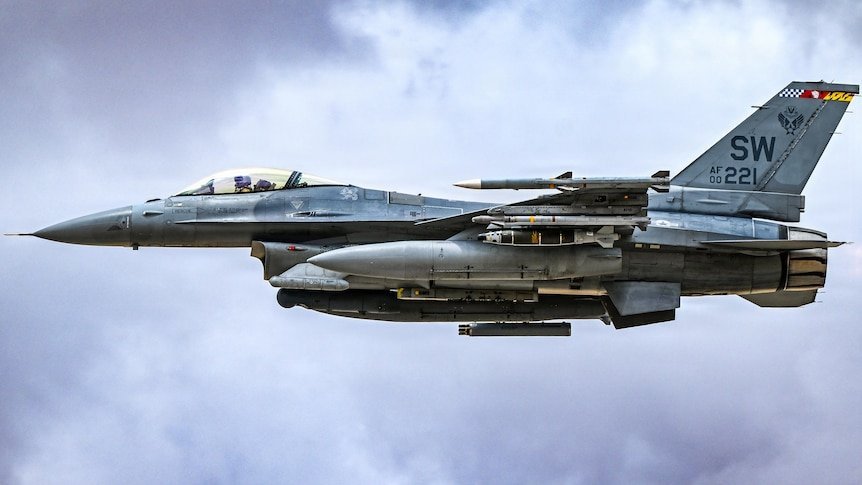
Reports from Washington indicate that America’s Gulf allies have been warned to prepare for a fresh assault on Iran as early as November 4, the day after the US midterm elections.
The New York Times reported last week that American and Israeli planners had drawn up joint attack plans for the post-election window. The Wall Street Journal revealed that Admiral Brad Cooper, head of US Central Command, had briefed President Donald Trump on options for renewed strikes.
Secretary of State Marco Rubio said on Saturday that the President had not yet decided whether to resume military action.
At sea, the danger is no longer theoretical. Iran’s Islamic Revolutionary Guard Corps claims four tankers hit mines and caught fire on Friday after using what it called unauthorised routes through the strait.
The Guard’s navy alleged that the ships had switched off their navigation systems and ignored repeated radio warnings. It did not name the vessels or say what happened to their crews.
Oman separately confirmed it had evacuated 25 sailors from a burning Panama-flagged tanker attacked 1.6 nautical miles off its Musandam coast. It remains unclear whether that ship was one of the four named by Iran.
The United Kingdom Maritime Trade Operations centre reported another vessel struck by an “unknown projectile” south of Lavan Island. Its crew survived.
An Iranian official said two fishermen were missing and two more injured in a separate attack on small boats, which Tehran blamed on Washington.
Since the war began, Iran has claimed control over much of the waterway and has warned that any ship crossing without permission faces “destruction”. Roughly a fifth of the world’s oil normally passes through this narrow channel.
Diplomacy is moving, but slowly. Qatar has been trying to broker talks, first in Tehran and now in Doha.
Hopes of direct US-Iran negotiations faded when it emerged that no American representatives had turned up.
The Washington Post reported that Vice-President JD Vance had offered to meet Mohsen Rezaei, secretary of Iran’s Supreme National Security Council, in person. The leaders of Saudi Arabia and Türkiye have urged Mr Trump to give diplomacy more time.
Israeli Prime Minister Benjamin Netanyahu is reportedly pushing for a joint strike soon after the midterms.
Foreign Minister Abbas Araghchi told Al Jazeera that American outreach was “a positive step”. He said Qatari mediation had cut the timeframe for Iran’s proposal to reopen the strait from five days to two.
Tehran’s conditions include lifting sanctions imposed after the Islamabad memorandum, reducing US forces in the region, restoring oil waivers and releasing frozen funds, including money held in Qatar.
He also issued a warning. Iran, he said, does not rule out war and has upgraded its weapons, fixed its weaknesses and tested new arms.
Its forces, he claimed, are at the highest state of readiness.
Analysis: What This Means for Australia
Australia is thousands of kilometres from the Gulf, but distance offers little protection from this crisis.
The nation imports the vast majority of its refined fuel, much of it from Asian refineries that rely heavily on crude shipped through Hormuz.
Australia’s long-running fuel security problem, including stockpiles that have historically fallen short of international benchmarks, means that any prolonged closure of the strait could feed directly into prices at the pump within weeks.
That pain would spread quickly. Higher diesel costs push up freight, groceries and farming inputs, adding fresh pressure to cost of living at a time when households are already struggling.
Economists watching the Reserve Bank of Australia warn that an oil shock could complicate any path towards lower interest rates.
The security implications are just as serious. A “geographically unrestricted” doctrine that targets “intangible” assets raises the spectre of cyber attacks on Western infrastructure and allied interests well beyond the battlefield.
As a close US ally, Australia cannot assume it would be overlooked.
Australians living and working across the Gulf, along with Australian Defence Force personnel deployed in the region, would face heightened risk. Travellers should monitor guidance from Smartraveller.
Security analysts say Khamenei’s statement is designed to raise the cost of any American decision before it is made, effectively warning Washington that a strike on Iran could set off conflict on multiple fronts.
Maritime insiders warn that mines are especially dangerous because they do not discriminate. Insurance premiums for Gulf shipping are already soaring, and some operators may simply refuse to make the passage.
Energy market observers believe the next 72 hours could prove decisive. If the midterms pass and the bombers fly, oil markets could react sharply and Australian motorists would feel it soon after.
For now, the world waits on a decision in Washington and on a Supreme Leader whose voice is heard but whose face has not been seen.