
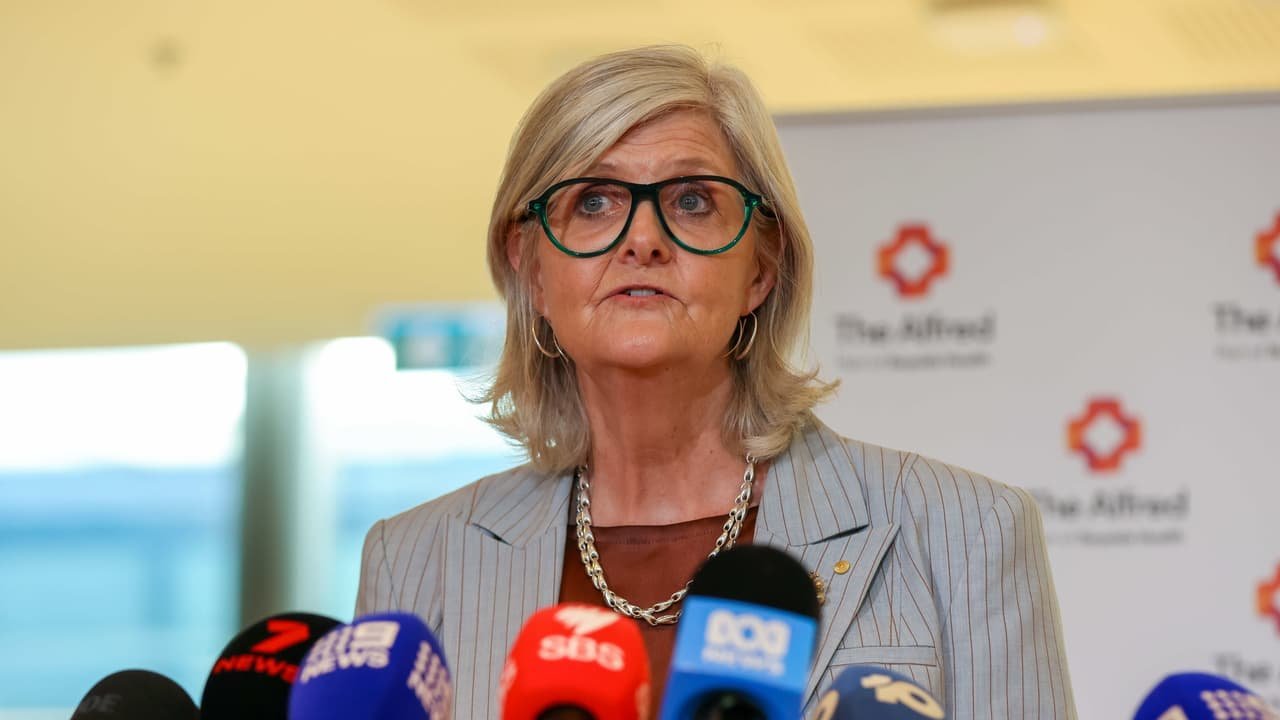
‘Kill Yourself… Die Slow, B**ch’: WA Minister Simone McGurk Reveals the Torrent of Violent Misogynistic Abuse Still Flooding Her Office, Weeks After Alleged Attack That Left MP Helen Haines Without Her Legs
- West Australian Women’s Interests Minister Simone McGurk says the vile threats against her and her young staff have not slowed, even after the alleged attack on federal independent Helen Haines.
- Messages urging her to take her own life and wishing AIDS on her children poured in after she criticised a Saturday Night Live sketch by US comedian Shane Gillis.
- An electorate staffer was called a “f**king c**t” by a constituent over the phone only a day before the minister spoke out.
- The revelations raise urgent questions about the safety of every MP, staffer and volunteer working in Australia’s electorate offices.
Warning: This story discusses self-harm and contains details some readers may find distressing.
The voicemail was waiting when the office opened.
A young electorate staffer, arriving for an ordinary working day in suburban Perth, pressed play and heard a stranger ordering their boss to “shut the f**k up and stay out of American politics”, capped off with a slur too obscene to print in full.
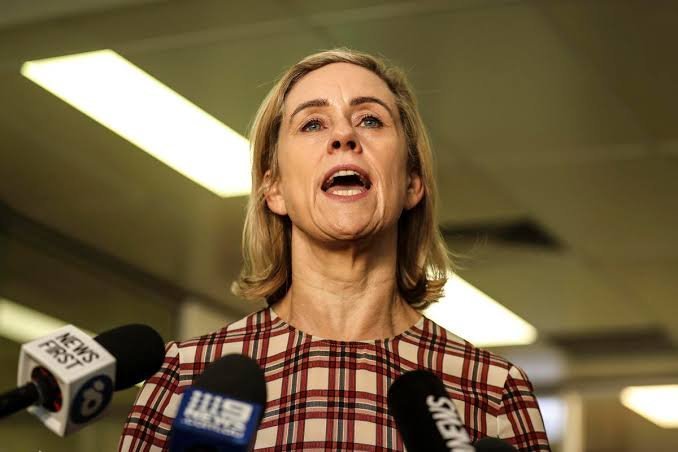
That is what it now means to work for a politician in Australia. And according to one of Western Australia’s most senior ministers, it is getting worse, not better.
Simone McGurk, the state’s Minister for Women’s Interests, has laid bare the hatred directed at her and her team, warning that the climate of abuse has not cooled in the slightest despite the shocking alleged attack on Helen Haines that should have jolted the nation.
Ms McGurk made the remarks at a business breakfast on Tuesday, telling the audience that in more than a decade in public life she had never witnessed such hatred and vitriol.
The trigger for the latest wave of abuse was a video she posted last month criticising a skit on Saturday Night Live by American comedian Shane Gillis.
In the routine, Gillis branded women “whores” for wearing what he called “bait-coloured” shorts to the gym.
The response to her criticism was savage. She described being inundated with violent direct messages.
Among them, strangers told her to kill herself, declared that “suicide is free”, said they hoped her children would contract AIDS, and wished that she would “die slow, b**ch”.
The abuse did not stay online.
Just a day before her speech, one of her staff members was allegedly called a “f**king c**t” by a constituent during a phone call to the office.
Ms McGurk, first elected to the WA Parliament in 2013, described the rise of online hatred as frightening.
Her comments land at an extraordinarily tense moment for Australian democracy.
Just over two weeks ago, federal independent MP Helen Haines had both of her legs amputated following an alleged attack outside her electorate office in Victoria.
The incident sent shockwaves through Parliament House and prompted politicians across the spectrum to reflect on the tone of public debate.
Days later, in Perth, a man was charged with threatening staff at the electorate office of WA state minister Hannah Beazley. Police have alleged he was carrying a weapon.
The man has told a Perth court it was in fact a musical instrument. The matter remains before the courts.
Two incidents. Two electorate offices.
Two reminders that the shopfronts where Australians meet their representatives are exposed and, in many cases, poorly protected.
Notably, Ms McGurk did not pin the blame on one political tribe.
She said both the far-right and the far-left were deploying much of the same rhetoric, pointing to messages from the left within her own electorate declaring that all politicians are “s**t”, corrupt and liars.
What, she asked, does that do to instil confidence?
Analysis: What This Means for Australia
For decades, the electorate office has been the most accessible point of contact between ordinary Australians and the people who govern them. Anyone can walk in.
Anyone can call. That openness is a cornerstone of local democracy, and it is now under direct threat.
From a national security perspective, the pattern is alarming. Online abuse that once stayed behind a keyboard now appears to be spilling into phone lines, voicemails and front doors.
Agencies including the Australian Federal Police and Australian Security Intelligence Organisation have previously flagged the growing risk of politically motivated violence, and the events of recent weeks will intensify scrutiny of how MPs are protected.
For law enforcement, the challenge is immense. Threats arrive anonymously, from overseas accounts and burner profiles, and in volumes that make individual investigation almost impossible.
Meanwhile, state and federal electorate offices vary wildly in their security arrangements.
The community cost is harder to measure but potentially more corrosive. Those answering the phones are often young staffers in their first jobs.
If they are routinely subjected to sexualised slurs and death wishes, fewer talented people will choose public service. Fewer women, in particular, may stand for office.
There is also a clear link to the broader crisis of domestic violence and violence against women. The language hurled at Ms McGurk, threatening, sexualised and designed to silence, mirrors the attitudes experts say underpin gendered violence in homes across the country.
Ms McGurk pointed to the WA Government’s significant work on domestic and sexual violence, including updating laws, saying recent events were a stark reminder of how far the state still has to go, but that it was determined to lay the foundation for cultural change and, ultimately, prevention.
Security analysts say the threat environment facing Australian politicians has shifted markedly, with the volume and intensity of online hostility now a genuine safety concern rather than a mere irritation of public life.
Law enforcement insiders warn that distinguishing between a keyboard warrior and someone prepared to act is one of the hardest calls in modern policing, and that every threat to an electorate office must now be treated seriously.
Political observers believe the cross-ideological nature of the abuse Ms McGurk describes is significant, suggesting a deeper collapse in trust towards institutions rather than a problem confined to any single movement.
Digital policy watchers, meanwhile, note that platforms continue to face pressure from regulators such as the eSafety Commissioner to act faster on targeted abuse.
Yet Ms McGurk is not retreating. She insisted social media remains essential, describing it as the way politicians now communicate with the communities they serve.
Alongside the hate, she said, comes genuine warmth, with constituents telling her they had not realised how hard she worked.
She called on all community leaders to help foster respectful, informed public debate, including by calling out misinformation.
Whether that plea cuts through the noise remains to be seen. For now, the phones keep ringing.
If you or someone you know needs support, contact Lifeline on 13 11 14 or Beyond Blue on 1300 22 4636.