
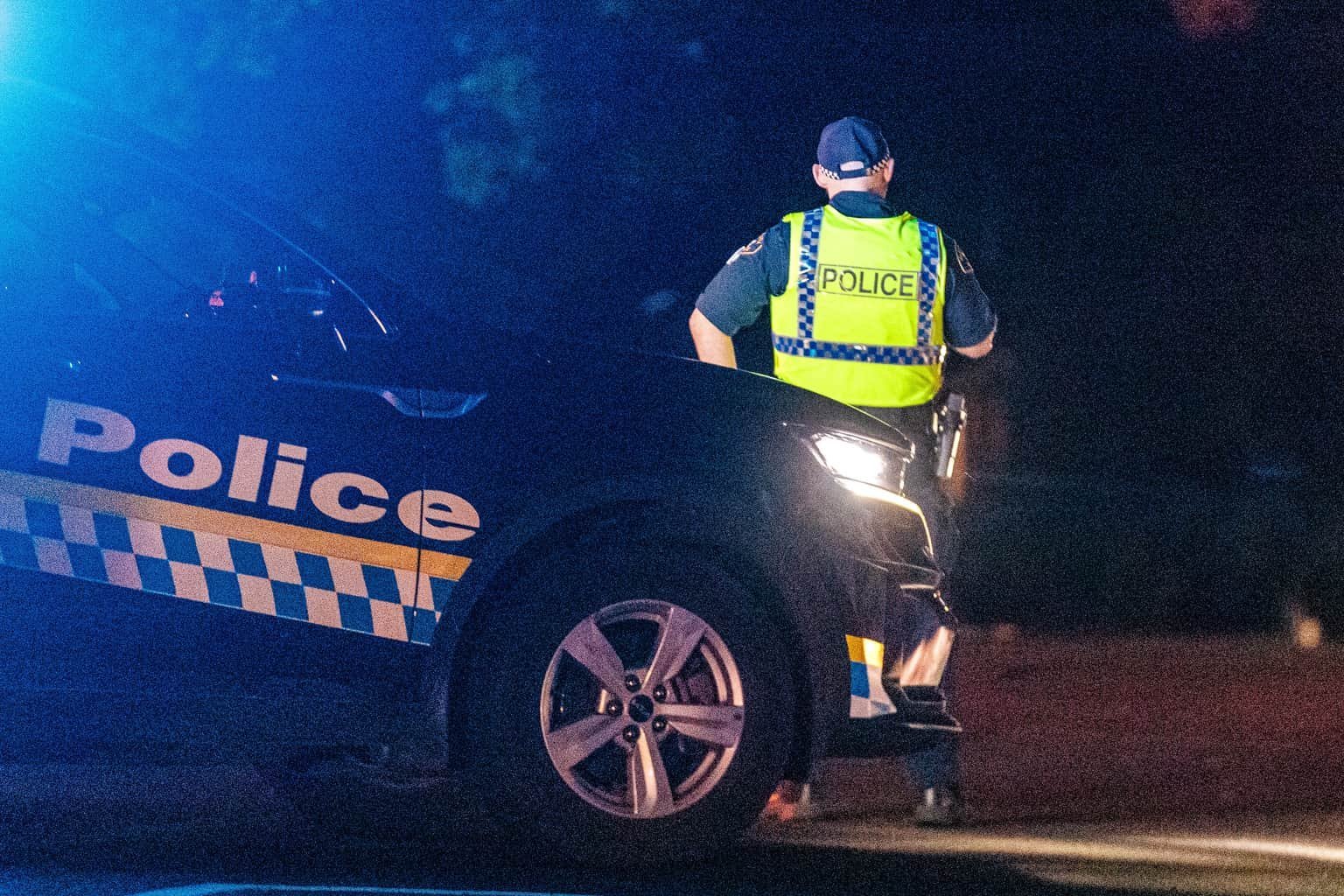
Horror on the Bass Highway: 10-Year-Old Girl Killed at the Scene After Head-On Smash West of Somerset as Woman Is Flown to Hospital in Serious Condition
- A 10-year-old girl died at the roadside after the Subaru she was travelling in collided head-on with a Toyota Hilux on Tasmania’s Bass Highway
- The woman driving the Subaru suffered serious injuries and was airlifted hundreds of kilometres to Royal Hobart Hospital
- Two people in the Hilux were taken to hospital in Burnie with injuries that are not considered life-threatening
- The crash shut a key stretch of Tasmania’s busiest northern corridor in both directions for more than four hours as police began investigating
She was just 10 years old.
On an ordinary Thursday evening, as families across Tasmania’s north-west sat down for dinner, a young girl lost her life on one of the state’s most heavily travelled roads.
Emergency crews who raced to the wreckage could not save her.

Now a community is in mourning, a woman is fighting through serious injuries in a hospital bed at the other end of the island, and investigators are working to understand how a routine journey ended in catastrophe.
The collision happened at about 5.30pm on the Bass Highway, west of the small coastal town of Somerset. Two white vehicles were involved: a Subaru travelling east and a Toyota Hilux heading west.
The two cars met head-on.
The girl, a passenger in the Subaru, suffered critical injuries. Despite the efforts of first responders, she died where the crash occurred.
The woman behind the wheel of the Subaru was seriously hurt.
Such was the gravity of her condition that she was flown by air ambulance to Royal Hobart Hospital, the state’s major trauma centre, where she remains.
In the Hilux, both the driver and a passenger escaped with injuries described as non-life-threatening. They were taken by road to North West Regional Hospital in Burnie for assessment and treatment.
Authorities closed the affected section of the highway in both directions. It stayed shut for more than four hours while emergency services worked at the scene and crash investigators began piecing together what happened.
Tasmania Police have confirmed an investigation into the circumstances of the collision is underway. In a brief statement, officers extended their sympathies to the family and loved ones of everyone caught up in the tragedy.
No details have been released about what may have caused the crash, and police have not publicly identified any of those involved.
For locals, the location will strike a painful chord. The Bass Highway is the backbone of northern Tasmania, threading together Launceston, Devonport, Burnie and the communities scattered along the coast.
It carries commuters, school traffic, freight trucks, farm vehicles and tourists, often all at once.
The stretch around Somerset sits at the gateway to the far north-west, where the highway links Burnie with Wynyard and beyond. At that hour on a weekday, it is typically busy with people heading home from work, school pick-ups and after-school activities.
Head-on collisions are among the most violent crashes on any road.
When two vehicles travelling in opposite directions meet, the combined forces are brutal, and the margin for survival can be terrifyingly thin, particularly for passengers in smaller vehicles.
Tasmania has long grappled with its road toll, with regional highways featuring prominently in the state’s serious crash statistics. Each death reignites debate about road design, speed, driver behaviour and the pace of upgrades on key routes.
Analysis: What This Means for Australia
The death of a child on a national highway is not just a local tragedy.
It is a stark reminder that road safety remains one of the most pressing public safety challenges facing Australians, particularly those living outside the major cities.
Regional and rural roads consistently account for a disproportionate share of fatalities nationwide.
Drivers in these areas often have no alternative routes, travel longer distances at higher speeds, and share undivided roads with heavy vehicles and oncoming traffic separated by nothing more than painted lines.
Thursday’s crash also exposes the realities of regional healthcare. The injured driver had to be flown across the state to receive the level of trauma care she needed.
For families in the north-west, the distance between the scene of an emergency and a major trauma hospital is a constant, sobering fact of life.
For law enforcement, every fatal crash triggers an exhaustive process: forensic examination of the scene, vehicle inspections, witness interviews and analysis of road conditions. Hours-long closures, while necessary, ripple through the regional economy, stranding freight, delaying workers and cutting off communities that depend on a single arterial road.
And then there is the human cost that no statistic captures. Emergency workers who attend these scenes carry them for years.
Schools, sporting clubs and small towns absorb the grief of losing a child. In tight-knit regional communities, almost everyone knows someone affected.
Nationally, governments have committed to ambitious targets to slash road deaths, yet progress has stalled in many jurisdictions. Each fatality involving a child intensifies pressure on state and federal authorities to accelerate investment in safer road infrastructure.
Road safety advocates say the type of crash seen near Somerset underlines the value of physical separation between opposing lanes of traffic.
Wire rope barriers, wider centre lines and dedicated overtaking lanes have been rolled out across parts of Australia with measurable results, though coverage on many regional highways remains patchy.
Law enforcement insiders warn that the early hours and days after a serious crash are critical. Investigators rely heavily on witnesses and dashcam footage to establish the sequence of events, and they caution against speculation until the facts are established.
Trauma specialists note that while advances in aeromedical retrieval have saved countless lives in regional Australia, outcomes still depend enormously on how quickly patients reach definitive care, a challenge sharpened by geography in states like Tasmania.
Child safety experts stress that young passengers are among the most vulnerable road users, and that every crash involving a child should prompt families to review restraint use and seating arrangements, while acknowledging that in high-impact collisions, even the best precautions cannot always prevent tragedy.
Community observers believe the loss will resonate far beyond the north-west, prompting renewed calls for safer roads and greater caution behind the wheel as the busy summer holiday season approaches.
For now, those questions will wait. A family is grieving the unthinkable, a woman remains in hospital, and a stretch of Tasmanian highway has become the site of yet another heartbreak.
Anyone who witnessed the crash or has dashcam footage from the area around the time of the collision is urged to contact Tasmania Police or Crime Stoppers Tasmania.