
‘National Security Implications Will Be Far More Costly’: Albanese Defends Jetting to COP31 as Australia Takes Command of Global Climate Talks and Taylor Accuses Him of Abandoning a ‘Wrecked’ Economy
- Anthony Albanese becomes the first Australian prime minister to attend a UN climate summit since Scott Morrison in 2021, warning that walking away from the Pacific would carry a national security price.
- Opposition Leader Angus Taylor says the PM has no business flying overseas while households struggle, claiming the government has “wrecked the economy”.
- Climate Minister Chris Bowen is running the negotiations at COP31 in Turkey, a role Australia won after losing its bid to host the summit with Pacific nations.
- Independent MP Nicolette Boele says Australia faces an awkward contradiction: it is racing towards renewables while remaining one of the world’s biggest fossil fuel exporters.
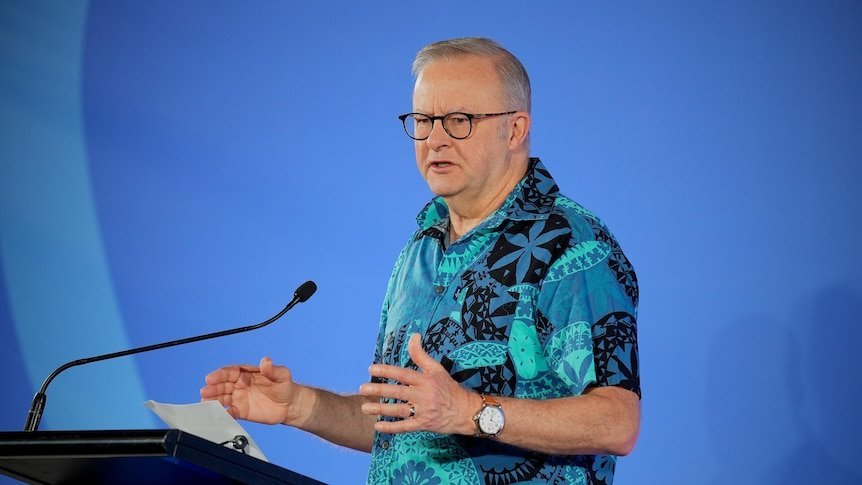
Anthony Albanese is not framing his latest overseas trip as a climate pilgrimage. He is framing it as a matter of national defence.
As the Prime Minister boarded a flight bound for Turkey, he made a pointed argument. If Canberra fails to show leadership alongside its Pacific neighbours, others will step in.
The cost of that, he warned, would be far higher than a plane ticket.
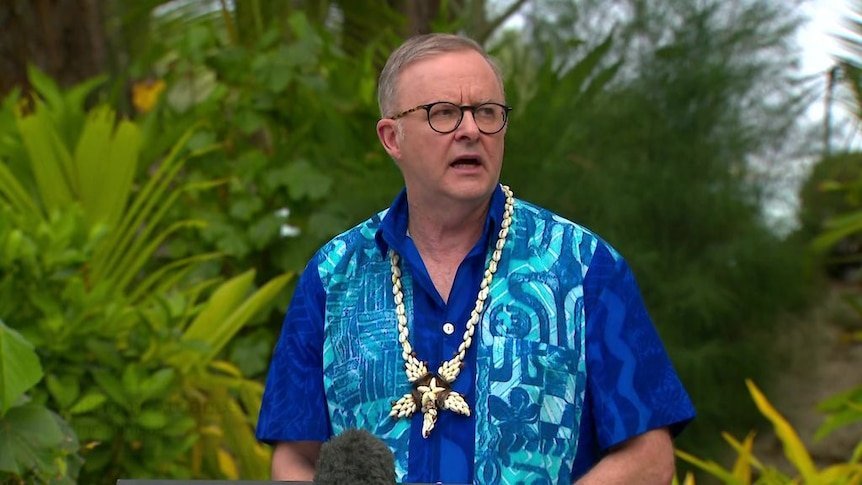
Back home, his critics see a leader escaping a cost-of-living emergency.
Mr Albanese departed on Tuesday for COP31, the United Nations’ annual climate conference.
It is the first stop on a two-week diplomatic marathon that will also take him to the Philippines for the ASEAN summit and to China for the APEC leaders’ meeting.
No Australian prime minister has sat in a COP plenary since Scott Morrison travelled to Glasgow in 2021. That gap alone shows how much Australia’s climate posture has shifted.
Speaking in Canberra before he left, Mr Albanese said staying engaged was “absolutely in Australia’s national interest” in an interconnected world. He also issued a blunt warning.
Without Australian leadership in the Pacific, he said, “there are national security implications as well that will be far more costly.”
Angus Taylor was having none of it.
Speaking to reporters in Victoria, the Opposition Leader accused the government of having “wrecked the economy”. He conceded that prime ministers would ordinarily make such journeys.
These, he argued, were not ordinary times.
It is a line designed to land with voters squeezed by mortgage repayments, grocery bills and power prices. The Coalition is betting that the cost-of-living crisis will matter far more to Australians than diplomatic summitry in Turkey.
Australia’s central role at this summit came out of a diplomatic setback.
Canberra had campaigned hard to host the 2026 conference jointly with Pacific island nations.
The pitch was simple: bring the world to the front line, where rising seas, intensifying cyclones and warming oceans already threaten homes, food supplies and whole ways of life.
Turkey also wanted the event. Rather than allow a drawn-out standoff, a compromise was reached.
Turkey would host. Australia would help steer the negotiations.
Under that arrangement, Chris Bowen has taken on the role of president of negotiations. It puts an Australian minister at the centre of efforts to broker agreement among nearly 200 countries with sharply competing interests.
Mr Bowen opened proceedings with an urgent call to action. “We must move faster,” he told delegates, arguing that the technologies needed were already “proven, commercial and scalable”.
The challenge, he said, was deploying them faster.
He also called for stronger support for nations least able to cope. The most exposed countries, he argued, needed access to the partnerships, support and finance required to build resilience before disaster strikes and to recover afterwards.
He pointed to deadly flooding caused by collapsing glaciers in Nepal and to brutal heatwaves across Europe as evidence that the crisis is already here. “It is not a forecast.
It is not a prediction,” he said. “It is the lived reality for billions of people.”
Leaders are expected to sign a pledge committing the world to source 35 per cent of its energy from electricity by 2035. It is a target that would reshape how countries power homes, transport and heavy industry.
Analysis: What This Means for Australia
Strip away the climate language and Mr Albanese’s argument is about strategic competition.
For Pacific nations, climate change is not one issue among many. Island leaders have repeatedly described it as the single greatest security threat facing their region.
Partners who take it seriously earn influence. Those who dismiss it lose ground.
That matters because the Pacific has become contested territory. Beijing’s 2022 security pact with Solomon Islands shocked Canberra and exposed how quickly Australia’s traditional influence could erode.
Since then, Australia has moved to lock in closer ties, including the Falepili Union treaty with Tuvalu, which explicitly links climate migration with security guarantees.
Taking a prominent role at COP31 is part of the same strategy.
It signals to Pacific capitals that Australia is listening, and it gives Canberra diplomatic standing to bring with it to ASEAN in Manila and APEC in China.
The domestic picture is more complicated. Mr Taylor’s attack taps into real anxiety about household budgets, interest rates and energy costs.
Any agreement on electrification will be judged by voters on whether it drives power bills up or down.
Then there is the contradiction that Nicolette Boele, the independent MP who is also attending the summit, put plainly on ABC Radio. Australia, she said, faces “a really interesting dilemma”.
It is moving to electrify and switch to renewables, yet it remains one of the largest fossil fuel exporters in the world.
Coal and gas exports earn the nation tens of billions of dollars a year and support jobs in regional communities from Queensland to Western Australia. Data from the Department of Industry, Science and Resources has long shown resources among the country’s most valuable exports.
Every push for faster global decarbonisation raises hard questions about that revenue stream and the towns that depend on it.
That tension will follow Australian negotiators into every closed-door session in Turkey.
Security analysts say the Pacific dimension is the most important part of the trip. They argue that climate credibility has become a form of strategic currency in the region, and that Australia’s past reluctance gave rival powers an opening.
Diplomatic observers believe that chairing negotiations is a rare chance for a middle power to shape a global agreement. They also warn that it exposes Australia to criticism from all sides if the talks stall or produce weak outcomes.
Energy industry insiders caution that pledges such as the 2035 electrification target will need serious investment in grid infrastructure and transmission. Australia’s own rollout has already run into delays and community opposition, and it will be closely scrutinised under the energy transition.
Political strategists, meanwhile, say Mr Taylor’s message is a calculated gamble. The Coalition is betting that kitchen-table economics will outweigh foreign policy for most voters.
Over the next fortnight, Mr Albanese will move from climate talks in Turkey to regional diplomacy in Manila and then to China. Whether his gamble pays off may depend less on what is signed abroad than on what Australians see in their power bills at home.