
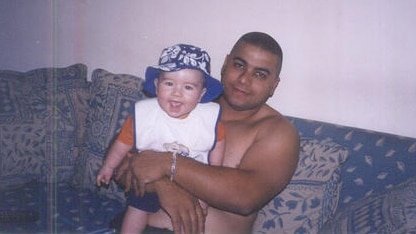
‘A Scream, Then Silence’: Young Sydney Father Vanished After Climbing Into a White Jeep Nearly 24 Years Ago, and Now Police Are Offering $1 Million to Crack the Gangland Mystery
- Mahmoud Sleiman, 24, was last seen getting into a white Jeep Grand Cherokee outside his family home in Greystanes, in Sydney’s west, on February 2, 2003
- That night, his desperate family rang his mobile and heard what they believe was a man screaming before the line abruptly went dead
- Detectives suspect he was murdered by organised criminals after clashing with underworld rivals, yet his body has never been found and no one has been charged
- His partner Jody Swift and son Billy Sleiman are joining NSW Police in a fresh plea, backed by a $1 million reward
The phone rang out into the darkness. Then came the sound no family should ever hear.
A scream. A man’s voice, his relatives believe, raw and terrified.
And then nothing at all.
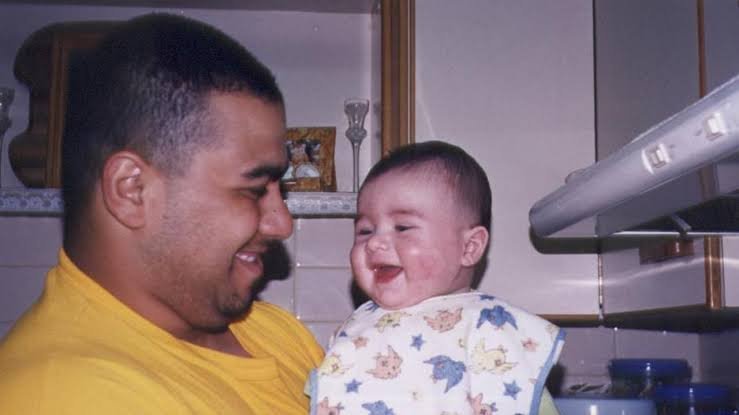
For almost a quarter of a century, that chilling fragment of sound has haunted the loved ones of Mahmoud Sleiman.
It may have been the final moment they ever shared with the young western Sydney father, and it remains one of the most disturbing clues in a case that has defied detectives since 2003.
Now, with the trail stretching back nearly 24 years, authorities are throwing everything they have at the mystery. A $1 million reward is on the table.
And the people who have lived longest with the pain are stepping forward to ask, once more, for the truth.
It was the morning of Sunday, February 2, 2003, when the 24-year-old was spotted on the street outside his Greystanes home.
He was talking to a man sitting in a white Jeep Grand Cherokee. Witnesses later told police Sleiman got into the vehicle, which then drove off.
He never came back.
As the hours slipped by without a word, his family grew alarmed and reported him missing to police later that same day. That evening, they tried his mobile.
The call connected, long enough for them to hear the screaming, before it was cut off.
Investigators have since formed a grim view of what happened. They believe Sleiman was killed, and their inquiries have pointed squarely towards organised crime.
Intelligence passed to detectives suggests he had been embroiled in disputes with criminal rivals in the period before he disappeared.
In the twelve months that followed, police combed bushland at Northmead and searched stretches of the Parramatta River, northeast of the family home. Those efforts failed to locate him.
In 2007, the matter went before the NSW Deputy State Coroner. The inquest found Sleiman was dead and had most likely died on the very day he walked out of his home.
The coroner ruled his death was suspicious, but could not establish how he died.
The case was then handed to the NSW unsolved homicide unit, where it has remained open ever since.
The disappearance of Mahmoud Sleiman belongs to a dark category of crime that has long confounded Australian police: the underworld ‘vanishing’.
When a victim is murdered and the body deliberately hidden, investigators lose the single most important piece of evidence. There is no crime scene to forensically examine, no post-mortem to reveal a cause of death, and often no clear timeline.
Killers who know how to make a body disappear also tend to know how to stay silent.
The early 2000s were a turbulent period for organised crime in Sydney, with rival networks vying for territory and influence across the city’s west and southwest.
Disputes that began over money, respect or turf frequently ended in bloodshed, and many of those cases still sit unsolved in police archives.
Time, however, can work in investigators’ favour. Loyalties shift.
Criminal alliances fracture. People who once had every reason to stay quiet may now be older, out of the life, or burdened by what they know.
That is precisely the window police hope to prise open with this renewed appeal.
Analysis: What This Means for Australia
The Sleiman case is far more than one family’s tragedy.
It is a stark reminder of how organised crime can reach directly into the suburbs, plucking a young man from outside his own front door in broad daylight.
From a national security and law enforcement perspective, unsolved gangland killings send a dangerous message: that violence can be committed with impunity. Every case that goes cold risks emboldening those who believe disputes can be settled with a bullet and a shallow grave.
For communities across western Sydney, the effects ripple outward for years. Fear of retaliation can silence witnesses, eroding trust between residents and police.
That code of silence is exactly what allows criminal networks to keep operating.
There is also a significant social cost. A son has grown up without his father.
A partner has spent decades without answers. Without a body, there has been no funeral in the ordinary sense, no grave to visit, no closure.
The decision by the state government and NSW Police Force to back the appeal with a seven-figure sum reflects a broader strategy of using large rewards to break open stubborn cold cases, particularly those where someone, somewhere, almost certainly knows what happened.
Law enforcement insiders warn that cases like this rarely break through forensic science alone. Instead, they typically turn on a single phone call from someone who was there, heard a confession, or helped clean up afterwards.
Security analysts say substantial rewards can be particularly effective in underworld matters, where former associates may finally weigh the money, and the passage of time, against the risks of speaking up.
Criminology observers believe the involvement of the victim’s family is a crucial element. Seeing a grieving partner and a son who lost his father can stir the conscience of those who have kept quiet for decades.
Investigators are also expected to be keenly interested in anyone who remembers the white Jeep Grand Cherokee, the identity of its driver, or where it travelled on that Sunday in 2003.
On Wednesday, Jody Swift and Billy Sleiman will stand alongside detectives as police relaunch their call for information.
The $1 million reward is offered for information leading to the arrest and conviction of those responsible for Mahmoud Sleiman’s disappearance or death.
Nearly 24 years after that terrible phone call, his family is still waiting for someone to break the silence.
Anyone with information is urged to contact Crime Stoppers on 1800 333 000. Information is treated in strict confidence.