
‘Very Little Chance’ He’ll Strike Again: Teenager Who Plotted Bomb Attack on Sydney Opera House Marathon Finish Line After TikTok Radicalisation Walks Free From Court
- A Western Sydney boy, just 14 when federal police arrested him, researched how to build a pressure-cooker bomb and studied the Sydney Marathon finish line at the Opera House as a possible target.
- His descent began on TikTok and spiralled into Al Qaeda material and Islamic State recruitment propaganda, ending with an attempt to email the surviving Boston Marathon bomber in a US prison.
- Despite pleading guilty to an offence carrying a maximum of life imprisonment, the now 16-year-old was spared jail and handed a three-year community corrections order.
- The case is a stark warning that the frontline of Australia’s terror threat may now be a child’s bedroom and a smartphone screen.
He was a schoolboy. He lived with his parents in the suburbs of Western Sydney.
And by the time he had barely turned 14, he was typing questions into the internet about how to turn a kitchen pressure cooker into a weapon of mass murder.
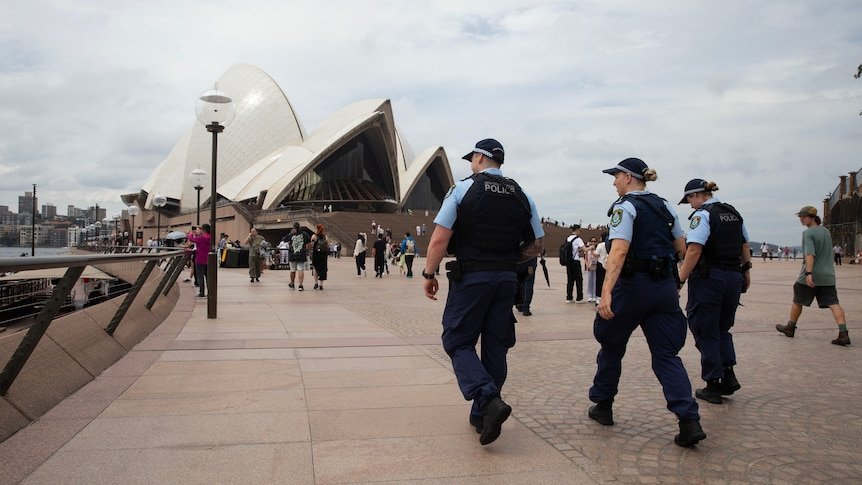
His chosen backdrop was among the most recognisable places on Earth: the Sydney Opera House, where thousands of runners and cheering families gather at the finish line of the Sydney Marathon.
On Monday, that boy, now 16, walked out of the NSW Supreme Court without a prison sentence.
Justice Stephen Campbell imposed a three-year community corrections order after the teenager admitted committing acts in preparation for a terrorist attack, a charge that can attract life behind bars.
The judge concluded there was “very little chance” he would offend again.
The boy, who cannot be named for legal reasons, was taken from his family home by officers from the Australian Federal Police in August 2024. He entered a guilty plea in August this year.
The court was told that across roughly five weeks in 2024 he searched for bomb-making instructions, scouted potential targets, distributed extremist content to others online and heaped praise on Al Qaeda through encrypted messaging platforms.
In one of the most chilling details, he tried to make email contact with the surviving Boston Marathon bomber, who is imprisoned in the United States.
The 2013 attack on that race’s finish line killed three people and injured hundreds.
Yet Justice Campbell placed the planning at the least serious end of the spectrum. The research was crude, the judge found, and the boy made no effort to hide what he was doing.
He never tried to acquire bomb components and never fixed a date.
Messages read to the court revealed a teenager both drawn to violence and evasive about it.
Asked by an online contact whether he would attempt to build a device, he replied that his parents would notice if he tried now, but that he would do so later, adding “inshallah”.
Pressed on whether he wanted to learn to plan an attack, he said he was only learning how to make a bomb at this stage, not planning one.
The judge said the boy repeatedly sidestepped direct questions about carrying out an attack, describing the exchanges as showing a “high level of naivety”. He accepted the teenager was, at best, hesitant about ever following through, had not indoctrinated anyone else, and posed no imminent threat.
The boy told the court his journey began innocently enough. Extremist clips surfaced on his TikTok feed and he found them “interesting”.
From there, the content grew darker and more violent until he was consuming Al Qaeda material and Islamic State recruitment videos.
That trajectory is precisely what security agencies have spent years warning about.
In August 2024, the very month this boy was arrested, ASIO lifted Australia’s national terrorism threat level from “possible” to “probable”, with officials flagging the growing number of young people being radicalised online at alarming speed.
Months earlier, Sydney had been rocked by the stabbing of a bishop during a livestreamed service at a church in Wakeley, an attack allegedly carried out by a 16-year-old and later declared a terrorist incident.
Police subsequently launched sweeping counter-terror operations targeting a network of teenagers.
The pattern has become depressingly familiar: younger suspects, faster radicalisation, and algorithms doing the recruiting that once required a charismatic figure in a back room.
Analysis: What This Means for Australia
For the nation’s security apparatus, this case confirms a profound shift. The threat no longer necessarily arrives across a border or through an organised cell.
It can be cultivated entirely through a phone, inside a loving family home, without parents having the faintest idea.
That poses enormous challenges for counter-terrorism policing.
Officers must now weigh intervening early against a child whose intentions may be half-formed, while knowing that waiting too long could prove catastrophic at a crowded public event.
For communities, the fear is visceral. Major events such as the marathon draw families, children and tourists.
The mere fact that a teenager could identify such a site as a target will unsettle organisers and push event security costs higher, as governments and promoters harden venues against the possibility of attack.
The case also lands squarely in the debate over social media regulation.
Australia’s ban on under-16s holding social media accounts came into force in December 2025, and supporters will point to this boy’s story as exhibit A for why platforms cannot be trusted to police themselves.
Critics will counter that determined young users simply migrate to encrypted apps beyond regulators’ reach.
And the sentence itself will provoke argument. Some will see a non-custodial order for a terror offence as dangerously lenient.
Others will argue that locking up a remorseful child risks exposing him to hardened extremists and turning a naive teenager into a genuine threat.
The court heard the boy has since renounced Islamic extremism.
His parents, members of Afghanistan’s long-persecuted Hazara minority, have friends from many faiths and backgrounds and have told their son extremism runs contrary to their understanding of Islam.
Justice Campbell found his remorse compelling and his prospects of rehabilitation excellent.
Under the order, he must give his phone password to a youth justice officer, keep attending any deradicalisation or education programs he is directed to, and stay off encrypted messaging apps entirely.
Security analysts say the conditions reflect a growing recognition that monitoring a young offender’s digital life is now as important as monitoring his physical movements.
Law enforcement insiders warn that cases like this are no longer outliers, and that police are increasingly dealing with children who have absorbed extremist ideology long before anyone around them notices a change.
Child safety advocates and online safety observers believe the real lesson lies in prevention, arguing that schools, families and tech companies must be equipped to spot the warning signs before a curious scroll becomes a search for bomb instructions.
Deradicalisation specialists note that family support is among the strongest protective factors against reoffending, a point the judge clearly took to heart.
As the hearing ended, the teenager returned to his seat between his parents. His mother rested her head on his shoulder for a moment.
His father smiled.
It was a tender family scene. But for a nation grappling with youth radicalisation, it was also a reminder of how close an ordinary suburban childhood came to something unthinkable.