
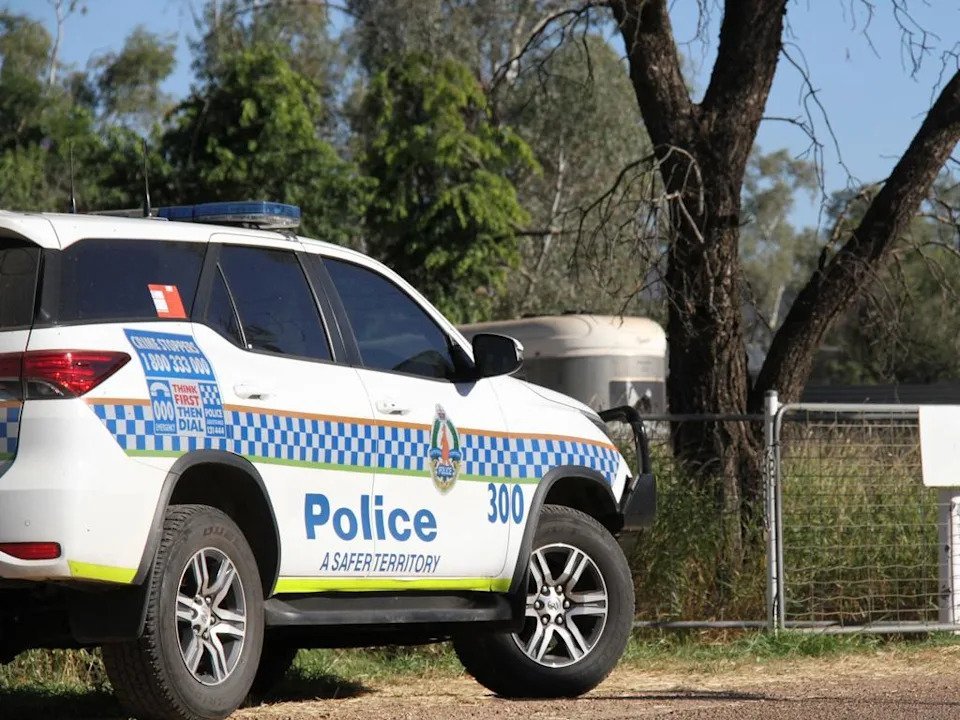
Swept From the Roof of His Car by a Raging Creek: Body of 60-Year-Old Man Found 10km Downstream After Desperate Three-Day Outback Search Near Santa Teresa
- A 60-year-old man and a woman climbed onto the roof of their bogged vehicle as a creek surged around them on a remote Central Australian road, but only one of them survived.
- The woman made a harrowing journey on foot to the Aboriginal community of Santa Teresa to raise the alarm after her companion was torn away by the torrent.
- Police, emergency volunteers and the Police Air Wing combed punishing terrain for three days before the man’s body was found about 10 kilometres from where he vanished.
- The tragedy came after a week of savage storms that flooded Uluru and turned dry desert creeks into deadly rivers almost without warning.
The water came fast. It always does out there.
One moment, a creek crossing on a lonely dirt road south of Alice Springs was just another obstacle in the red heart of the continent. The next, it had become a churning brown torrent that trapped a car, stranded two people on its roof and ultimately claimed a man’s life.
Now a remote community is grieving, and a familiar, painful question is being asked again across the Northern Territory: how many more lives will the outback’s flash floods take before something changes?
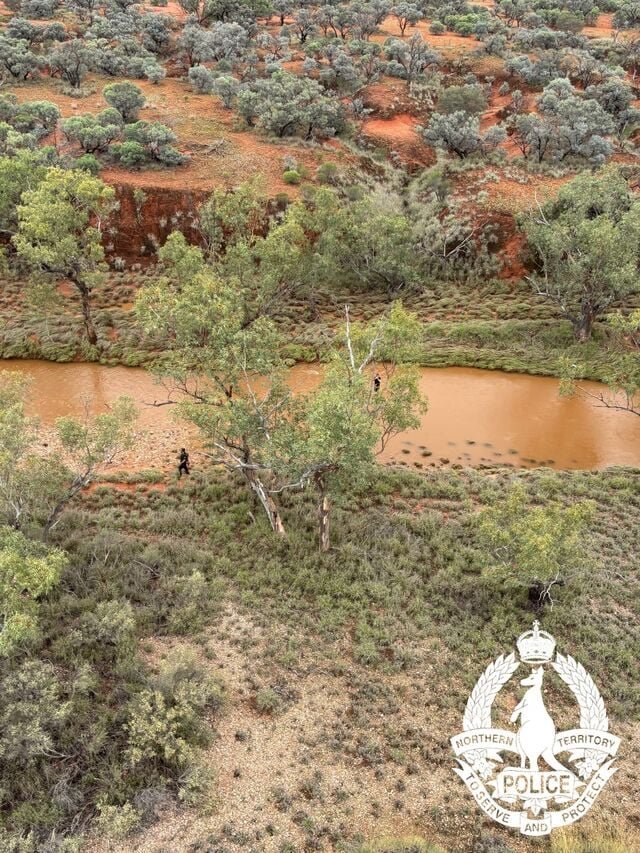
Northern Territory Police confirmed on Saturday that the body of the 60-year-old was discovered at 1.40pm, ending a gruelling search that had stretched across three days.
He was located roughly 10 kilometres from the spot where floodwater had ripped him from the roof of his vehicle on Phillipson Bore Road, near Santa Teresa, known in the local language as Ltyentye Apurte.
The community sits about 80 kilometres south of Alice Springs, in country that is as breathtaking as it is unforgiving.
According to police, the man had been travelling with a woman when their car became stuck while crossing a creek. With water rising around them, the pair scrambled onto the roof, the last refuge left.
It was not enough. The current dragged the man away.
The woman survived. Alone, and in what must have been a state of terror and exhaustion, she walked to Santa Teresa and told police her companion was missing.
Her report set in motion a large-scale search and rescue effort.
Officers were backed by volunteers from the Northern Territory Emergency Service and the Police Air Wing, who scoured rugged, waterlogged ground from land and sky in the hope of finding him alive.
That hope faded with each passing day. On Saturday afternoon, searchers made the discovery every family dreads.
Police say a report into the death will be prepared for the coroner.
The tragedy did not unfold in isolation.
Central Australia has been hammered this week by widespread downpours and violent thunderstorms, a weather system powerful enough to send water pouring off Uluru and flooding parts of the surrounding area.
Across the region, normally bone-dry creek beds swelled rapidly as rain fell faster than the baked earth could absorb it.
It is a phenomenon locals know well but outsiders often underestimate. In the desert, creeks can sit empty for months, their sandy beds used as tracks and shortcuts.
When heavy rain hits, even many kilometres upstream, a wall of water can arrive with little or no warning, carrying debris, eroding banks and turning a routine crossing into a death trap.
Unsealed roads such as Phillipson Bore Road can become impassable within hours. For people living in remote communities, these routes are not optional scenic drives; they are lifelines for reaching family, shops, clinics and essential services.
The broader pattern of extreme weather events across Australia in recent years has only sharpened concern about how isolated communities cope when conditions turn without warning.
Analysis: What This Means for Australia
This death is a stark reminder that the dangers facing remote Australians are not abstract. They are immediate, physical and frequently fatal.
For public safety, the case lays bare the vast distances emergency crews must cover. A single missing person in Central Australia can demand aircraft, specialist volunteers and days of manpower across terrain where vehicles struggle to go.
Every hour lost to distance is an hour that can decide whether a search ends in rescue or recovery.
It also highlights a heavy reliance on volunteers.
Emergency service volunteers form the backbone of disaster response across much of regional Australia, yet they are often stretched thin, particularly when severe weather strikes several places at once.
For communities such as Santa Teresa, the consequences run deeper. Remote Aboriginal communities frequently face limited mobile coverage, scarce public transport and poor road infrastructure.
When people must drive long, unsealed routes to meet basic needs, exposure to flood risk becomes part of daily life rather than a rare misfortune.
There are economic and social costs too. Road closures can cut off food supplies, delay medical treatment and isolate families for days.
Each search operation consumes significant public resources, and each death leaves a lasting wound on tight-knit communities already grappling with disadvantage, an issue tied closely to the long-running debate over remote Indigenous communities and regional infrastructure funding.
Nationally, the warning is clear. As severe storms continue to batter parts of the country, Australians in both cities and the bush must treat floodwater with deadly seriousness.
Emergency management experts say the lesson is brutally simple: floodwater is far more powerful than it looks. Even shallow, fast-moving water can sweep a vehicle off a crossing, and once a car is stranded, occupants are left with few safe options.
Law enforcement insiders warn that many flood-related deaths involve people attempting to cross waterways they believe they know well. Familiarity, they say, can breed a false sense of security, especially in areas where creeks are dry for most of the year.
Disaster response observers believe more investment is needed in flood warning systems for remote roads, including signage, gauges and better communication networks that could alert travellers before they reach a dangerous crossing.
Others point to the extraordinary courage shown by the surviving woman.
Analysts familiar with outback emergencies note that her decision to reach help on foot was critical in launching the search, and that survivors of such ordeals often need significant support long after the waters recede.
Weather watchers are urging residents and visitors across Central Australia to monitor alerts from the Bureau of Meteorology and to heed road closure advice as storm activity continues.
For now, Santa Teresa mourns. A man has lost his life to a creek that, days earlier, may have been nothing more than sand and stone.
And once again, the outback has shown just how quickly paradise can turn deadly.