
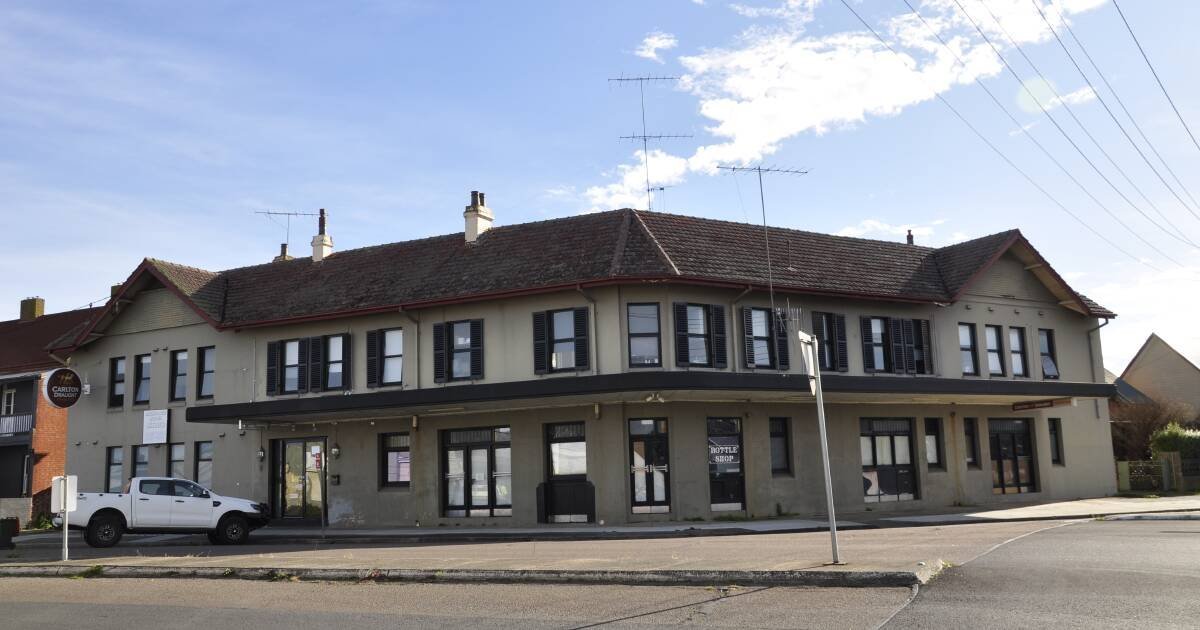
Man, 56, Dies on Pub Floor After Alleged Assault at Goulburn Hotel as Police Fight to Save Him, While 39-Year-Old Is Charged and Walks Free on Bail
- A 56-year-old man collapsed and died at a hotel in the heart of Goulburn after an alleged early-evening altercation on Friday.
- Police officers performed CPR on the unresponsive man until paramedics arrived, but he could not be saved.
- A 39-year-old man, treated in hospital for a head wound, has been charged with common assault and released on conditional bail.
- The death has revived uncomfortable questions about violence in regional pubs and whether country towns are being left behind on public safety.
It was barely dinnertime. The working week was over, and across regional New South Wales people were settling in for a Friday night drink.
But inside one hotel in Goulburn, a night out ended with a man lying motionless on the floor, police officers pressing desperately on his chest and a community left reeling.
He was 56 years old. He did not survive.
Now a 39-year-old man is facing court, a coroner is preparing to examine the circumstances of the death, and residents of one of Australia’s oldest inland cities are asking how a routine evening could turn fatal so quickly.
According to police, the confrontation erupted at a hotel on Bradley Street, one of Goulburn’s main thoroughfares, at about 5.50pm on Friday.
Officers allege the older man became involved in an altercation with the 39-year-old. Exactly what sparked the clash has not been made public.
When police arrived a short time later, they found the 56-year-old unresponsive. Officers immediately began CPR, continuing their efforts until paramedics from NSW Ambulance reached the scene.
Despite the frantic attempts to revive him, the man was declared dead where he lay.
The younger man was arrested. He had suffered a laceration to his head and was first taken to hospital for treatment.
Once discharged, he was transported to Goulburn Police Station and charged with common assault. He was granted conditional bail and is due to face Goulburn Local Court on December 16.
The allegations against him have not been tested in court.
NSW Police Force confirmed an investigation is under way and that a report will be prepared for the coroner, a standard step whenever a person dies suddenly or in unexplained circumstances.
Detectives are appealing for anyone who saw the incident, or who has information, to come forward to Goulburn Police or Crime Stoppers.
For many Australians, a death following a pub altercation triggers painful memories.
The state was shaken more than a decade ago by the deaths of teenagers Thomas Kelly in 2012 and Daniel Christie in 2014, both struck in unprovoked attacks in Sydney’s Kings Cross.
Their deaths ignited a furious national debate about alcohol-fuelled violence.
The NSW Government responded in 2014 with a dedicated offence of assault causing death, carrying a maximum penalty of 20 years in prison, alongside the controversial Sydney lockout laws that reshaped the city’s nightlife for years.
There is no suggestion at this stage of how the 56-year-old died, or whether alcohol played any role in Friday’s incident. That is precisely what the coronial process and police investigation will seek to establish.
But the broader pattern is impossible to ignore. Much of the political attention, and the policing resources, flowed toward Sydney’s late-night precincts.
Regional towns, where the local hotel often serves as the social centre of the entire community, received far less scrutiny.
Goulburn, roughly two hours south-west of Sydney, is a proud city of more than 20,000 people, known for its heritage streetscapes and its long history as a crossroads between the capital and Canberra.
It is not a place that typically makes headlines for violence.
Analysis: What This Means for Australia
This tragedy goes to the heart of a quiet but persistent public safety challenge facing regional Australia.
In smaller centres, police stations frequently operate with fewer officers covering wider areas. Ambulance response times can stretch longer than in the cities.
When violence breaks out, the margin between life and death can be painfully thin.
On Friday, officers arrived quickly and did everything they could.
Yet the case highlights how much frontline police are now expected to act as first responders in medical emergencies, a burden that weighs heavily on already stretched regional policing commands.
There is also a legal dimension that will be watched closely. The 39-year-old has been charged with common assault.
Once a coroner’s report and medical evidence are finalised, prosecutors will review the full brief. In cases elsewhere, charges have been amended as investigations progressed, though no decision of that kind has been announced here.
For the community, the impact is raw. Country pubs are places where neighbours, workmates and families gather.
A death inside one fractures that sense of safety and familiarity, and can leave witnesses, staff and locals carrying trauma for years.
There is an economic sting, too. Regional hospitality venues have battled rising costs, staff shortages and the lingering effects of the cost of living crisis.
Any perception that a town’s nightlife is unsafe can hurt venues that are already doing it tough.
And nationally, the case feeds into the ongoing conversation about alcohol-fuelled violence and whether reforms born in the city have meaningfully reached the bush.
Law enforcement insiders warn that altercations in licensed venues can escalate in seconds, and that even a single blow or fall can prove catastrophic, particularly for older people.
They stress that what appears to be a minor scuffle can carry devastating consequences.
Legal observers note that the charge laid in the immediate aftermath of an incident reflects only the information available to police at that point, and that coronial findings often play a decisive role in shaping how a matter ultimately proceeds through the courts.
Community safety advocates believe regional venues deserve the same focus on staff training, responsible service and security that city precincts received after the high-profile deaths of the last decade.
Public health researchers have long argued that prevention, rather than punishment after the fact, is the most effective way to stop these tragedies, pointing to data from bodies such as the Australian Institute of Health and Welfare on the toll of assault-related injuries across the country.
For now, a family is grieving a man who walked into a hotel on a Friday evening and never came home.
The 39-year-old will have his day in court on December 16.
Until then, police are urging anyone who was at the Bradley Street hotel on Friday, or who has any information, to contact Goulburn Police or Crime Stoppers on 1800 333 000.