
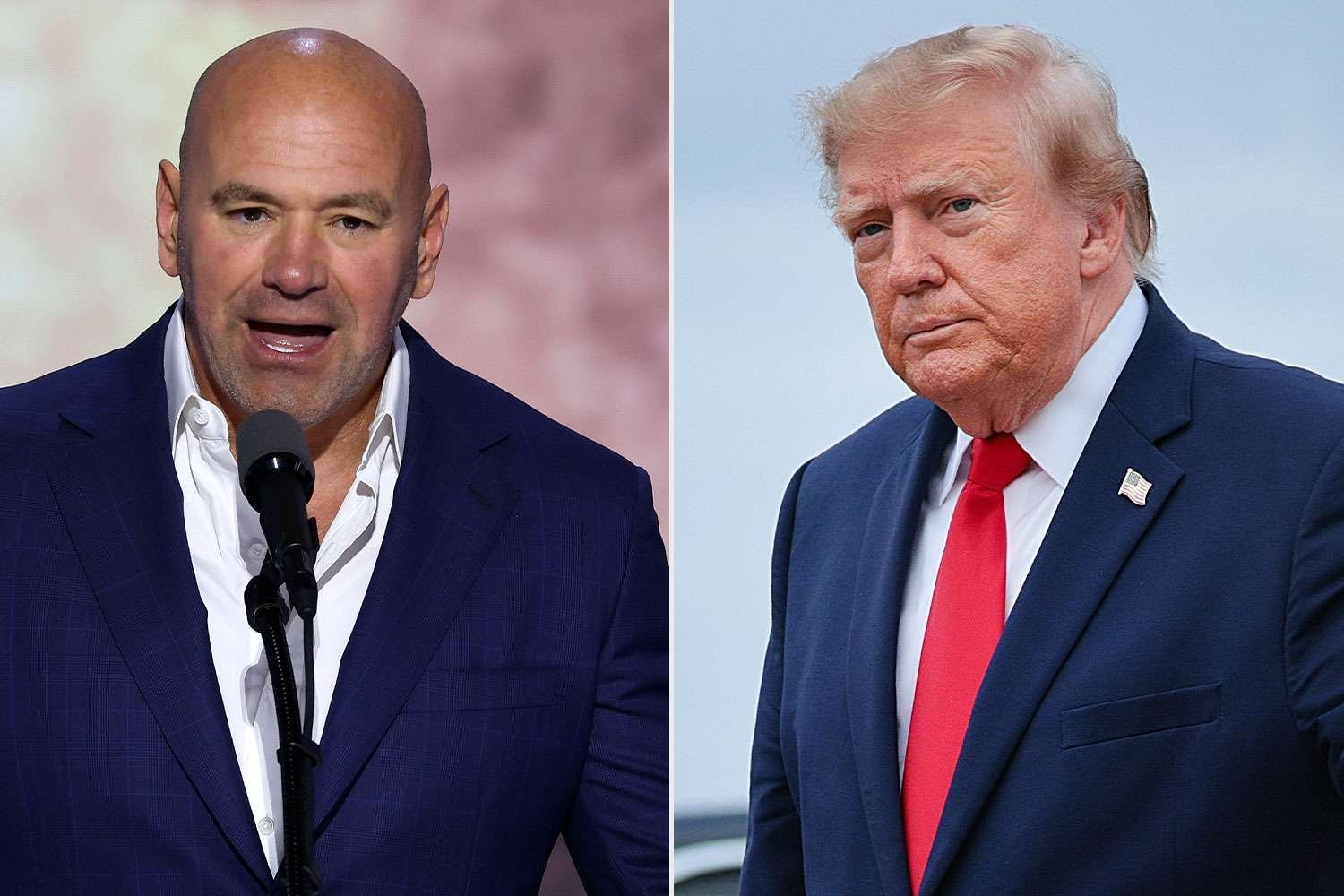
‘Dana, Please Take the Job!’: Donald Trump Backflips on Bizarre Bid to Install UFC Boss Dana White as White House Press Secretary, Insisting He Was ‘Kidding’ as Fighters Were Floated as ‘Assistants’
- Donald Trump publicly begged UFC supremo Dana White to become his press secretary, only to claim 24 hours later it was all “a little fun”
- The role was vacant after Katie Zacharia quit less than five days into the job following a widely panned first appearance at the lectern
- Trump called White a “violent fighter and warrior” and wanted a squad of UFC stars, including foreign fighters, to battle the “Lunatic Left”
- White, 57, posted a photo of himself at the White House podium and confirmed a Monday meeting with the President, despite vowing to quit politics
It is the most powerful podium on the planet. Every word spoken from it is parsed in Canberra, Beijing, Brussels and beyond.
And for roughly 24 hours, the President of the United States appeared to want a cage fighting promoter standing behind it.
Donald Trump has now walked back his extraordinary public appeal for UFC chief Dana White to take over as White House press secretary, telling reporters he had only been joking.
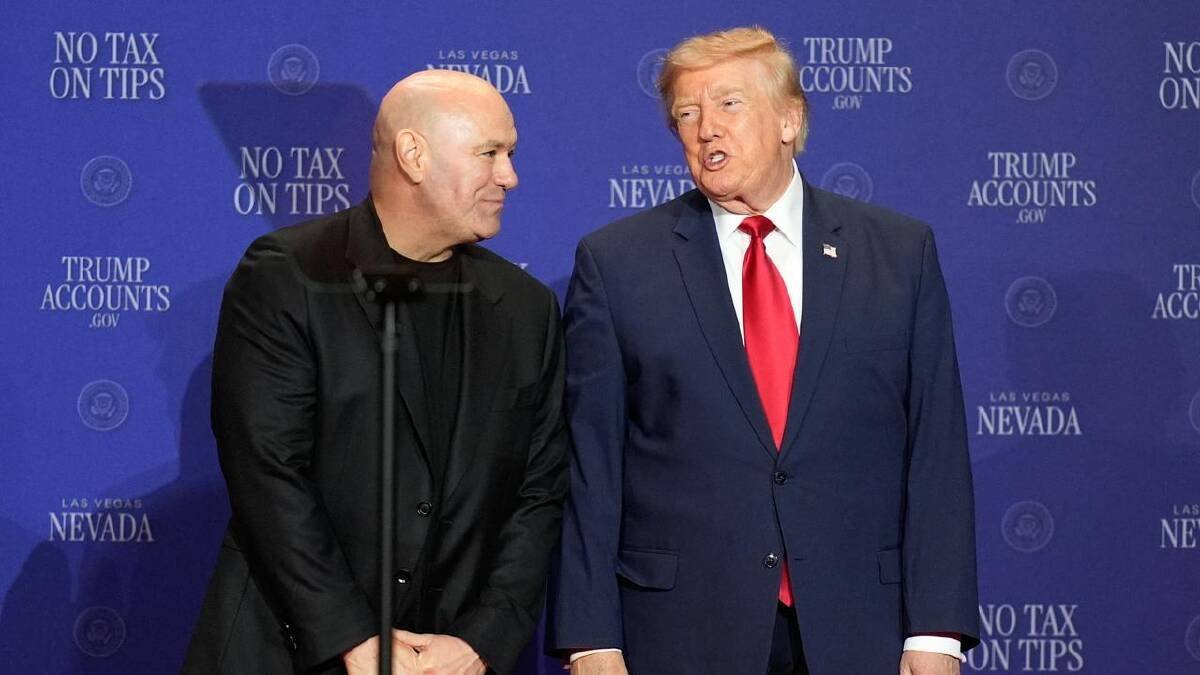
But the episode, and the chaos that preceded it, has once again exposed the instability at the heart of an administration Australia depends on more than almost any other.
The saga began on Saturday, when Trump took to his Truth Social platform with a direct plea to his longtime friend.
He declared White would be a press secretary unlike any before him, signing off with an emphatic “Dana, please take the job!”
The President went further still.
He described the mixed martial arts mogul as a “violent fighter and warrior” and suggested White should bring a cohort of high-profile fighters along with him, noting pointedly that some of them were not American.
Their purpose, according to Trump, would be to defend the administration against what he branded the “Lunatic Left”.
The post landed at a moment of genuine turmoil.
The press secretary position had fallen vacant after Katie Zacharia resigned less than five days after starting, her debut briefing having drawn a torrent of criticism.
By the following day, however, the President was singing a different tune.
Speaking to reporters, Trump insisted the offer had been made in jest, pointing to his proposal of a team of elite fighters serving as White’s assistants as proof he could not have been serious.
It was, he said, simply “a little fun”.
Yet he did not entirely slam the door. Trump added that he believed White liked the idea and praised him as a “very capable guy”.
White, for his part, appeared more than happy to play along.
The 57-year-old shared an Instagram image of himself standing behind the lectern in the famous White House briefing room, fuelling a frenzy of online speculation.
He later revealed he would sit down with Trump on Monday, though what was on the agenda remains unclear.
The bond between the two men stretches back more than two decades, to the early days of the UFC when Trump’s Atlantic City casinos hosted events that other venues shunned.
White has never forgotten the favour.
He became one of Trump’s most visible cheerleaders, delivering speeches at Republican conventions and emerging as a key figure in the 2024 re-election campaign, where his reach into a young, largely male audience was seen as a major asset.
Since then, the UFC and the administration have grown ever closer, with the much-publicised plan to stage a fight card on the White House grounds underlining how deeply combat sport has been woven into Trump’s political brand.
But after the election, White declared he wanted “nothing to do with” politics. He has nonetheless maintained he remains firmly in Trump’s corner, a contradiction that this weekend’s episode has thrown into sharp relief.
Analysis: What This Means for Australia
To many Australians, the idea of a UFC boss briefing the world’s media may sound like light entertainment. It is not.
The White House press secretary is the official daily voice of the US government. When tariffs shift, when military postures change, when the future of AUKUS is debated, it is often from that podium that the first signals emerge.
Officials at the Department of Foreign Affairs and Trade monitor those briefings closely. A role that churns through occupants, or that is treated as a punchline, makes the task of reading Washington’s intentions considerably harder.
For national security, the stakes are concrete. Australia’s defence planning, intelligence sharing and submarine ambitions are bound tightly to American policy.
Mixed messages or erratic communications from the White House ripple directly into decisions made in Canberra.
Economically, markets react within minutes to remarks from the podium. Australian exporters, superannuation funds and the dollar itself are exposed whenever US messaging turns volatile, as seen repeatedly during the tariff war.
There is a social dimension too.
The UFC enjoys a huge following in Australia, and the blurring of sport, entertainment and governance resonates with a local audience increasingly consuming politics through social media rather than traditional news.
Trump’s remark that some of the fighters he wanted were “not from our country” also raised eyebrows, given the strong Australian presence in the sport’s upper ranks.
Security analysts say the deeper concern is not the joke itself, but what it reveals. A press secretary quitting within a week, followed by a public offer to a sports promoter, suggests a communications operation running on improvisation.
Diplomatic observers warn that allies such as Australia prize predictability above almost everything. Every hint of disorder at the top forces partners to hedge, double-check and seek back-channel clarification.
Political strategists believe the stunt may also have been deliberate, a way of changing the conversation after an embarrassing resignation by flooding social media with a more entertaining storyline.
Media industry insiders note that, whether serious or not, the episode cemented the White House briefing room as a stage for spectacle, a trend that has been building for years across American political communication.
Others argue White’s enthusiastic response, and his Monday meeting, leave open the possibility that some formal role, however unconventional, could yet materialise for the man who once swore off politics altogether.
For now, the lectern stands empty.
And in capitals from Canberra to Tokyo, officials are waiting to see who will step up to it next, and whether anyone in Washington is taking the job seriously.