

‘She Is a Fighter’: Indi MP Helen Haines Pulls Through the Worst After Losing Both Legs in Alleged Deliberate Attack Outside Her Wangaratta Office, as Shaken Nation Asks Whether Any Politician Is Truly Safe
- Independent MP Helen Haines, 65, has been upgraded from critical to serious but stable at Melbourne’s Alfred Hospital after more than four days fighting for her life.
- Surgeons amputated both of her legs after she was crushed between vehicles outside her electorate office in Wangaratta on Monday.
- A 43-year-old Tarrawingee man, Brendan Nugent, has been charged over what police allege was a deliberate act.
- Almost $1 million has poured into Save the Children Australia in her name, as candles burned across the country in a vigil of solidarity.
For four agonising days, a country town held its breath.
Then, on Saturday morning, came the first glimmer of light. Helen Haines, the softly spoken independent who has represented the north-east Victorian seat of Indi since 2019, is no longer in a critical condition.
She has lost both of her legs. But she is alive, she is stable, and those closest to her say her heart and mind remain unbroken.
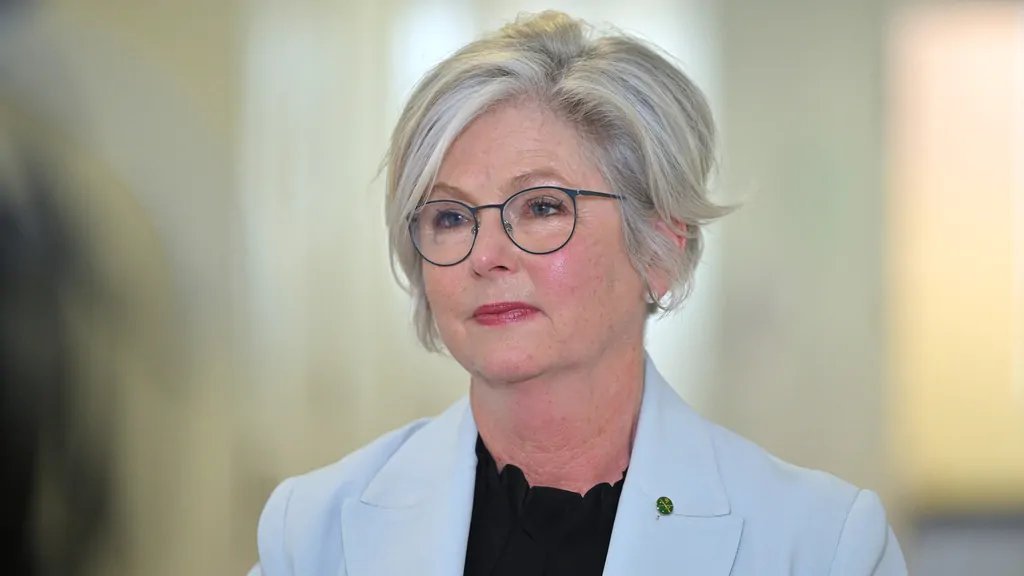
The Alfred Hospital in Melbourne confirmed the upgrade on Saturday, reporting that Ms Haines’s condition had shifted from critical to serious but stable. It is the first positive news since she was airlifted from Wangaratta on Monday in a scene that has shocked the nation.
Police allege Ms Haines was deliberately struck by a vehicle outside her own electorate office, the very place where constituents come to ask for help. She was pinned between vehicles, suffering catastrophic injuries.
Brendan Nugent, 43, from the small locality of Tarrawingee near Wangaratta, has been charged with multiple offences in connection with the incident. The allegations have not been tested in court.
The toll on the 65-year-old was devastating. Her left leg was amputated on the day of the incident.
On Wednesday, her husband, Phil Haines, revealed that surgeons had also been forced to remove her right leg because of the severity of the damage.
Speaking that day, Mr Haines painted a portrait of a woman of enormous compassion and fierce intellect, someone driven by a lifelong hunger to read, learn and make sense of the world around her.
He said the family was hopeful she would recover and took comfort in the fact that, despite everything, both her heart and her mind were in good shape.
He called her a fighter. Saturday’s news suggests he is right.
In Wangaratta, the footpath outside her office has been transformed into a shrine. Bunches of flowers have spread along the shopfront, with new tributes added every day.
On Friday night, locals gathered with candles in her honour, and similar vigils flickered to life in towns and cities right across Australia.
The generosity has been staggering.
Close to one million dollars has been donated to Save the Children Australia in her name, a cause supporters say reflects the values she has championed throughout her career.
Staff and colleagues say they have been overwhelmed by the outpouring.
Among those who witnessed the horror first-hand was local barber Ricky Jefferies, who rushed to Ms Haines’s side in the immediate aftermath.
He said the news of her improvement brought him real joy, and predicted the entire community would share in that relief, even if the progress is only small for now.
To understand why this attack has struck such a raw nerve, you have to understand who Helen Haines is.
A former nurse and midwife, she inherited Indi from fellow independent Cathy McGowan in 2019, becoming the first independent in Australian history to succeed another independent in the House of Representatives.
She has since built a reputation as one of Parliament’s most measured and respected crossbenchers, pushing for a federal integrity commission and championing regional health and communities.
She is, by any measure, not a polarising figure. That is precisely what makes the alleged attack so chilling.
It also comes against a backdrop of mounting hostility towards elected officials.
In recent years, electorate offices across the country have been vandalised, graffitied and targeted during heated protests, particularly amid tensions over the conflict in the Middle East.
Federal politicians from all sides have spoken openly about abuse, stalking and threats directed at them and their staff.
Overseas, the dangers have proven deadly.
In Britain, MPs Jo Cox and Sir David Amess were both killed while carrying out their duties in their own constituencies, in 2016 and 2021 respectively.
Analysis: What This Means for Australia
The alleged attack on Ms Haines strikes at the foundations of Australian democracy: the idea that ordinary people can walk off the street and speak face-to-face with their representative.
Electorate offices are deliberately open and accessible. Many sit on suburban shopping strips or country main streets, staffed by a handful of workers with minimal protection.
That openness has long been a point of national pride. It is now under intense scrutiny.
From a national security perspective, the incident will inevitably prompt questions about how threats against parliamentarians are assessed and managed. The Australian Federal Police is responsible for protective security for federal MPs, but the vast majority of electorate offices operate without any permanent security presence.
For crime and law enforcement agencies, the challenge is acute. Protecting 151 lower house members and 76 senators across a continent, many in sprawling regional seats like Indi, is a formidable logistical and financial task.
There is a community cost too. Regional towns like Wangaratta pride themselves on safety and familiarity.
A violent incident on a main street, in broad daylight, leaves lasting scars on residents, witnesses and first responders alike.
And there is a democratic cost.
If serving in public office comes with the risk of catastrophic harm, fewer good people may be willing to put their hands up, particularly women and independents without the backing of major party machinery.
Security analysts say the incident is likely to accelerate a review of protections for electorate offices, including physical barriers, duress alarms and better threat-reporting systems for staff.
Law enforcement insiders warn there is a delicate balance to strike. Turning offices into fortresses could erode the very accessibility that makes local representation meaningful.
Political observers believe the cross-party unity seen this week, with tributes flowing from every corner of Parliament, may create rare momentum for reform. Some argue that funding for security upgrades should be treated as essential infrastructure rather than an optional extra.
Community advocates, meanwhile, stress that the overwhelming response in Wangaratta, the flowers, the candles and the donations, shows that the instinct of most Australians in the face of violence is compassion, not fear.
For now, the focus remains on a hospital bed in Melbourne, where a former nurse who spent her life caring for others is now the one being cared for.
The road ahead will be long and gruelling. But for the first time since Monday, the people of Indi have reason to hope.
The case against Mr Nugent is expected to proceed through the courts.