
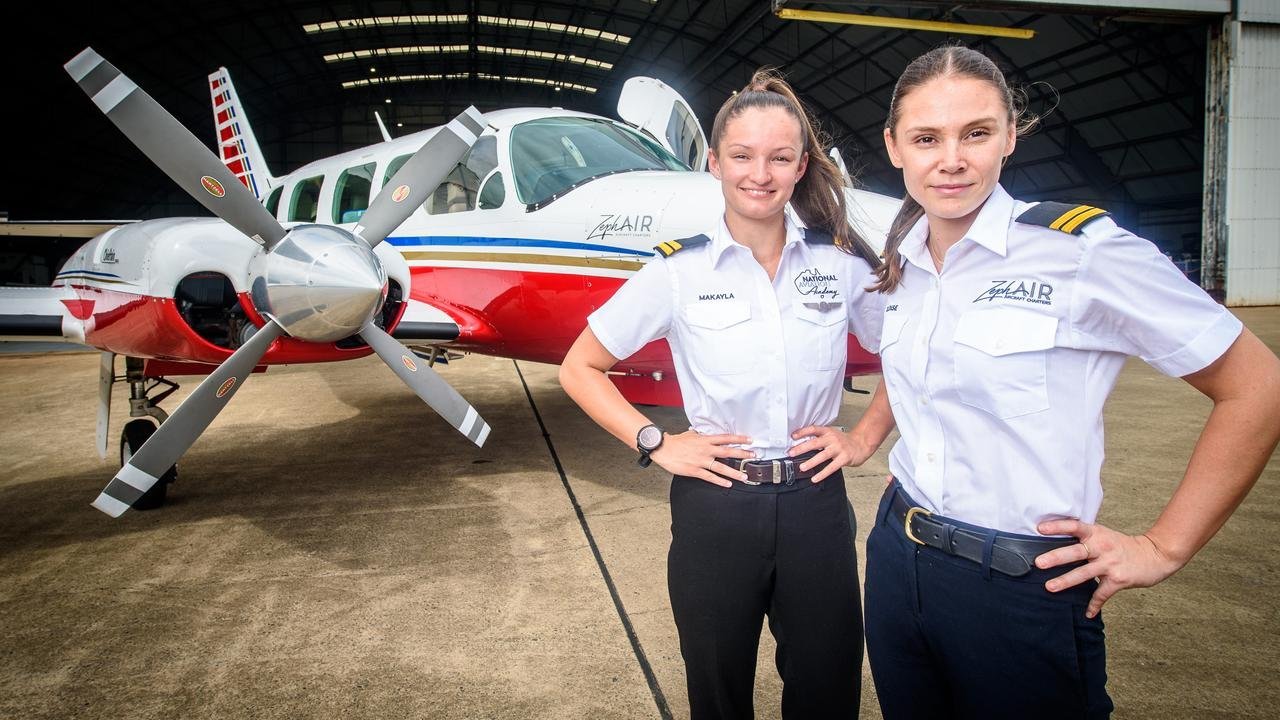
‘Can My Daughter Have Your Number?’: Female Pilots Flying the Kimberley’s Vast Outback Reveal What Passengers Really Think as Shock Figures Show Women Hold Just 8 Per Cent of Australia’s Pilot Licences
- Fewer than one in ten licensed pilots in Australia is a woman, according to the latest figures from the nation’s aviation safety regulator
- Female pilots in Western Australia’s remote north say the stereotypes come mostly from passengers, not colleagues, with some travellers mistaking captains for flight attendants
- Parents are now approaching women pilots mid-journey asking for career advice for their daughters
- Seven years and $8 million into a federal push to get more women flying, advocates say the cockpit door is still only half open
The red dirt stretches for hundreds of kilometres in every direction. There are no traffic lights, no highways worth the name, and often no road at all.
In this landscape, the person at the controls of a tiny single-engine plane is not a luxury. She is a lifeline.
Yet across Australia, she remains a rarity.
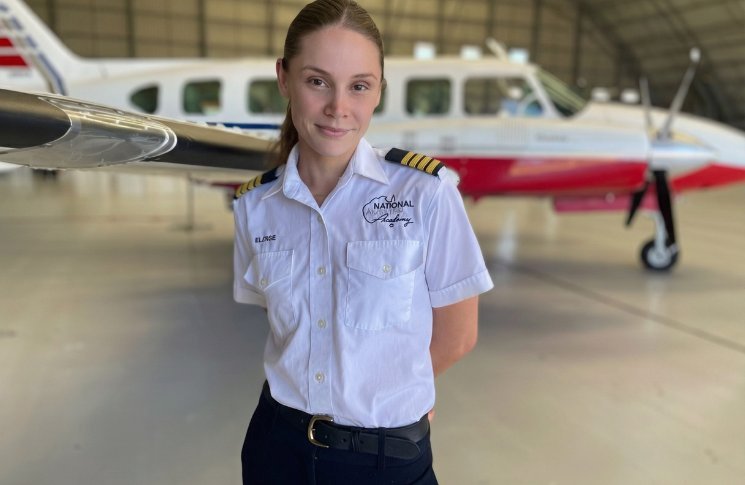
New data from the Civil Aviation Safety Authority has laid bare one of the most stubborn imbalances in the national workforce. Women account for only 8 per cent of the country’s licensed pilots.
That means more than 90 in every 100 people holding a licence are men, in an industry that keeps regional Australia moving.
Nowhere is the gap more visible, or the stakes more obvious, than in the Kimberley.
Western Australia’s far north has long served as a proving ground for ambitious young aviators.
Pilots build their hours ferrying passengers, workers and supplies between isolated communities, cattle stations and tourist sites, often aboard the six-seat Cessna 210, nicknamed the ‘LandCruiser of the sky’ for its rugged reliability.
Caroline Jamieson, a senior pilot with Shoal Air in Broome, and Greta Taine, who holds the same role at the operator’s Kununurra base, both fly these remote routes.
And both say the most outdated attitudes rarely come from the men they work alongside.
They come from the passenger seats.
Ms Jamieson said travellers had, on occasion, assumed that female pilots were flight attendants. Despite a gradual rise in women entering the field, she said old-fashioned assumptions about who belongs in the cockpit still surface.
But there is a flip side.
Ms Jamieson said a growing number of passengers now approach her to ask whether she would share her contact details so their daughters, curious about flying, could seek her guidance.
She believes simply being seen in the job convinces young women it is within their reach.
She told the ABC she would welcome more female friends in the industry and actively encourages girls to give it a go, though she did not view the imbalance itself as a negative experience.
Ms Taine described a strong sense of mutual respect among pilots in the region. The isolation, she said, forces everyone to look out for one another.
Having grown up with a family member in aviation, she understood the lifestyle early, and she urged girls not to let gender stop them. The work is demanding, she said, but deeply rewarding, and it brought her to a corner of the country she might otherwise never have seen.
The struggle to bring women into Australian aviation is not new.
Pioneers such as Nancy Bird Walton blazed a trail across the outback skies in the 1930s.
Decades later, Deborah Lawrie fought a landmark discrimination battle against Ansett in the late 1970s before becoming one of the first women to fly for a major Australian airline.
Progress since then has been painfully slow.
Recognising the problem, the federal government launched the Women in the Aviation Industry Initiative in 2019, committing $8 million to lift both participation and retention through career pathway and professional development programs.
In 2023, the Department of Infrastructure, Transport, Regional Development, Communications, Sport and the Arts released a Strategic Action Plan setting out how the initiative would be delivered through to 2026.
With that deadline now arriving, the 8 per cent figure is an uncomfortable scorecard.
Analysis: What This Means for Australia
This is not simply a story about fairness. It is a story about who keeps the country connected.
In the Kimberley, aircraft operate almost like taxis, according to Hilary Wilkins, vice-president of the Australian Women Pilots Association and a helicopter pilot herself.
When the nearest town may be a day’s drive away, or cut off entirely in the wet season, small planes carry everything from tourists to essential workers.
An industry that draws overwhelmingly from half the population is, by definition, fishing in a shallow pool.
Airlines and charter operators worldwide have grappled with pilot shortages in the years since the pandemic, and regional operators often feel the squeeze first as experienced pilots are lured to the major carriers.
For remote communities, any shortfall can mean fewer flights, higher fares and slower access to services, adding pressure to the broader cost of living crisis already biting outside the capital cities.
There are wider social consequences too.
Career paths that remain closed off, in practice if not on paper, limit opportunities for young women in regional Australia and feed into the persistent gender pay gap in highly skilled technical professions.
Ms Wilkins argues the remote north is, paradoxically, one of the best places to fix the problem. Much of the flying is single-pilot, meaning newcomers must make every call themselves: where to go, how to manage fuel, how to handle passengers.
She said that experience prepares pilots well for airline careers, and that Broome offers the rare chance to progress from small single-engine aircraft to twin-engine planes and larger passenger aircraft without leaving town.
She also believes visibility matters enormously.
Boarding a flight from Perth to Broome and discovering the captain is a woman, she said, can make all the difference to a young traveller wondering what is possible.
Professional networks, she added, are key to closing the gap, and she noted that women confront stereotypes in every industry, not just aviation.
Industry observers believe the association’s call for family-friendly policies, stronger professional development and clearer career pathways will be central to whatever replaces the current government plan.
Workforce analysts warn that rosters built around long stints in isolated bases can make it difficult for pilots of either gender to balance careers with raising children, and that losing trained women mid-career wastes years of costly training.
Regional aviation insiders say the solutions are well understood. The question is whether operators and policymakers will commit to them once the current funding cycle ends.
For now, the women of the Kimberley keep flying, one remote airstrip at a time, and fielding the same question from the back seats.
Can my daughter call you?