
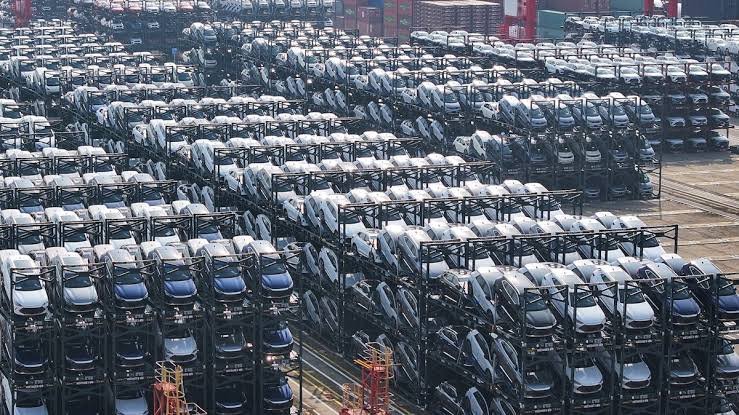
‘Smartphones on Wheels’ Spying on Military Bases? Allies Slam the Gates on Chinese Cars, but Australia Refuses to Follow as Defence Minister Admits ‘We Haven’t Taken That Step’
- The US has barred Chinese-made BYD vehicles from a major American air base in Japan, branding them an “unacceptable and unmitigable risk”.
- Poland, the UK, Czechia and Switzerland have all moved to keep connected Chinese cars away from sensitive defence sites.
- Defence Minister Richard Marles confirmed Australia has not imposed any similar ban and says Washington has not asked it to.
- A Chinese carmaker in Australian showrooms uses cameras from a company whose surveillance gear was stripped from Commonwealth buildings in 2023.
They glide silently past security checkpoints, packed with cameras, microphones, GPS trackers and always-on internet connections.
To millions of motorists, they are simply affordable, high-tech family cars. To a growing number of Western intelligence agencies, they are something far more troubling: potential surveillance platforms parked right outside the gates of military bases.
Yet while key allies are slamming the door on Chinese-built vehicles near their most sensitive defence installations, Australia is choosing to keep watching rather than act.
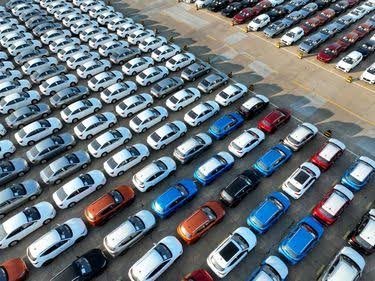
Defence Minister Richard Marles confirmed this week that the Albanese Government has not banned Chinese-made cars from Australian military sites.
He said authorities continue to keep a close eye on security around bases in every respect, but conceded the government had not taken that step, according to Reuters.
Mr Marles also revealed there had been no request from the United States for Australia to impose restrictions of its own.
His comments come just weeks after the US military banned BYD vehicles from Kadena Air Base on the Japanese island of Okinawa, one of the most strategically important American installations in the Indo-Pacific.
Brigadier General John Gallemore, who ordered the ban, said the move followed a thorough, consultative process which concluded the vehicles posed an “unacceptable and unmitigable risk to our personnel and our mission”.
That is blunt language from a military commander. And Washington is far from alone.
Earlier this year, Poland barred Chinese-manufactured vehicles from entering secured military facilities unless their recording and connectivity functions had been switched off. Polish military personnel were also forbidden from plugging work phones into the cars’ infotainment systems.
The United Kingdom and Czechia have introduced comparable restrictions.
In Switzerland, authorities have gone further, prohibiting connected vehicles from driving near sensitive defence sites altogether.
Swiss Federal Intelligence Service director Serge Bavaud delivered a chilling assessment to broadcaster SRF, describing the cars as “smartphones on wheels”. He warned that authorities in China work closely with manufacturers and that intelligence services can access data captured by the vehicles, including conversations.
The anxiety is rooted in how modern cars actually work. Today’s electric and connected vehicles are rolling data centres, constantly mapping their surroundings, logging locations and, in many cases, transmitting information back to manufacturers’ servers.
Western security agencies point to Chinese national security laws that can compel companies to cooperate with state intelligence work. That, critics argue, makes it impossible to guarantee where sensitive data might end up.
Tellingly, Beijing itself appears to share the concern in reverse. The Chinese government has previously barred Tesla vehicles from sensitive locations inside China.
In Australia, the debate exploded into public view in September when the ABC’s Four Corners aired a wide-ranging investigation into data security in connected vehicles.
The program demonstrated how certain cars could be accessed remotely, although only after a hacker had first gained physical access to the vehicle.
It also turned the spotlight on Chinese carmaker Leapmotor and its use of cameras supplied by Dahua, a company better known for building security systems.
That name carries heavy baggage in Canberra. In 2023, Dahua cameras were ripped out of Australian Government buildings over spyware fears, following similar crackdowns in the United States and United Kingdom.
Shadow Defence Minister James Paterson told Four Corners it was “extraordinary” that vehicles fitted with the same company’s cameras are free to drive around government buildings and installations.
He pointed to the firm’s links to human rights abuses and the mass surveillance of Uyghur people in China.
Leapmotor has pushed back hard. The company acknowledged its vehicles use Dahua cameras but insisted they are independently tested and certified for privacy.
It said footage can only be exported through the dashcam function, which requires a USB stick to be physically plugged into the car.
Analysis: What This Means for Australia
Australia’s decision to hold back places it at odds with a growing bloc of allies at a time when its defence relationships have never been more closely scrutinised.
Under AUKUS and expanded US force posture arrangements, including the rotation of American Marines through Darwin, Australian bases are increasingly shared spaces. A security gap on Australian soil is, by extension, a potential gap for Washington and London.
For law enforcement and defence security officials, the challenge is enormous.
Chinese brands are among the fastest-growing in the Australian new car market, driven by the push towards electric vehicles and the soaring cost of living.
Many Defence personnel, contractors and their families almost certainly own one.
Any ban would therefore land squarely on ordinary Australians, raising awkward questions about compensation, enforcement and fairness.
There are also economic and diplomatic stakes. Canberra has spent years stabilising its relationship with Beijing after a bruising trade war.
A blanket ban could be seen as provocative, risking fresh retaliation against Australian exporters.
But the counter-argument is stark. If allies have concluded the risk cannot be mitigated, critics ask why Australia believes it can manage what others cannot.
The issue feeds into a broader national conversation about foreign interference, cyber security and Australia’s dependence on Chinese technology, from solar panels to smart home devices.
Security analysts say the Kadena decision is significant because it came from a frontline military commander rather than politicians, suggesting a concrete operational assessment rather than symbolic posturing.
Law enforcement insiders warn that the danger lies less in a single car and more in aggregated data. Thousands of vehicles quietly logging movements around bases could, over time, help build a detailed picture of patterns of life, shift changes and sensitive activity.
Defence observers believe Australia may ultimately be forced to adopt a middle path similar to Poland’s, permitting vehicles only when cameras and connectivity are disabled, rather than imposing outright bans.
Industry observers caution against singling out one nation’s manufacturers, noting that virtually all modern vehicles harvest vast amounts of data, and arguing that robust, brand-neutral rules would be more effective than piecemeal restrictions.
For now, the Albanese Government insists it is watching closely. Whether watching will be enough, as allies lock their gates, remains the question Canberra cannot avoid for much longer.