
‘F**king Yes I Am’: Family Racially Abused in Melbourne Bunnings Carpark Turns Down Art Teacher’s Plea for Face-to-Face Apology, Saying Words Mean Nothing Without Real Change
- A Melbourne family targeted with a ‘go back to China’ tirade in a Hawthorn Bunnings carpark has declined the abuser’s request to apologise in person.
- Children’s art teacher Alice Krause allegedly answered a bystander who called her a racist with a defiant, expletive-laden ‘yes’, before later issuing a public apology.
- The victim has lived in Australia for three decades, and his son warns that open racism of this kind must never be allowed to feel normal.
- The family has praised the young stranger who intervened, saying she ‘showed what being a good Australian really means’.
Thirty years. That is how long the man at the centre of this ugly confrontation has called Australia home.
He has built a life here, raised a family here and, by his family’s account, come to love this country deeply.
Then, in the ordinary setting of a hardware store carpark in Melbourne’s leafy east, he was told to go back to where he supposedly came from.
Now his family has sent a message that will resonate far beyond one suburban parking lot: sorry is not enough.
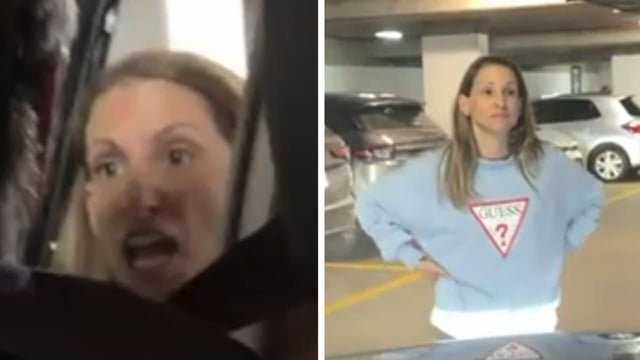
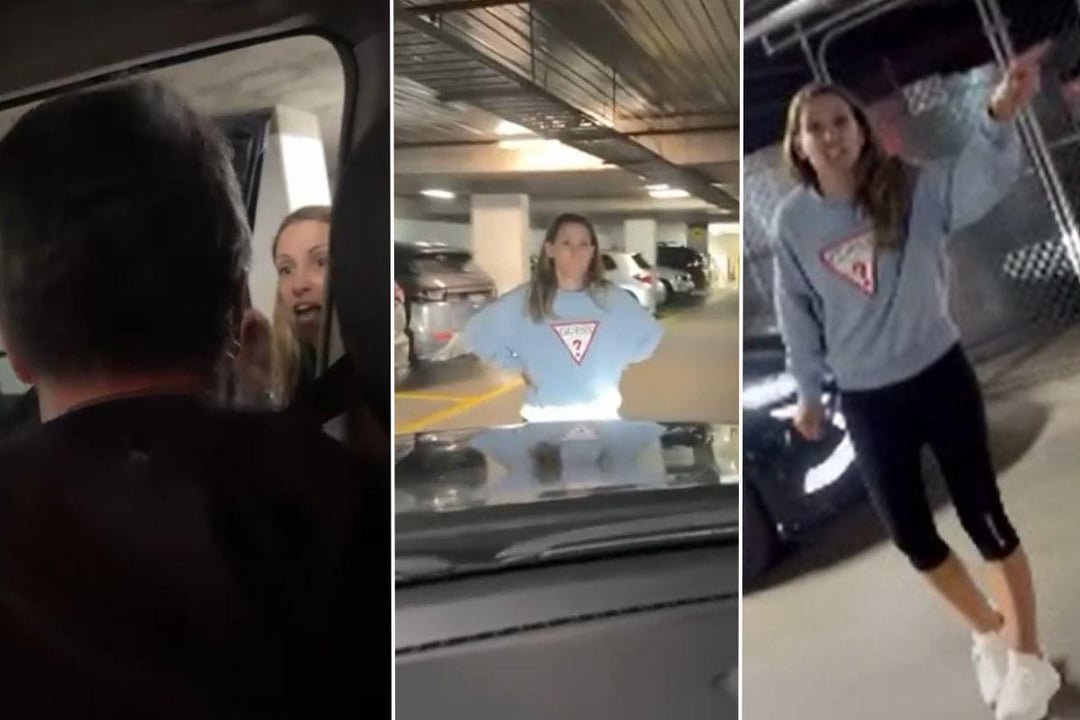
The family has rejected a request from Alice Krause, a children’s art teacher, to apologise to them face to face after she was filmed hurling racist abuse at the father during a road rage dispute outside Bunnings in Hawthorn.
The clash erupted after a traffic disagreement between the two drivers. Krause told the man that ‘that’s not how you drive in this country’ and that he should ‘go back to China’.
When a young woman nearby stepped in and labelled her behaviour racist, Krause allegedly fired back: ‘F**king yes I am.’
Footage spread rapidly and Krause was identified online. On Friday she released a public apology, saying she was ‘deeply sorry’ and acknowledging the man deserved to be treated with dignity and respect.
She also said she hoped she might be given the chance to apologise to him in person.
The family’s answer, delivered in a statement to 7NEWS, was polite but firm. They had seen her apology and saw no need for a meeting.
What they want instead is reflection.
They urged Krause to think carefully about why she held those views of them at all, and to change the way she sees people from different backgrounds rather than simply regretting what happened.
That, they said, would mean far more than any apology.
They also noted that, despite her public statement, they had still not received a personal apology from her.
The victim’s son, Daniel Chen, summed it up bluntly. ‘Actions speak louder than words,’ he said.
Mr Chen described the incident as ‘ugly and confronting’ and said the openness of the abuse was precisely why it needed to be exposed.
He said the fact that someone felt able to voice such views so proudly showed that speaking out was necessary, and that behaviour like this must never become so normalised that people express it without considering the harm or the consequences.
He added that he was glad the episode had raised awareness about racial discrimination, something he said many migrants have sadly experienced.
The incident lands amid a long and painful national conversation about racism in Australia.
Asian Australians in particular have repeatedly reported spikes in abuse in public spaces, with community groups documenting a surge in harassment during the pandemic years, when Chinese-Australians were frequently scapegoated.
The phrase ‘go back to China’ is not new.
Advocates say it is among the most common slurs reported, often directed at people born in Australia or who, like this father, have lived here for decades.
It carries a specific sting: the suggestion that belonging is conditional, and can be revoked in a moment of anger behind the wheel.
The rise of smartphone footage has also transformed how such incidents play out.
What once might have ended as an unpleasant memory for the victim now becomes a viral public reckoning within hours, raising fresh questions about accountability, online identification and the line between exposure and pile-on.
Analysis: What This Means for Australia
At its core, this is a story about social cohesion, the invisible glue that holds a multicultural nation together.
Almost half of all Australians were born overseas or have at least one parent who was, and the country’s economy, workforce and communities depend on migrants feeling safe and welcome.
Every incident like this chips away at that trust.
Racism in public spaces does not stay with one victim; it ripples through families and communities, shaping where people feel comfortable shopping, driving or simply existing.
There are serious implications for public safety, too. Road rage is already a recognised danger on Australian roads, and when it fuses with racial hostility, the potential for escalation grows.
Victoria has anti-vilification laws, and the state has moved in recent years to strengthen protections against hate conduct, but enforcement in fleeting, everyday encounters remains notoriously difficult.
The fact that the accused works with children will also prompt uncomfortable questions for parents and educators about the values modelled to young people.
Bodies such as the Australian Human Rights Commission have long warned that everyday racism is under-reported, with many victims choosing silence over confrontation. This family chose differently, and in doing so has put the spotlight on a problem many Australians would rather not see.
Social cohesion researchers say incidents like this are a barometer of community attitudes, and that public tolerance for open racism is a warning sign worth taking seriously.
They argue that national surveys such as those tracking social cohesion consistently show discrimination remains a lived reality for many migrant Australians.
Community advocates believe the family’s response is unusually powerful. By refusing a staged reconciliation and demanding genuine change, they say, the family has reframed the debate from personal embarrassment to collective responsibility.
Legal observers note that public apologies, while sometimes sincere, are increasingly viewed with scepticism when they follow viral exposure, and that victims are under no obligation to accept them on the offender’s terms.
The family reserved its warmest words for the young woman who stepped in.
They said she did not know them at all, yet she acted when she saw what was happening, reminding them that there are many good people in Australia.
‘To us, she showed what being a good Australian really means,’ they said.
Mr Chen said the burden should never have fallen on a stranger, but thanked her for confronting Krause and telling her she was wrong.
Despite everything, the family insists they love Australia and want it to be a safe, welcoming place for everyone. They do not want more anger or hatred, they said, only for people to be a little kinder to one another.