
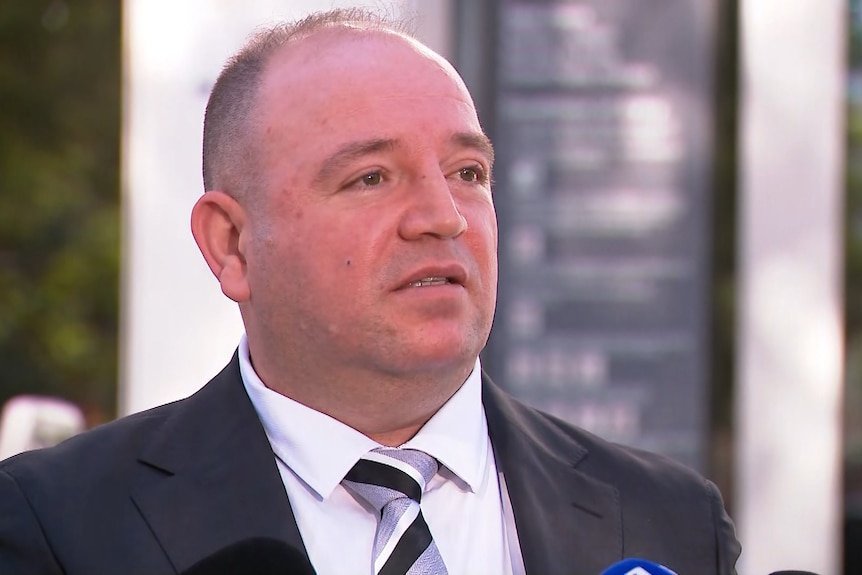
‘I Can Still Hear the Children Crying’: Bondi Massacre Hero Who Wrestled a Shotgun From a Terrorist Reveals the Bullets Still Lodged in His Body, the Family Feud That Tore Him Apart, and Why He Would Do It All Again
- Ahmed Al Ahmed, the father-of-two who tackled a gunman during the deadliest terror attack on Australian soil, has been left with permanent nerve damage and two bullets still lodged in his shoulder
- Nearly a year on, he still cannot bring himself to climb the Bondi footbridge where the carnage unfolded, and says the screams of women and children still echo in his mind
- The celebrated hero, showered with more than $2.5 million in public donations, says sections of the media “smeared” him by turning a bitter family dispute into headlines while he was still recovering
- Now launching a book and a foundation for women and children fleeing family violence, he insists: “I did it for humanity”
He hid between parked cars. He was safe.
The gunmen had not seen him.
And then Ahmed Al Ahmed made the choice that would save lives and shatter his own.
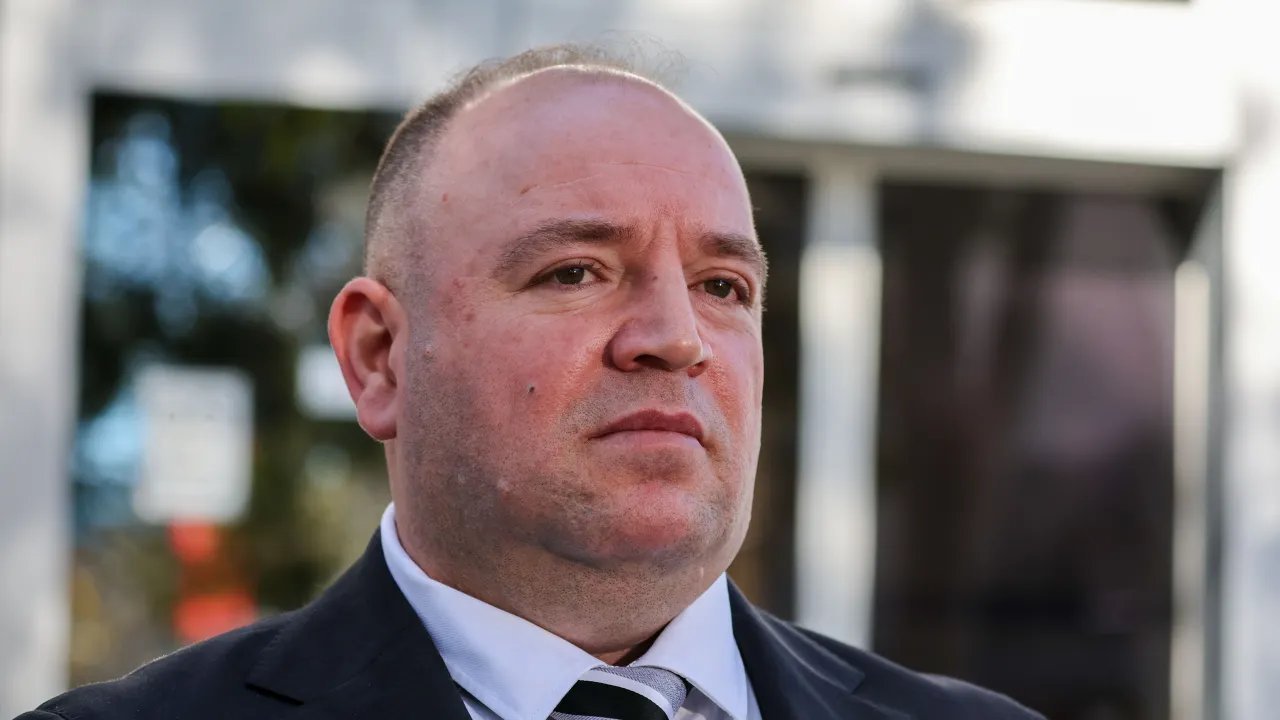
Almost a year after terror tore through a Hanukkah celebration at Bondi, the man who threw himself at an armed killer carries the cost in his flesh, his sleep and his family.
Two bullets remain buried in his shoulder. His arm will never fully work again.
And the sounds of that December afternoon have never left him.
“I’m still hearing the kids crying and the women and everyone from there, you know, asking for help,” he says.
On December 14, 2025, Mr Al Ahmed, a former business owner from Sydney’s south, had gone to Bondi Beach simply to walk with his cousin.
When gunfire erupted near Archer Park, the pair dived for cover near the northern pedestrian bridge that has since become a grim landmark in the nation’s memory.
Unseen, he could have stayed put. Instead, he prayed.
“God, please help me. Oh lord, please aid me to stop this b**tard,” he recalls asking.
He launched himself at Sajid Akram, locking the gunman in a chokehold with his right arm while wrenching at the shotgun with his left. The weapon came free.
With the gun now in his hands and aimed at the attacker, he roared at him to get out, shouting “motherf**ker” and ordering him to leave.
Akram retreated, but only briefly. Mr Al Ahmed sought shelter behind a palm tree and was shot.
Sajid Akram was killed by police at the scene. His son, Naveed Akram, now faces more than 70 charges, among them 15 counts of murder and one count of committing a terrorist act.
At least 15 innocent people died. Dozens more were wounded.
Surgeons extracted three bullets from Mr Al Ahmed’s arm across multiple operations. Two could not be removed.
The nerve damage left behind causes constant pain and severely restricts his movement.
“Still today the healing is very slow,” he says. “There’s big damage.”
The invisible wounds cut just as deep. Returning to Bondi for the first time with reporters, he stopped short of the footbridge.
“It’s a bad memory,” he said simply. The violence still invades his dreams.
In the days that followed the massacre, the nation embraced him. Prime Minister Anthony Albanese visited his hospital bed, as did NSW Premier Chris Minns and rabbis from Australia and overseas.
A GoFundMe campaign drew more than $2.5 million from upwards of 43,000 donors. Presented with the giant cheque, his response was disbelief: “I deserve it?”
Weeks later, the Sydney Cricket Ground crowd rose to its feet before the opening day of the Test to honour him and 13 others who had stepped up that day.
In March, Waverley Council handed him a symbolic key to the city and a lifetime beach parking pass. His “heart cries”, he told the gathering.
But the glow faded fast. His father accused him of assault before later withdrawing the allegation, while his two brothers were arrested for allegedly threatening him.
In August, he was required to appear at Bankstown Local Court.
Mr Al Ahmed says some outlets exploited and humiliated him. “They focused on personal issues with my family, with my father and my brothers.
They tried to smear my reputation,” he says, adding that he wished he had been shown more humanity while still recovering.
Most of the disputes have since been resolved, though wounds remain. “My father, he realised his mistake and he regrets [it] after,” he says.
“I forgive him. I forgive everyone.”
Analysis: What This Means for Australia
Mr Al Ahmed’s story cuts to the heart of a question Australia has wrestled with since that day: how a diverse nation holds together when terrorism strikes at one community’s celebration.
A Muslim man of Syrian origin risking his life to disarm an attacker at a Jewish festival is a powerful rebuttal to those seeking to inflame division.
He is emphatic on the point. “They’re not Muslim.
Islam is free from this,” he says of the shooters.
For social cohesion, the stakes could hardly be higher. Attacks of this scale threaten to fracture neighbourhoods along religious lines and fuel retaliatory hatred.
Figures who cross those lines become anchors for national unity.
His case also raises uncomfortable questions about how Australia supports the civilians who confront violence. A former carpenter and construction supplier, he admits returning to that trade without help would now be difficult.
Public generosity has softened the blow, but long-term rehabilitation, mental health care and protection from intrusive scrutiny are not guaranteed for ordinary people thrust into extraordinary moments.
And for law enforcement, the prosecution of Naveed Akram, alongside ongoing work by NSW Police Force and the Australian Federal Police, will be watched closely by a public still demanding answers.
Security analysts say bystander interventions, while sometimes decisive, expose a painful truth: in the first chaotic minutes of a mass shooting, civilians are often the only ones close enough to act.
Community leaders believe the image of Mr Al Ahmed wrestling away a terrorist’s weapon has done more to calm interfaith tensions than any official statement could.
Media ethics observers warn that the swift pivot from celebrating him to dissecting his family troubles reflects a broader pattern in which trauma survivors are elevated, then torn down.
Mental health advocates note that the trauma recovery he describes, from flashbacks to disrupted sleep, is typical among survivors of mass-casualty events and can persist for years without sustained support.
Despite everything, Mr Al Ahmed says he has no regrets. “I would change nothing.
This was God’s will and this was my fate,” he says. “I’m proud to be Australian of Muslim heritage and I protected innocent people.”
He still attends physiotherapy and specialist appointments, fighting to save what movement he can. Yet he is pushing forward.
His debut book, Light Will Win, traces his journey from Syria to the steps of Waverley’s council chambers. He is also establishing the Ahmed Al Ahmed Foundation to help women and children in need, particularly those escaping domestic violence.
He calls himself “like any other guy”, a hard worker devoted to his wife and two young daughters.
“I’m a proud Aussie and what I did, I didn’t do it for the Muslim community, I did it for the Australian community,” he says. “I did it for humanity.”