
‘Entirely Reversible’: Australia Joins Global Allies in Blistering Demand That Israel Open Gaza’s Borders as Deadly Floods Leave Thousands of Families Exposed to Winter
- Five people are dead and thousands of families have lost their shelters after torrential rain sent floodwaters as high as 1.5 metres surging through Gaza’s makeshift camps
- Around 150,000 tents and other vital supplies are reportedly stuck at the border while desperate families face the onset of winter in the open
- Australia has signed a joint statement with the UK, Canada and Italy demanding Israel allow immediate and unimpeded aid into the enclave
- The diplomatic push comes as Israel itself is in political limbo, with Benjamin Netanyahu’s coalition falling short of a majority after October’s election
The water came fast, and there was nowhere to run.
Across a strip of land already reduced to rubble by years of war, families huddled beneath canvas and plastic sheeting woke to find floodwaters swallowing their belongings, their bedding and, in the worst cases, their loved ones.
Now, with winter closing in and the death toll climbing, Australia has stepped into the diplomatic firing line alongside three of its closest Western partners, issuing a pointed warning to Israel that time is running out.
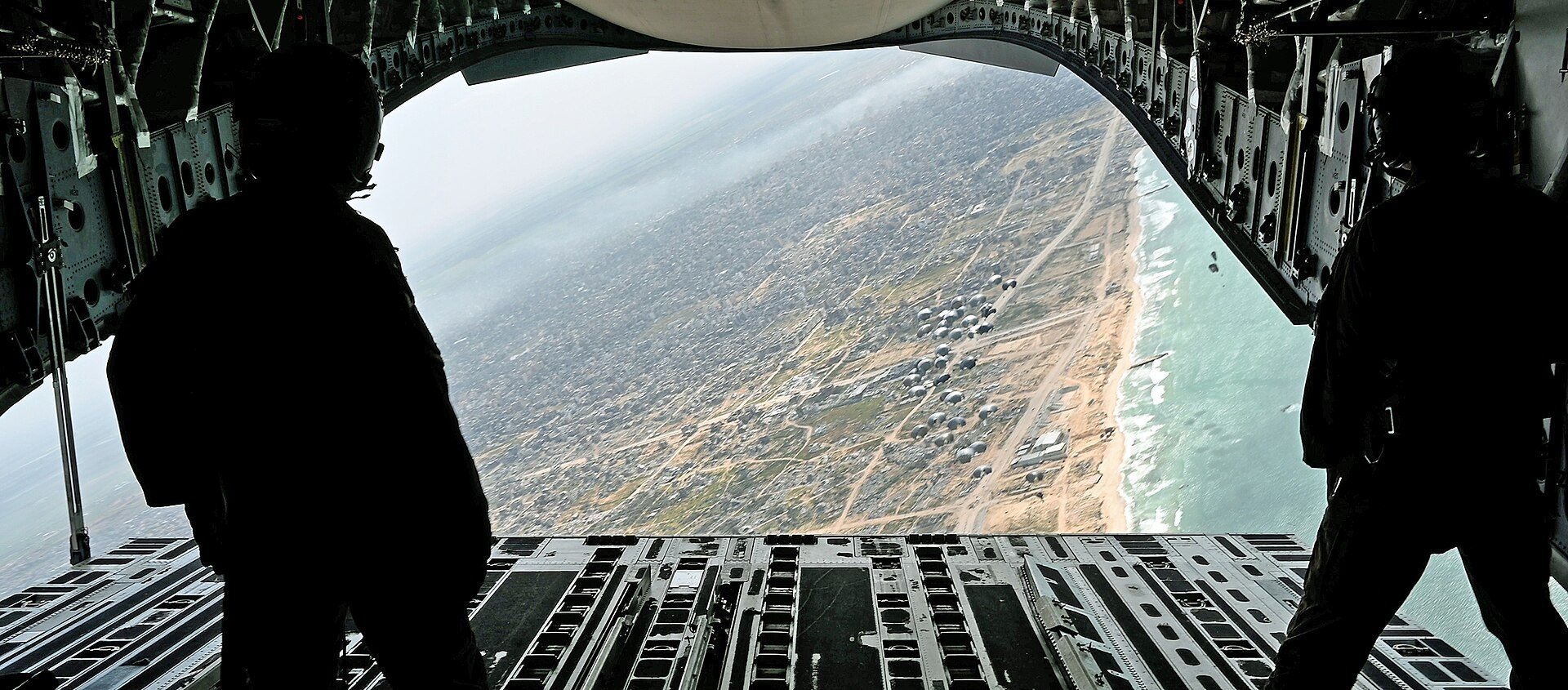
Foreign ministers from Australia, the United Kingdom, Canada and Italy have put their names to a joint statement calling on Israel to dismantle the obstacles preventing humanitarian supplies from crossing into Gaza.
The four nations described conditions on the ground as dire, stressing that intervention is needed now, before the cold season fully takes hold.
Their central complaint is stark.
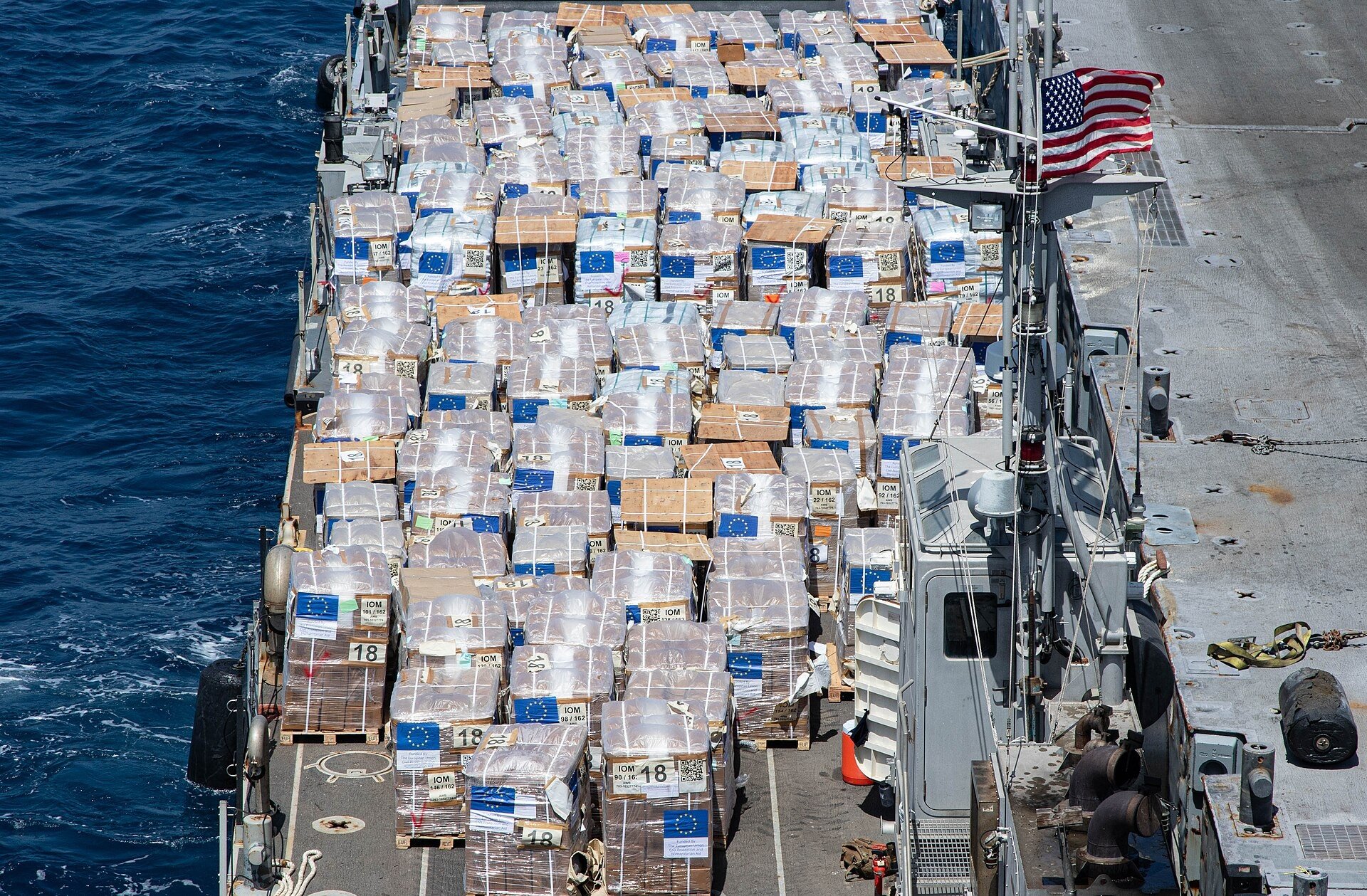
According to the ministers, some 150,000 tents, along with other essential supplies, are sitting idle at the border, blocked from reaching the people who need them most.
The ministers argued the crisis could be completely turned around, insisting there remains a narrow window to act before winter arrives in earnest.
They urged Israel to end delays at crossing points and permit aid to flow freely throughout the territory.
Crucially, they also called for so-called ‘dual use’ items, goods with potential civilian and military applications, to be allowed in where they are needed for relief work and early recovery.
The statement went further, calling on every party to honour the Comprehensive Plan for Gaza, respect the ceasefire and abide by their obligations under international humanitarian law.
The intervention follows a similar call from the European Union, which on Saturday urged Israel to open Gaza to humanitarian assistance.
The scale of the latest disaster is staggering. The United Nations reports that five people have been killed and thousands of families left without shelter after days of heavy rain lashed the region.
In some areas, floodwaters reached 1.5 metres. Local authorities, overwhelmed and under-resourced, were unable to answer the thousands of calls for help that poured in as the water rose.
Beneath the surface, the damage is just as catastrophic. More than 700 kilometres of the sewage network has been destroyed, raising the spectre of contaminated water and disease spreading through densely packed camps.
Nearly two-thirds of Gaza’s population is now living in tents or temporary shelters, structures never designed to withstand a Mediterranean winter, let alone a flood.
The flooding is the latest blow to a population that has endured relentless devastation since the war erupted following Hamas’s attack on Israel in October 2023.
A fragile ceasefire, built around the US-backed Comprehensive Plan for Gaza, was meant to usher in a period of reconstruction and relief. Instead, aid agencies have repeatedly warned that the flow of supplies has failed to match the overwhelming need.
The question of what is allowed across the border, and how quickly, has become one of the most bitter flashpoints of the post-war period. Israel has long argued that strict controls are necessary to stop materials being diverted to militant groups.
Humanitarian organisations counter that those restrictions are choking the recovery.
Adding to the uncertainty, Israel is gripped by its own political turmoil. Following a general election in October, incumbent Prime Minister Benjamin Netanyahu’s coalition was unable to secure a governing majority.
Pressure is now mounting on opposition leader Gadi Eisenkot to strike a deal with Arab parties in order to form government. He has roughly a month to cobble together a coalition, meaning decisions about Gaza could hinge on the outcome of tense negotiations in Jerusalem.
Analysis: What This Means for Australia
For Canberra, this statement is far more than a diplomatic formality. It is a calculated signal about where Australia intends to stand on the world stage.
By aligning with the UK, Canada and Italy, Australia is positioning itself within a bloc of middle powers willing to publicly press Israel, a long-standing partner, on humanitarian conduct.
That stance carries weight, but it also carries risk.
On the national security front, the Middle East conflict has repeatedly spilled into Australian domestic life. Tensions over the war have fuelled protests, inflamed community divisions and placed heavy demands on police and security agencies.
Any deterioration in Gaza, particularly images of children and families drowning in flooded tents, has the potential to reignite those tensions on Australian streets, testing social cohesion in cities with large Jewish, Palestinian and broader Middle Eastern communities.
There are also financial and humanitarian stakes.
Australia has committed funding to relief efforts in the region through the Department of Foreign Affairs and Trade, and supplies stalled at a border represent taxpayer-backed foreign aid failing to reach its destination.
Australians have paid a personal price in this conflict before.
The death of Melbourne aid worker Zomi Frankcom in an Israeli strike in April 2024 left a lasting mark on the national conversation about the safety of humanitarian operations in Gaza.
Diplomatically, the move sits alongside Australia’s decision in September 2025 to formally recognise a Palestinian state, a step taken in concert with the UK and Canada.
Together, they reflect a clear shift in tone from Canberra.
Security analysts say joint statements of this kind are designed to maximise pressure while spreading the political cost across several governments, making it harder for any single nation to be singled out for criticism.
Foreign policy observers believe the timing is deliberate. With Israel’s next government still undecided, Western partners may be attempting to shape the priorities of whichever coalition ultimately emerges.
Humanitarian sector insiders warn that the weeks ahead will be decisive.
Without shelter, sanitation and clean water, they caution, flooding could quickly give way to a public health emergency, with disease posing an even greater threat than the floods themselves.
Diplomatic watchers note that while statements alone rarely change facts on the ground, coordinated pressure from allies can influence decisions at border crossings, particularly when the requests are specific and measurable, such as the release of tents already waiting to cross.
For the families sheltering in sodden tents in Gaza tonight, the language of diplomacy offers little comfort. What they need is dry ground, a roof and a way through the winter.
Whether that arrives in time may depend on what happens at the border in the coming days.