
‘Without Liquidity, You’re Sunk’: David Jones Fights for Survival After 188 Years as Store Closures Loom, Luxury Labels Walk Out and More Than 5,000 Jobs Hang in the Balance
- Australia’s oldest department store is reportedly searching for a cash-rich rescuer, with store closures being floated as it fights for survival.
- Reports say Christian Dior, Gucci and Chanel have departed, and some suppliers have allegedly struggled to get paid.
- A leading retail strategist warns that even a bumper Christmas would only “delay the inevitable” for the 188-year-old institution.
- More than 5,000 workers across 38 stores in Australia and New Zealand now face an anxious wait over the retailer’s future.
It survived two world wars. It outlasted the Great Depression.
For generations of Australians, it was where you bought your wedding china, your first good suit and the Christmas presents that really mattered.
Now David Jones, the oldest department store in the nation, is in a fight for its life.
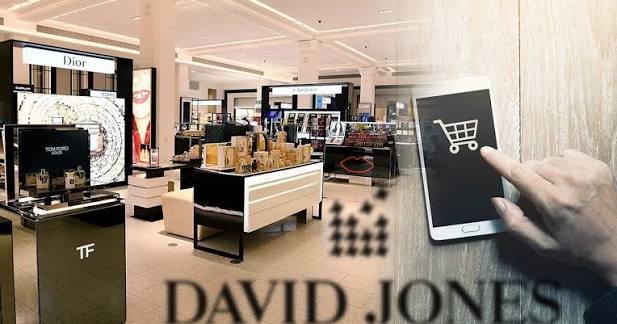
The 188-year-old retailer is reportedly teetering on the edge of collapse and hunting for a deep-pocketed financial backer, with the closure of stores now openly on the table as executives scramble to keep the business afloat.
The crisis was first reported by The Australian.
A David Jones spokeswoman has since confirmed to 7NEWS.com.au that chief executive Erica Berchtold is reviewing the company’s entire store network across Australia, alongside the trading terms it holds with suppliers and brand partners.
According to the spokeswoman, Ms Berchtold’s focus is on speeding up the rollout of the company’s INSPIRE30 strategy.
She said the CEO was in advanced talks with key stakeholders about how the business is adjusting to a retail landscape that continues to shift beneath its feet.
Behind that carefully worded corporate language lies a far grimmer picture.
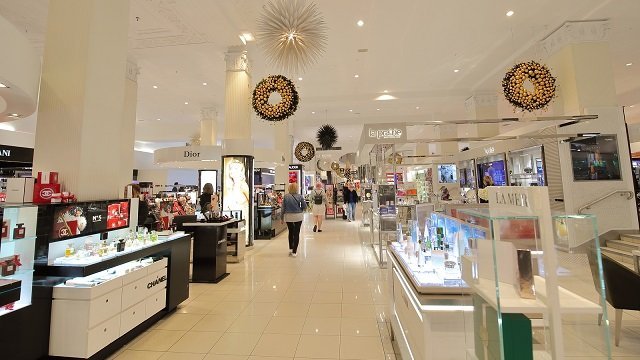
The luxury retailer has reportedly had difficulty paying some suppliers. It has also reportedly lost several of the glamour brands that once defined its premium identity, among them Christian Dior, Gucci and Chanel.
For a store that built its reputation on prestige, those departures cut deep.
Ms Berchtold only took the top job in June, appointed with a mandate to sharpen cost efficiency and strengthen the company’s capabilities.
At the same time, David Jones unveiled a refinancing partnership with lender Hilco, a move that now looks less like a fresh start and more like a warning sign of the financial strain building inside the business.
The timing could hardly be worse. Founded in Sydney in 1838, David Jones has weathered almost every economic storm the country has endured.
But the current squeeze on Australian households is proving uniquely punishing for big-box retail.
Families battered by rising interest rates and surging petrol prices have sharply cut back on discretionary spending.
Designer handbags, homewares and high-end fashion, the very products that fill David Jones’ floors, are often the first things to go when the household budget tightens.
The numbers lay it bare.
Retail property giant Vicinity has reported that department store sales have slumped 6.5 per cent in just the past three months, an alarming fall for a sector already struggling against online shopping and changing consumer habits.
The broader cost-of-living crisis has turned what was once a slow decline for traditional department stores into something far more urgent.
Analysis: What This Means for Australia
The potential collapse or shrinking of David Jones would reach far beyond the glass doors of its flagship stores.
The most immediate concern is human. The company employs more than 5,000 people across its 38 outlets in Australia and New Zealand.
Any closures would put livelihoods directly at risk, at a moment when families can least afford a lost pay packet.
Then there is the knock-on effect across the supply chain.
Reports that some suppliers have struggled to be paid point to a ripple of financial pressure that could hit smaller Australian brands, wholesalers and service providers who depend on the department store for a significant share of their revenue.
Shopping centres would also feel the blow. Department stores have long served as anchor tenants, drawing foot traffic that keeps neighbouring cafes, boutiques and specialty retailers alive.
The loss of a major anchor can leave a gaping hole in a centre, with consequences for local small business owners and the communities they serve.
On a wider economic level, the struggles of such an iconic name are a stark barometer of consumer confidence. When a business that survived the Great Depression is reportedly fighting for survival, it signals just how deeply the squeeze on household spending has bitten.
Economists and policymakers watching data from the Australian Bureau of Statistics and the Reserve Bank of Australia will see David Jones as a warning light for the entire retail sector.
There is a cultural cost, too.
David Jones is woven into the fabric of Australian city life, from its famous Christmas windows to the generations of shoppers who grew up walking its floors.
Losing stores would erase a piece of national retail history.
Business strategist and consumer behaviour analyst Barry Urquhart has delivered a sobering verdict on the retailer’s prospects.
Speaking to 7NEWS, he warned that a booming Christmas trading period would not rescue David Jones and would “simply delay the inevitable”.
Mr Urquhart argued the company could not trade its way out of trouble, describing the core problem as “capital inadequacy”. In his view, it comes down to cash flow and liquidity.
“Without liquidity, you’re sunk,” he said.
Associate Professor Carol Tan from RMIT University offered a slightly more hopeful outlook, though one that comes with painful conditions.
She said David Jones’ long history alone would not be enough to secure its future. “It’s got legacy, it’s got heritage, but as we can see, heritage is no longer enough,” she said.
Still, Professor Tan said she was confident the business could be saved, though not in its current form. A leaner operation with fewer stores, she suggested, may be the price of survival.
Industry observers believe that view reflects a broader reckoning facing department stores worldwide, where sprawling footprints and high fixed costs have become a heavy burden in an era of online competition and cautious shoppers.
Retail analysts say the departure of top-tier luxury labels is particularly damaging, because those brands not only generate sales but also lend prestige that attracts high-spending customers through the doors.
For now, David Jones insists it is adapting.
But with suppliers reportedly waiting on payments, marquee brands gone and shoppers keeping their wallets firmly closed, the clock is ticking on one of Australia’s most enduring retail names.
Long-time customers are hoping the grand old store can pull off one more great escape. Whether it can is a question that thousands of workers are now anxiously waiting to have answered.