
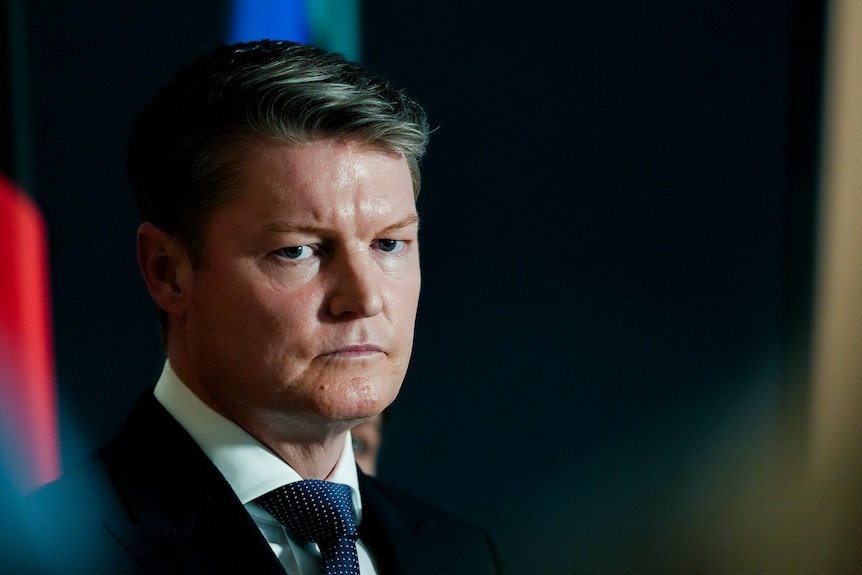
‘Political Madness’: Premier Ben Carroll’s Big Build Royal Commission Set to Explode in the Middle of Victoria’s Election as Labor Trails and $197 Billion Debt Looms Over Every Household
- Public hearings into alleged corruption on Victoria’s Big Build will run for two weeks of a four-week election campaign, putting 12 years of Labor decisions under oath.
- A bombshell submission claims the government deliberately inflated costs and threatened to sack a senior public servant to push through its preferred Airport Rail Link route.
- Opposition Leader Jess Wilson faces mounting pressure to reveal costings, which will arrive after an estimated one million Victorians have already voted.
- The Reserve Bank’s Melbourne Cup Day rate hike to an 18-year high has made state spending a central issue in a contest about trust and money.
Victorians are about to watch their own government face a public inquiry in the final weeks of an election campaign.
No Australian government has done anything quite like it. Within days, a royal commission examining alleged corruption across the state’s multibillion-dollar Big Build will open its doors to the public.
Witnesses will testify, documents will be tabled and allegations will be aired, while voters are deciding who should run the state.
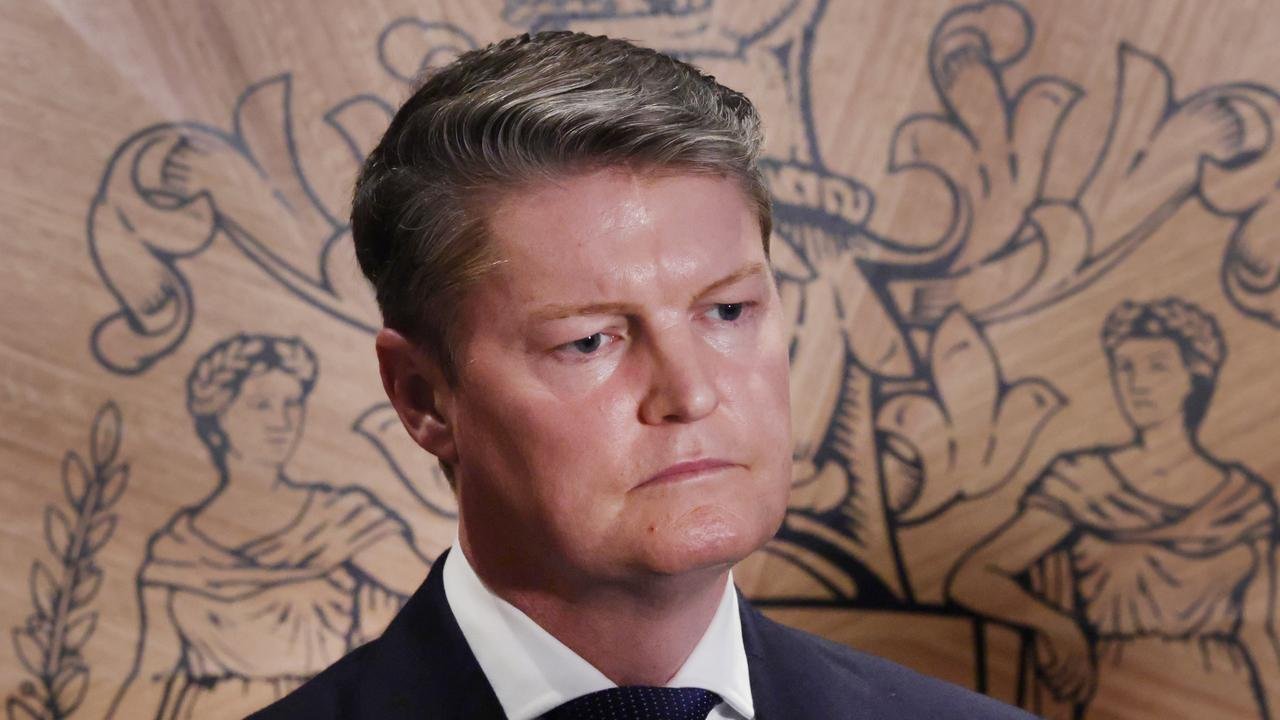
For a Labor government already trailing in the polls, the timing could hardly be more dangerous.
Premier Ben Carroll set up the inquiry himself. It was the first thing he did after taking the top job, and he has made it a centrepiece of his campaign.
He tells voters that “integrity is not negotiable”, and the commission features in his main television advertisement.
But the hearings will occupy roughly half of a four-week campaign.
That gives the Coalition, the Greens and One Nation a steady supply of material to attack more than a decade of Labor stewardship over infrastructure spending.
Some Labor insiders privately describe the decision as madness. Others fear it could finish off any hope of a late recovery before polling day on November 28.
The allegations are serious.
One submission to the commission claims the government deliberately inflated costs and threatened to sack a senior public servant to secure its favoured route for the Airport Rail Link, one of the most expensive and contested projects in Victoria’s transport program.
To understand how Labor reached this point, look at the leadership change that put Carroll in charge.
Former premier Jacinta Allan spent much of her time in office fending off repeated claims of corruption and criminal activity in the construction sector. She refused to call a royal commission.
That refusal became a key reason her colleagues removed her.
Carroll’s quick reversal was meant to settle the matter. The idea was to give Labor a ready answer whenever scandal came up and to take the issue away from its opponents.
It has not worked out that way. The leadership change produced no measurable bounce in the polls.
If voters did not reward Labor for changing leaders, there is little reason to expect them to reward it if new corruption claims surface in the hearing room.
Kosmos Samaras, a former Labor strategist who now runs polling firm Redbridge, has argued that once Carroll had dealt with the issue, he should have stopped talking about it and focused on traditional Labor ground such as education.
Instead, Samaras noted, the campaign has made the Big Build scandal a prominent part of its message, including in the premier’s main TV pitch.
Labor strategists still have a reason for hope.
A gain of just a few percentage points could change the outcome in dozens of seats and make Jess Wilson’s path to majority government much harder.
Analysis: What This Means for Australia
The stakes go well beyond Spring Street. Victoria is Australia’s second-largest economy, and the way it manages large public projects affects investor confidence, construction costs and the national inflation picture.
The state’s debt is projected to reach $197 billion, and successive budgets show its finances weakening under Labor. Corruption on major projects is not only an ethics problem.
Inflated contracts mean higher repayments for decades and less money for hospitals, schools and frontline services.
The Reserve Bank of Australia has underlined this.
Its Melbourne Cup Day rate rise, which took rates to an 18-year high, came with a warning that government spending was adding to the country’s inflation problem.
That pressure reaches mortgage holders across the country.
For law enforcement and regulators, the commission is also a test of whether Australia’s systems for protecting the integrity of public works are strong enough. If evidence points to criminal behaviour, it is likely to bring renewed calls for tougher national oversight of the construction industry.
Both main parties are exposed.
Interviewed by Raf Epstein on ABC Melbourne, Carroll dismissed suggestions that state spending was feeding inflation, describing Labor’s measures as “sustainable, targeted cost-of-living support”.
Wilson, in a podcast interview with Neil Mitchell, accepted that government spending was inflationary but could not explain why her own plans would not be.
That contradiction matters. Wilson is pitching herself as both premier and treasurer, promising to reduce debt and repair the budget.
Economists remain unconvinced. So far the Coalition’s offering has included continued spending and tax cuts.
Its main saving is a ten-year plan to shrink the public service, worth $22 billion over a decade.
On Friday, the Coalition announced plans to raise $1.3 billion by selling government land across Melbourne and Ballarat. Critics say much more will be needed to make the numbers work.
Labor has seized on the gap. It released a 64-page booklet picking apart the opposition’s costings, a piece of political theatre that worked.
Wilson’s press conference that day lasted less than five minutes.
Labor is not in a strong position to lecture, though. It has not released detailed costings for its own promises either.
The Coalition says its full figures will appear “in the usual way” near the end of the campaign. With early voting opening on November 18, at least a million Victorians are expected to have voted before then.
Asked whether voters deserved the full picture first, Wilson said: “Our policies will be released in the usual way. Victorians choose when they vote.”
Political analysts say the combination of a corruption inquiry and unanswered questions about costings has created an unusually volatile campaign, in which neither side can claim clear credibility on money.
Fiscal observers warn that whoever wins will inherit a heavy debt burden and an electorate struggling with the cost of living crisis, and that voters are increasingly sceptical of rehearsed answers.
Governance experts believe the royal commission’s findings, whenever they arrive, are likely to shape debate about how Australian governments approve and manage major projects for years to come.
After 12 years in power, Labor faces an election that has become a public review of its record, both at the ballot box and in the hearing room.