
Ukraine Offered NATO Membership in Exchange for Surrendering the Donbas as Zelenskyy Calls Putin’s Battlefield ‘Ceasefire’ a Trap, and Why the Gamble Matters for Australia
- For the first time in the peace talks, American negotiators have floated a deal linking Ukraine’s entry into NATO to Kyiv giving up its eastern Donbas region.
- Volodymyr Zelenskyy says Ukraine will not hand over land, but he would let the nation decide in a referendum if offered a large enough package of guarantees.
- The Ukrainian leader has rejected Vladimir Putin’s offer of a local truce in besieged Kostiantynivka, calling it an attempt to take the city without a fight.
- Defence observers warn that rewarding territorial conquest in Europe could set a dangerous precedent in the Indo-Pacific, on Australia’s doorstep.
It is the deal that would once have been unthinkable: hand over the land, and get the shield.
After nearly four years of slaughter, shattered cities and hundreds of thousands of casualties, Ukraine has been asked a brutal question.
Would it give up the Donbas, the industrial heartland Russia has bled to seize, in return for the NATO membership Moscow went to war to prevent?
The answer, for now, is no.
But the fact that the question is being asked at all marks a stark shift in a conflict whose outcome will echo far beyond Europe, including in Canberra.
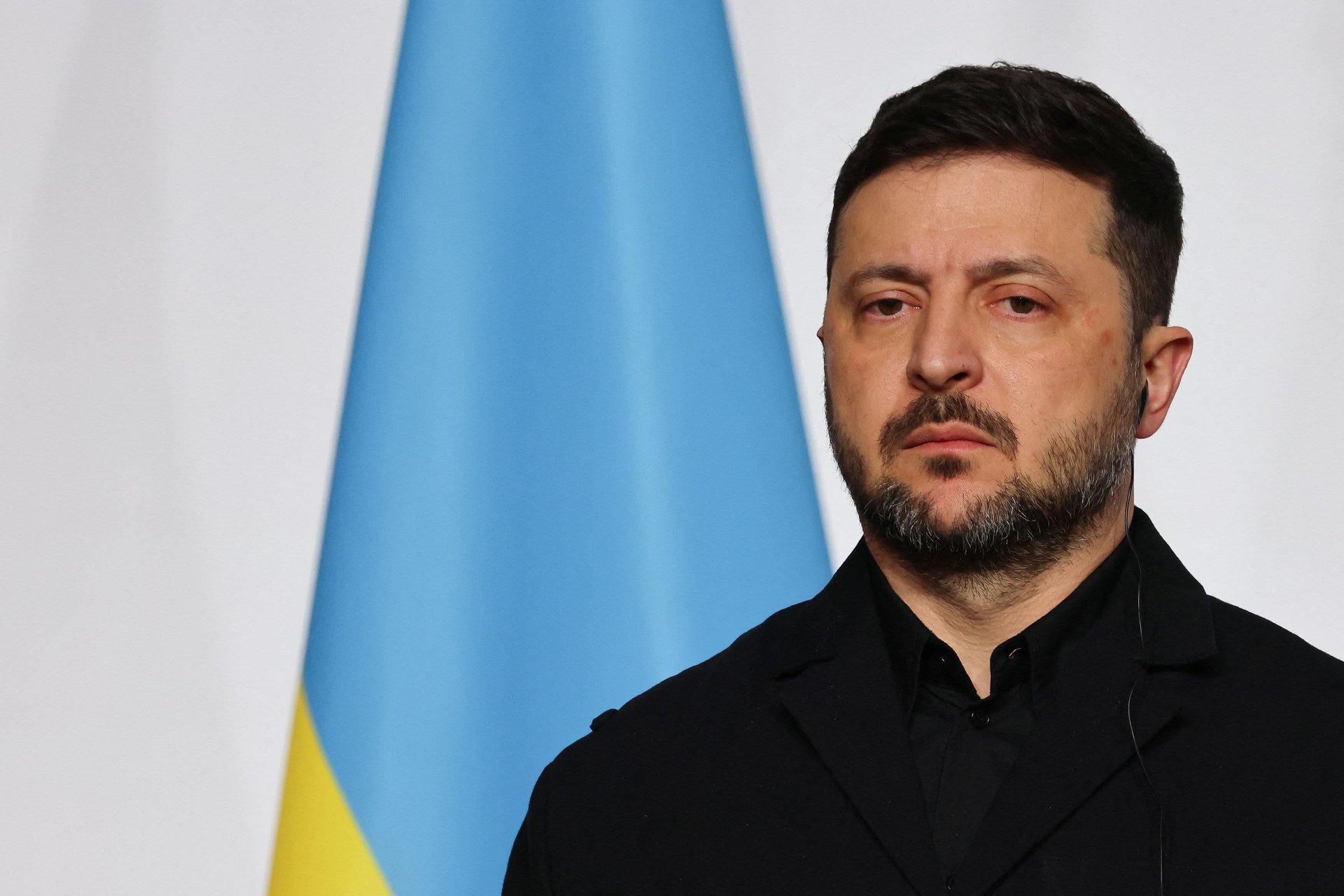
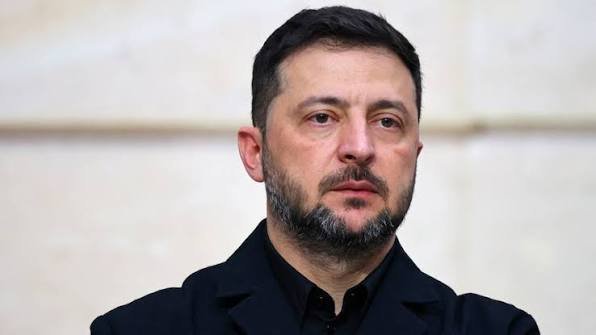
President Volodymyr Zelenskyy disclosed that US negotiators had raised the idea of a Ukrainian withdrawal from the eastern region in exchange for a path into the Western military alliance.
He said it was the first time the two issues had been tied together during the talks.
He told reporters he believed NATO was now back on the agenda. He also warned that the Kremlin’s signals made this an exceptionally hard conversation.
The revelation followed two days of US-brokered negotiations between Ukrainian and Russian delegations in Abu Dhabi. They ended on Wednesday without a major breakthrough.
The one tangible result was a human one.
Both sides agreed to a prisoner exchange that Mr Zelenskyy said would involve more than 1,000 people, though the final figures were still being worked out.
Mr Zelenskyy repeated that Kyiv was not prepared to cede territory. But he left a door ajar.
If Ukraine were offered a comprehensive package, including firm security guarantees, the right to keep a strong and properly funded army, and money for reconstruction, he said he would put the matter to Ukrainians in a national referendum.
His contempt for the Kremlin’s latest proposal was unmistakable. Vladimir Putin has suggested a localised humanitarian ceasefire around Kostiantynivka, a frontline city in the Donetsk region that Russian forces have pounded for months.
Mr Zelenskyy dismissed it outright. He said the offer only showed Moscow could not capture the city by force, and that civilians had already been given the chance to flee.
In his view, Putin simply wanted Ukrainian troops to walk out so Russian soldiers could walk in and occupy the city unopposed.
He said Kyiv had handed over a list of seven or eight other frontline settlements where civilians, children among them, were trapped and could benefit from a humanitarian pause.
Russia, he claimed, preferred to treat those places as military targets. Moscow denies deliberately attacking civilians.
Diplomatic traffic has intensified.
US envoys Steve Witkoff and Jared Kushner flew to Moscow on Thursday, having promised to raise an energy ceasefire with Putin, a pause on strikes against power plants and grids that have plunged millions of Ukrainians into darkness.
No progress was announced. Mr Zelenskyy was blunt, saying Putin personally does not back a ceasefire.
The two Americans then met the Ukrainian president in Ireland, where he was attending a summit in Dublin hosted by Taoiseach Micheál Martin. Mr Zelenskyy said they told him all parties had agreed Europe would have a seat at the table in upcoming talks.
That is a significant change.
Europe is now Ukraine’s largest financial and military backer, yet in Abu Dhabi its delegates met US and Ukrainian officials but never sat across from the Russians.
At the Dublin summit, EU leaders settled on a negotiating team made up of five major military powers, Britain, France, Germany, Italy and Poland, alongside EU officials.
Britain’s inclusion, despite leaving the bloc, reflects its weight as a nuclear power and one of Kyiv’s most committed supporters.
European leaders also joined Mr Zelenskyy in rejecting Moscow’s demand that a sweeping new European security architecture be agreed before the details of ending the war are settled.
His position was simple: the war has to end first.
Behind all of this sits Putin’s oldest grievance.
The Russian leader has long declared Ukrainian NATO membership a red line, and he named it as one justification for launching his full-scale invasion in February 2022.
Any formula that brings Kyiv into the alliance, even a smaller Ukraine, collides with that claim.
Analysis: What This Means for Australia
It would be easy to see a land-for-security deal in eastern Europe as a distant matter. That would be a mistake.
Australia has committed more than $1 billion in support to Ukraine, including Bushmaster protected vehicles and decommissioned Abrams tanks, and has imposed wide-ranging sanctions on Russian individuals and entities.
Those commitments rest on a principle successive governments have defended: borders must not be redrawn by force.
A settlement that formally rewards Russia with captured territory would test that principle at the very moment tensions over Taiwan and the South China Sea are rising.
The national security implications are direct. Authoritarian powers watch how the West handles aggression, and a deal seen as appeasement could embolden ambitions closer to home.
There are economic stakes too.
The war has fed volatility in global energy and grain markets, which flowed through to Australian households already under pressure from the cost of living crisis.
A lasting peace could ease that pressure. A fragile one could revive it.
Australia is also one of NATO’s Indo-Pacific partners. A larger alliance with new guarantees in Europe may stretch Western resources, influencing how much attention Washington and its allies can give the Pacific.
That concern features heavily in debate over AUKUS and defence spending, and in the priorities set out by the Department of Defence.
For Australia’s Ukrainian community, who have rallied, fundraised and grieved since 2022, the talk of surrendering the Donbas will be painful. Many have relatives in the very regions now treated as bargaining chips.
Security analysts say the most striking feature of the latest round is not the land question but the pairing with NATO. They note it suggests Washington is searching for a formula that gives both sides something, even if neither will publicly accept it.
Defence observers believe a referendum could be Mr Zelenskyy’s way of sharing the burden of an agonising decision with his people, while making clear any concession must be paid for in real, enforceable guarantees.
Foreign policy insiders warn that Putin’s rejection of an energy truce, combined with his narrow offer at Kostiantynivka, points to a Kremlin still betting it can win more on the battlefield than at the table.
Regional specialists caution that Canberra should watch closely.
Whatever is signed over Ukraine, they argue, will be studied in Beijing as carefully as in Moscow, and Australia’s Department of Foreign Affairs and Trade will need to be ready for the consequences.